
Quick Read
- Israeli military launched dozens of airstrikes on southern Gaza, citing Hamas attacks.
- At least 21 Palestinians killed since morning, with casualties in Rafah, az-Zawayda, and Nuseirat.
- Israel halted humanitarian aid transfers into Gaza, deepening civilian hardship.
- Both Israel and Hamas accused each other of ceasefire violations amid fragile truce.
- Remains of two hostages returned to Israel, but further negotiations remain uncertain.
Israeli Airstrikes Resume as Ceasefire Frays
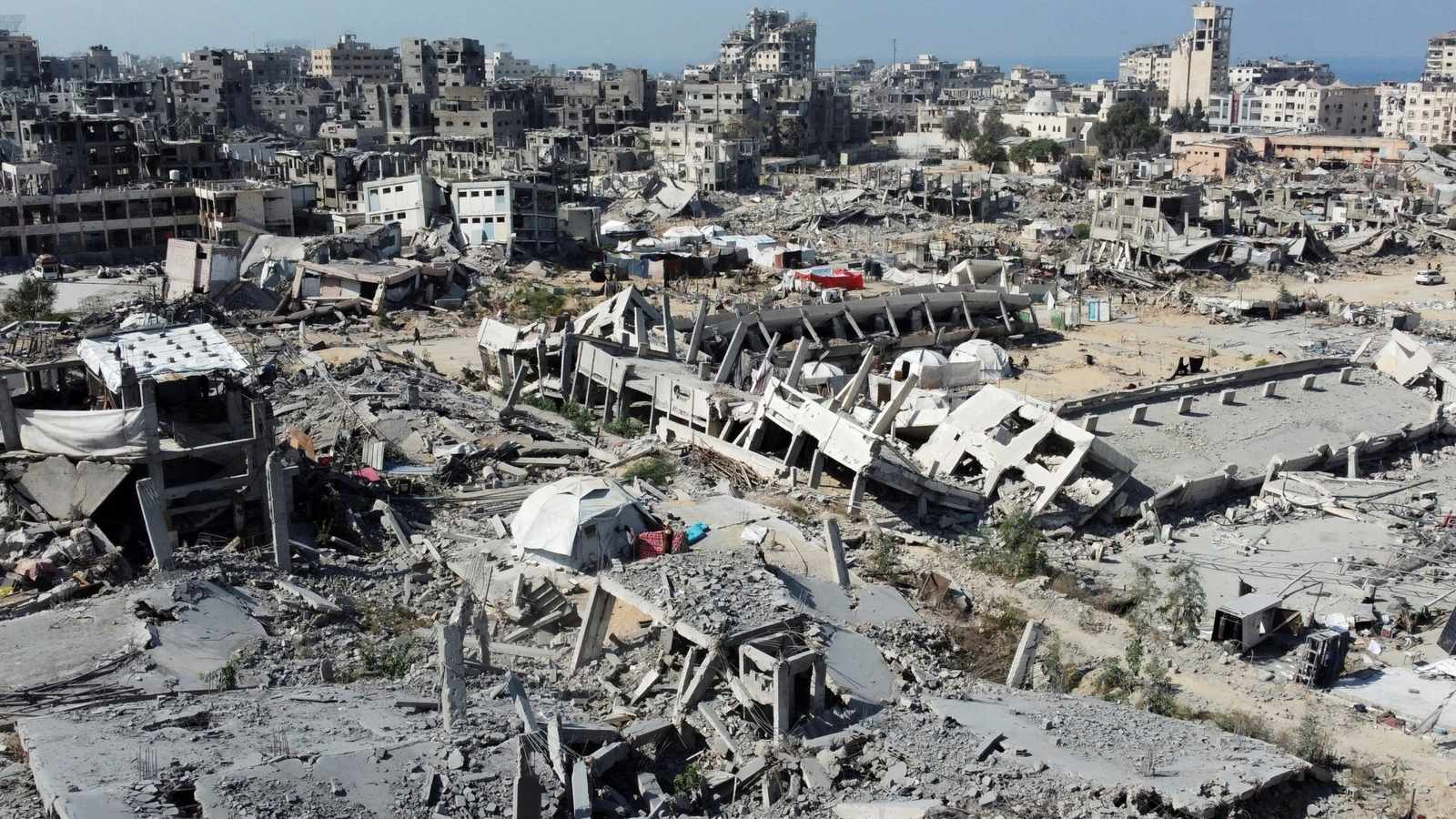
Southern Gaza woke to the roar of Israeli fighter jets on Sunday, as the fragile ceasefire brokered by the United States appeared to unravel. Dozens of airstrikes targeted Rafah and surrounding areas, following Israeli claims that their troops had come under fire from Hamas militants. The strikes, described by the Israeli military as a “massive and extensive wave,” marked a dramatic escalation just days after a tentative truce had kindled hope for a pause in the two-year conflict.
According to Al Jazeera, at least 21 Palestinians were killed across the strip since morning, with casualties reported in central Gaza’s az-Zawayda and the Nuseirat refugee camp. Medical teams struggled to cope with the influx of wounded, as families huddled in makeshift shelters, uncertain whether the relative calm of the previous week would ever return.
Both Sides Trade Accusations Over Ceasefire Violations
The ceasefire, painstakingly negotiated with U.S. mediation, was designed to halt hostilities, facilitate prisoner exchanges, and ramp up humanitarian aid. But its terms now appear tenuous, with both Israel and Hamas accusing the other of bad faith.
Israeli officials pointed to a string of attacks in Rafah, including anti-tank missile and sniper fire, as evidence of a “blatant violation” by Hamas. Prime Minister Benjamin Netanyahu convened emergency consultations with military chiefs and ordered “strong action” against what he called “terrorist targets.” Defense Minister Israel Katz warned that “Hamas will learn the hard way today that the IDF is determined to protect its soldiers.”
Yet Hamas leadership, speaking through both its armed and political wings, denied involvement in any clashes in Rafah. “We have no knowledge of any incidents or clashes taking place in the Rafah area,” the Qassam Brigades said, noting that the territory was firmly under Israeli control since the previous breakdown in March. Senior Hamas official Izzat Al-Rishq accused Israel of fabricating “flimsy pretexts” to justify renewed military action, and insisted that the group remained “fully, accurately, and faithfully committed to implementing the agreement.”
The atmosphere among civilians is tense and fearful. Reporting from Gaza City, Al Jazeera’s Hani Mahmoud captured the mood: “Fear and panic are dominating the scene. People—including women and children—are asking us if the war is back on.” For many, the question is not academic; it’s a matter of survival.
Humanitarian Aid Halted, Civilian Suffering Deepens
One of the ceasefire’s cornerstones was the unimpeded flow of humanitarian aid into Gaza, a territory battered by war and widespread famine. That lifeline was abruptly cut off Sunday, as Israel announced it would halt aid transfers “until further notice” in response to what it described as Hamas violations.
For the families in camps like Nuseirat, the consequences were immediate and dire. Displaced Palestinians lined up for water from public taps, and emergency food supplies dwindled. Images shared by NBC News showed residents carrying boxes from aid distribution points, their faces etched with fatigue and anxiety.
Hamas, for its part, accused Israel of deliberately blocking aid and delaying the release of Palestinian detainees—actions it warned could scuttle the entire ceasefire deal. The group also called on Washington to pressure Israel to “stop supporting gangs and providing them a safe haven.”
Hostage Remains Returned, Negotiations in Limbo
Amid the military escalation, a somber exchange unfolded: the remains of two captives—Ronen Engel, a father of three, and Sonthaya Oakkharasri, a Thai agricultural worker—were returned to Israel via the Red Cross. According to Israeli sources, twelve bodies have been handed over since the truce, but sixteen remain in Gaza. Hamas said it is committed to the deal’s terms, including the handover of remaining captive remains, but ongoing combat and the destruction caused by airstrikes have made retrieval efforts difficult.
The ceasefire agreement, brokered by President Donald Trump, envisioned disarming Hamas and establishing an internationally backed authority to administer Gaza. But with trust eroding and violence surging, the prospects for substantive negotiations seem increasingly remote.
Political Pressures and the Risk of Renewed War
Inside Israel, political leaders reacted sharply to the weekend’s events. Far-right National Security Minister Itamar Ben-Gvir demanded a full-scale resumption of combat “with maximum force,” while Finance Minister Bezalel Smotrich simply posted: “War!” The rhetoric reflected a shift in public sentiment, as reports of clashes in Rafah stoked fears of reprisal attacks and undermined hopes for peace.
Opposition figures like Benny Gantz urged caution but said all options—including renewed military maneuvering—should remain on the table. Analyst Yossi Mekelberg, speaking to Al Jazeera, warned that the ceasefire was “very fragile, and can tilt in one way or another.”
International Reactions and the Path Forward
The United States, which brokered the truce, weighed in with statements about “credible reports” of imminent violations by Hamas—claims that Hamas categorically rejected as “fully consistent with misleading Israeli propaganda.” Meanwhile, international organizations continued to sound the alarm about the humanitarian crisis, with the world’s leading authority on hunger declaring famine in parts of Gaza.
As violence flared, the fate of the ceasefire hung in the balance. Both sides insisted they were upholding the deal, even as accusations mounted and the toll on civilians rose. The coming days will test whether diplomacy can salvage the agreement—or whether the region will slide back into full-scale war.
The latest escalation in Gaza underscores the perilous fragility of the ceasefire, with both Israeli and Palestinian leaderships locked in a cycle of accusation and reprisal. As humanitarian aid stalls and civilian suffering deepens, the breakdown of trust threatens not only immediate peace prospects but also the broader regional stability. The world watches, knowing that the true cost of failure will be borne by those least able to endure it.