
Quick Read
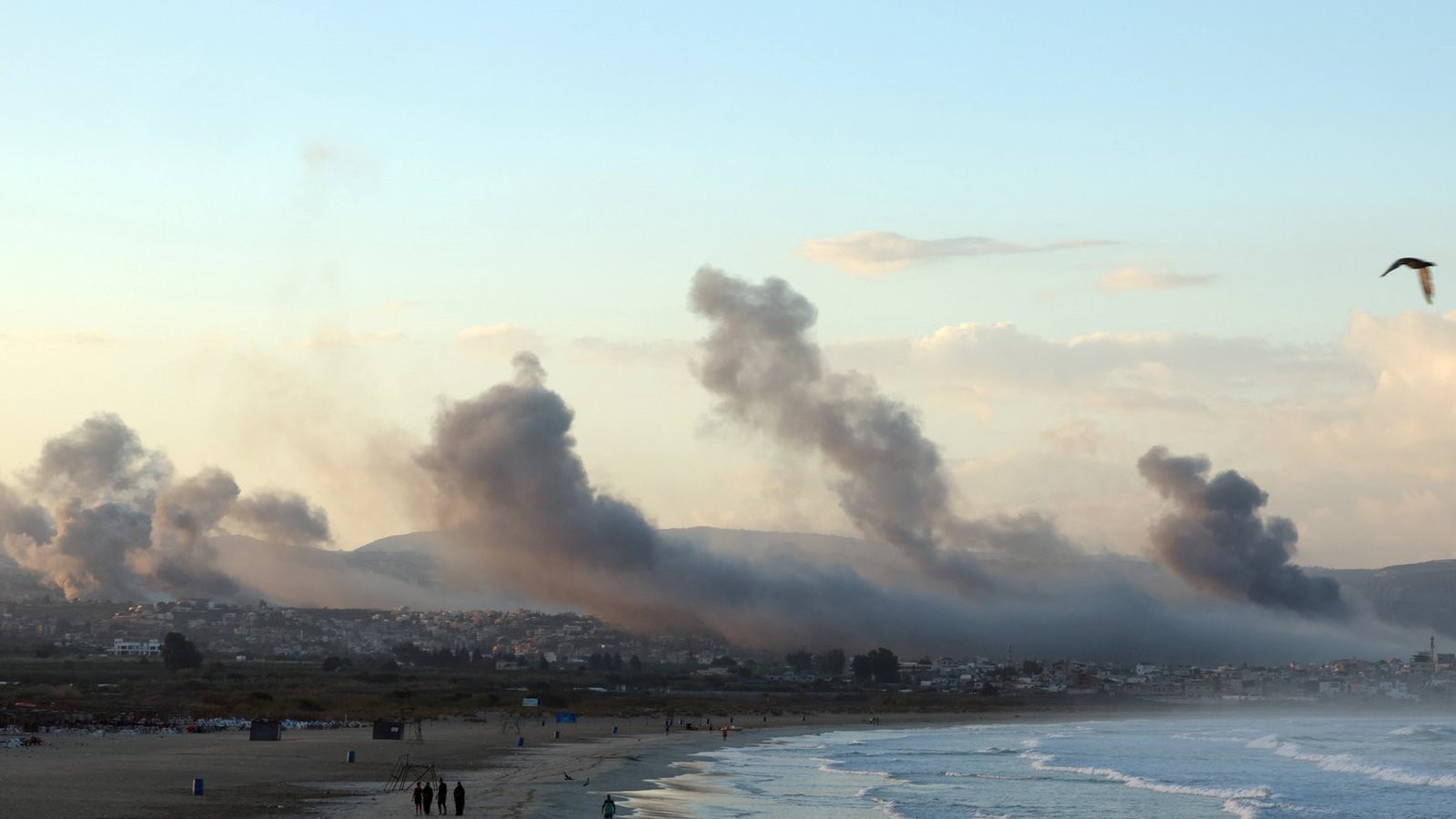
- Israeli military issued evacuation warnings for villages in southern Lebanon before launching airstrikes on Hezbollah targets.
- Airstrikes hit Mais al-Jabal, Dibbine, and Kfar Tibnit, with no immediate casualties reported.
- Qatar is seeking legal action against Israel following a deadly strike on its territory targeting Hamas leaders.
- Over 4,600 ceasefire violations have been recorded along the Lebanon-Israel border since November 2024.
Evacuation Warnings Signal Intensifying Conflict Along the Lebanon-Israel Border
On Thursday, the Israeli military issued urgent evacuation warnings to residents of several villages in southern Lebanon, including Mais al-Jabal, Dibbine, and Kfar Tibnit. Within hours, airstrikes began pounding suspected Hezbollah military infrastructure in these areas. While no casualties were immediately reported, the reverberations of the attacks extended far beyond the targeted zones, fueling fears of a wider conflict that could pull in actors across the region.
Hezbollah Under Fire: Israel Responds to Renewed Militant Activity
According to an official statement from the Israel Defense Forces (IDF), the strikes were a direct response to what Israel claims are Hezbollah’s renewed efforts to rebuild and expand its operations near the volatile border. Tensions between Israel and the Iran-backed group have escalated sharply in recent weeks, with both sides trading threats and accusations. The IDF’s warning maps, circulated on social media and local news outlets, clearly marked buildings and neighborhoods slated for attack, underscoring the gravity of the situation for residents suddenly forced to choose between their homes and their safety.
Local media reports, cited by Shafaq News, confirmed the airstrikes on Mais al-Jabal, Dibbine, and Kfar Tibnit. The operation follows a string of recent Israeli raids in Lebanon’s Beqaa Valley, adding to a litany of over 4,600 ceasefire violations since November 2024. Official figures indicate these incidents have resulted in at least 261 deaths and more than 650 wounded, painting a grim picture of a border that has become a flashpoint for violence.
Regional Fallout: Qatar Seeks Accountability After Deadly Strike
The reverberations of the Israeli strikes are being felt not just in Lebanon, but across the Gulf. Last week, Israel targeted Qatar-based leaders of Hamas in an operation that killed five members of the Palestinian militant group and an officer of Qatar’s internal security force. The attack sent shock waves through Gulf states, some of which have relied on U.S. security guarantees for decades.
In response, Qatar’s chief negotiator, Mohammed Al-Khulaifi, traveled to The Hague to meet with the president of the International Criminal Court (ICC), Judge Tomoko Akane. As an observer state at the ICC, Qatar cannot refer cases directly, but it is actively exploring “every available legal and diplomatic avenue to ensure accountability for those responsible for Israel’s attack on Qatar,” a Qatari official told Arab News. Emergency talks in Doha saw Arab and Islamic blocs urging member states to take “all possible legal and effective measures to prevent Israel from continuing its actions.”
Human Cost: Civilians Caught in the Crossfire
For families in southern Lebanon, the latest escalation is a bitter reminder of how quickly everyday life can be upended. As Israeli warning maps spread across social networks and local media, residents scrambled to evacuate, fearing for their lives and wondering when—or if—they might return. The specter of displacement hangs heavy, especially for those who have already endured repeated cycles of conflict.
While the immediate airstrikes resulted in no reported casualties, the long-term effects of such operations are harder to quantify. The United Nations considers Lebanon’s health ministry figures reliable, but the sheer scale of ceasefire violations and the number of wounded underscore a broader humanitarian crisis. In Gaza, where last year’s war triggered by Hamas’s October 2023 attack led to devastating losses on both sides, the lessons of unchecked escalation are still painfully fresh.
Legal and Political Ramifications: Calls for International Oversight
Against the backdrop of military action, diplomatic and legal maneuvering has gained new urgency. The ICC has already launched prosecutions against key figures on both sides of the Israeli-Palestinian conflict, including Israeli Prime Minister Benjamin Netanyahu and former defense minister Yoav Gallant, as well as senior Hamas commander Mohammed Deif. Allegations range from war crimes to crimes against humanity, with charges including intentional targeting of civilians and use of starvation as a weapon of war.
Qatar’s push for accountability reflects a broader trend among Gulf and Arab states, many of which are now re-evaluating their security arrangements and diplomatic ties. The calls from Doha are echoed in Arab League statements and in quiet but determined diplomatic efforts across capitals from Riyadh to Cairo. As legal teams pour over evidence and international observers monitor the situation, the region waits to see whether justice—or at least some measure of accountability—can be achieved amid the fog of war.
Uncertain Path Forward: Regional Stability Hangs in the Balance
As the dust settles in Mais al-Jabal, Dibbine, and Kfar Tibnit, the future remains uncertain. Both Israel and Hezbollah have signaled that they are prepared for further escalation, and the risk of a broader conflict looms large. For civilians on both sides of the border, the prospect of renewed violence is a source of deep anxiety, compounded by the knowledge that diplomatic and legal remedies are slow and often incomplete.
What happens next will depend not only on the actions of military commanders and political leaders, but also on the capacity of international institutions to enforce norms and protect civilians. With more than 4,600 ceasefire violations in less than a year, the status quo is clearly unsustainable. Whether regional actors can step back from the brink—or whether the spiral of violence will continue—is a question hanging over Lebanon, Israel, and the broader Middle East.
The facts on the ground in southern Lebanon reveal a cycle of escalation that is dangerously close to tipping into wider war. While evacuation orders and targeted strikes may reflect tactical calculations, they also expose the limits of military solutions in a region where civilian lives and political stability are increasingly at risk. Legal and diplomatic efforts, such as those spearheaded by Qatar, offer a glimmer of hope—but unless they yield tangible accountability, the humanitarian cost will only grow.