
Quick Read
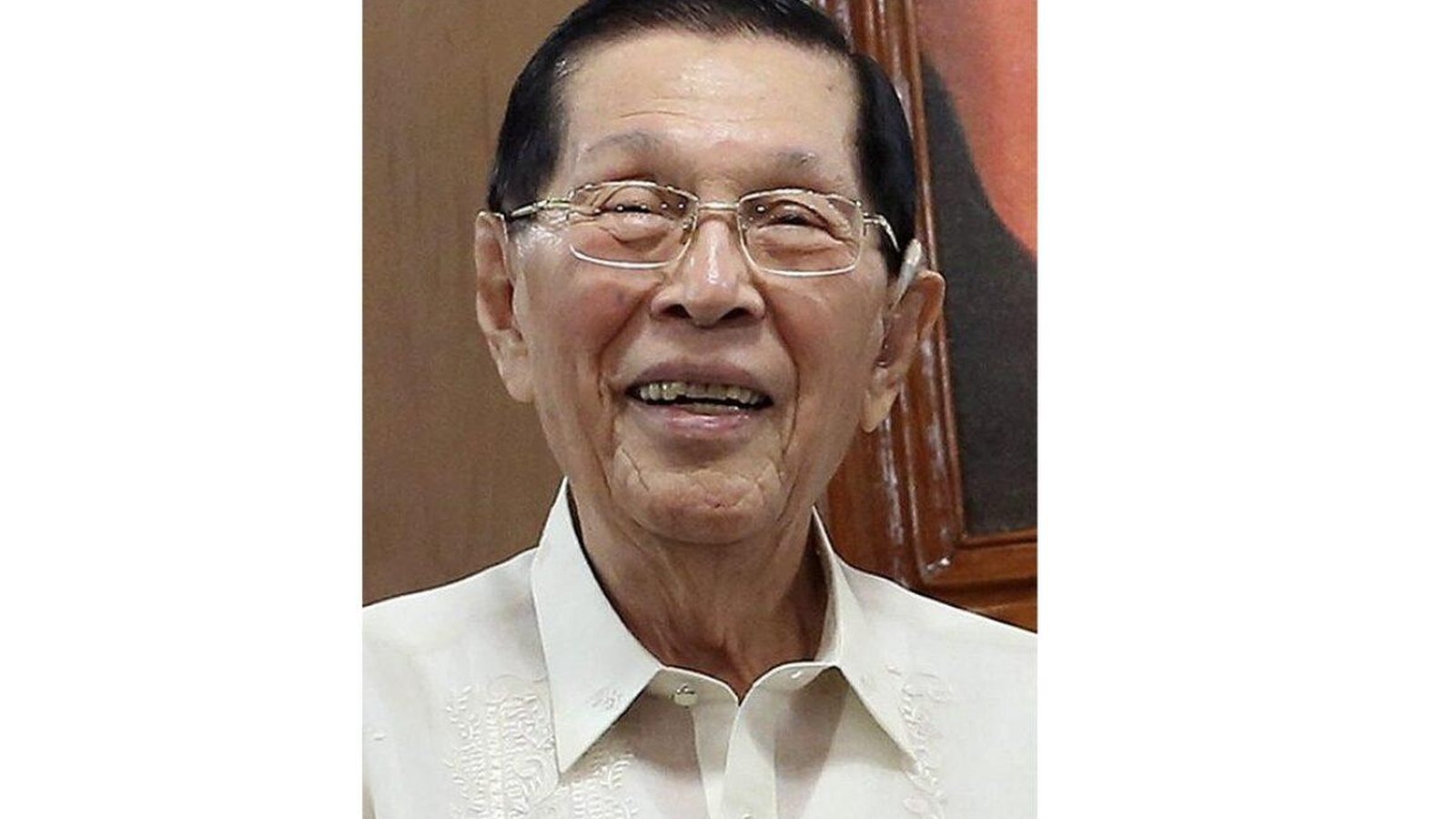
- Juan Ponce Enrile died at home on November 13, 2025, aged 101.
- He was a key architect of martial law under President Ferdinand Marcos Sr.
- Enrile later helped spark the 1986 EDSA People Power Revolution.
- Served as Senate President, Chief Presidential Legal Counsel, and held multiple government posts.
- Acquitted of plunder and graft charges in 2024 and 2025.
The Last Living Architect of Martial Law Passes Away
Juan Ponce Enrile, whose name has been synonymous with the most turbulent chapters in Philippine history, died peacefully at home on November 13, 2025. He was 101. His daughter, Cagayan Representative Katrina Ponce Enrile, announced his passing, describing his final moments as serene and surrounded by family. Enrile’s death closes a chapter on an era defined by dictatorship, revolution, and an enduring struggle over the nation’s democratic identity.
A Career That Spanned Regimes and Revolutions
Born in 1924 in Gonzaga, Cagayan, Enrile’s journey from provincial obscurity to the epicenter of power is marked by both ambition and controversy. After excelling academically—graduating cum laude from Ateneo de Manila University and the University of the Philippines College of Law, and earning a Master of Laws from Harvard—Enrile entered government service in the 1960s, holding key regulatory and finance posts. His appointment as Secretary of National Defense under President Ferdinand Marcos Sr. in 1970 set the stage for his most consequential role: the public face and strategist behind the declaration of martial law in 1972.
Martial law brought sweeping changes, but at a cost. Human rights groups and official inquiries have documented thousands of arrests without warrant, torture, disappearances, and killings. Enrile maintained in later interviews and memoirs that the ambush on his car, cited by Marcos as a justification for martial law, was genuine—a claim disputed by historians and activists. The episode remains emblematic of the era’s opacity and the contested narratives that followed.
From Defender to Defector: The EDSA People Power Revolution
By 1986, cracks in the Marcos regime had grown. Enrile, together with Armed Forces Vice Chief of Staff Fidel V. Ramos, publicly withdrew support from Marcos, igniting the four-day EDSA People Power Revolution. Millions of Filipinos took to the streets, backed by the Catholic Church, demanding change. The peaceful uprising forced Marcos and his family into exile and ushered in Corazon Aquino’s presidency. Enrile’s break was seen by some as an act of principle, by others as a pragmatic move to ‘save his own skin’ as the dictatorship faltered.
Enrile briefly resumed his role as defense minister under Aquino but was later removed and detained for alleged rebellion—a charge eventually dismissed. His subsequent return to the Senate marked the beginning of a new chapter.
Senate Power Broker and Legal Battles
Enrile won a Senate seat in 1987 and was re-elected in 1995, 610, and 2010. His reputation as a shrewd tactician grew. He served as Senate President from 2008 to 2013, presiding over landmark hearings, including the impeachment trial of Chief Justice Renato Corona in 2012. Colleagues often noted his deep institutional knowledge and mastery of parliamentary procedure.
Legal troubles followed. In 2014, Enrile was charged with plunder and graft over alleged misuse of the Priority Development Assistance Fund. He surrendered voluntarily and was held under hospital arrest. The Supreme Court granted him bail in 2015 due to his age and health. Ultimately, the Sandiganbayan acquitted him of all charges in 2024 and 2025, citing insufficient evidence.
Family, Business, and Enduring Influence
Enrile’s personal life was marked by stability amid political storms. Married to Cristina Castañer Enrile since 1957, he fathered two children—Juan “Jack” Ponce Enrile Jr. and Katrina—both of whom entered public service and business. He credited his wife for grounding him through decades of public scrutiny.
Outside politics, Enrile built a business empire, founding Enrile and Company and chairing the JAKA Group, which spanned food processing, manufacturing, forestry, and security services. In later years, management passed to his children, though he maintained agricultural interests in northern Luzon—a nod to his earliest roots.
Contested Legacy: Architect, Strategist, and Polarizing Figure
Enrile’s legacy defies easy categorization. Supporters hail him as a legal mind and crisis manager who stabilized institutions in perilous times. Critics, notably groups like SELDA (Samahan ng mga Ex-Detainee Laban sa Detensyon at Aresto), see him as a chief architect and enabler of martial law, whose actions facilitated repression and corruption. SELDA’s statement following his death was unequivocal: “Enrile’s hands are stained with the blood and suffering of countless victims of martial law.” They argue his later reconciliation with the Marcos family and role as Chief Presidential Legal Counsel to President Ferdinand Marcos Jr. symbolizes the persistence of impunity in Philippine politics.
Enrile himself remained unapologetic, often declaring he had “no regrets, no mistakes” and stood by his choices as necessary for the country’s stability. The debate over his role—as patriot, power broker, or architect of repression—continues to shape national discourse.
The Enrile family has announced that details of public viewing and interment will be shared soon, reflecting their wish to grieve privately while acknowledging his public stature.
Juan Ponce Enrile’s life is a prism through which the Philippines’ modern history can be seen in all its complexity: ambition and principle, reform and repression, public service and personal gain. His passing forces a nation to reckon with the legacies of power, accountability, and the ongoing struggle for truth and justice.