
Quick Read
- Massive protests erupt in Kathmandu, led by Generation Z demonstrators.
- 19 protesters killed by police fire; government buildings set ablaze.
- Prime Minister Oli resigns; Nepal faces a constitutional crisis.
- Social media ban partially triggered the unrest; ban later lifted.
- Nepali Army takes control of security, urges calm and reconciliation.
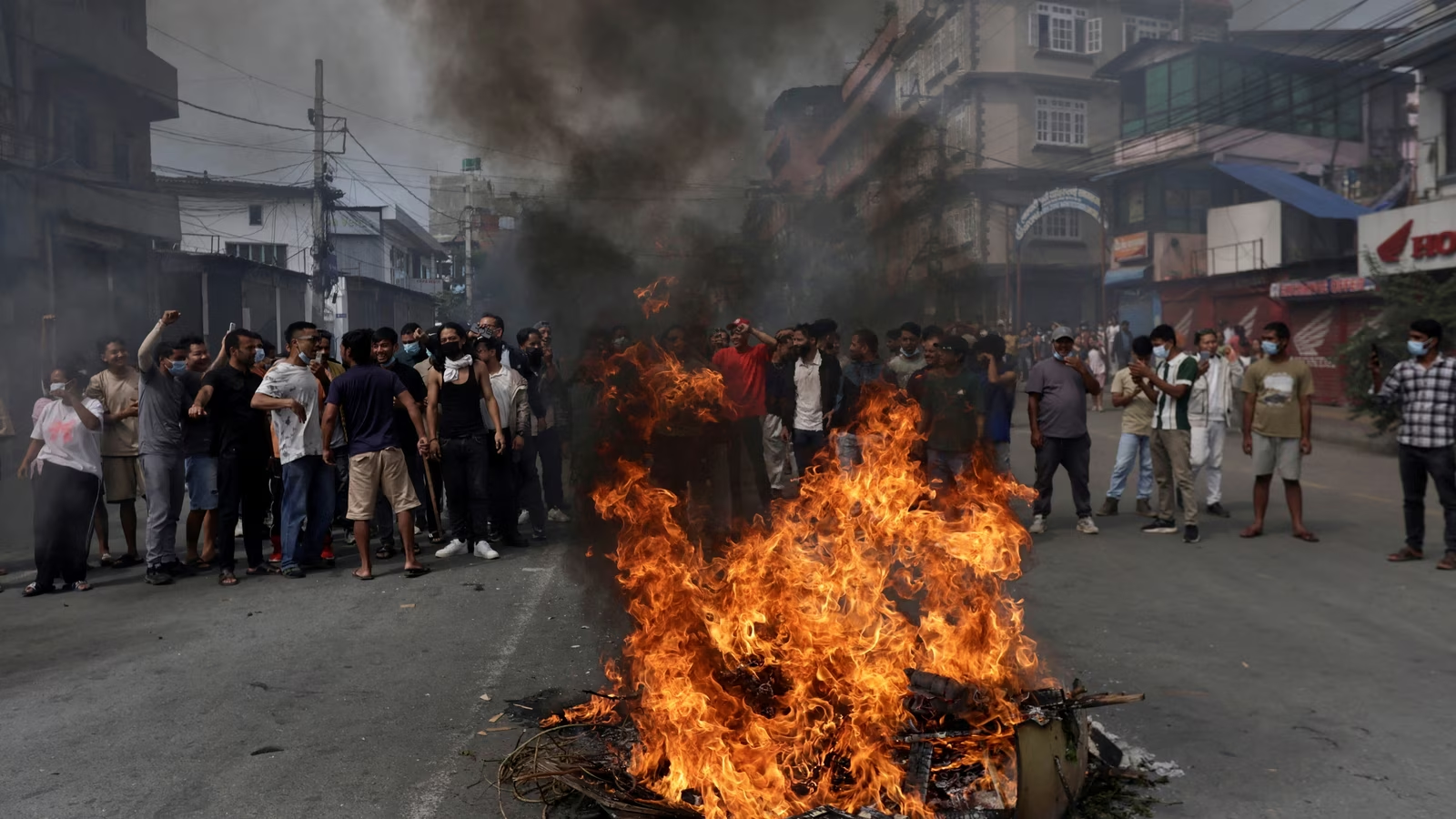
Nepal’s capital, Kathmandu, has become the epicenter of massive unrest following a series of protests led by Generation Z demonstrators. The protests, which started as a response to allegations of widespread corruption and repressive government actions, have escalated into violent clashes, leading to significant political upheaval in the country. With the resignation of Prime Minister K P Sharma Oli and President Ram Chandra Poudel under Army protection, the country faces a constitutional crisis, leaving its future uncertain.
The Genesis of the Protests
The unrest began after a controversial social media ban was imposed by the government. Platforms like Facebook, which had become a space for young Nepalis to voice their frustrations over corruption and political dysfunction, were abruptly shut down. This move, seen as an attack on free speech, provoked outrage among the country’s youth, particularly those born between 1996 and 2012, commonly referred to as Generation Z.
The protests intensified when police opened fire on demonstrators in Kathmandu on September 8, killing 19 people. This tragic event acted as a catalyst, sparking nationwide outrage. By the following day, protesters had set fire to several government buildings, including Singha Durbar, which houses key ministries, and the residences of prominent political figures. The violence quickly spread beyond the capital, engulfing other cities in the country.
Political Fallout and Leadership Vacuum
The escalating violence forced Prime Minister K P Sharma Oli to resign, with President Ram Chandra Poudel retreating to an undisclosed location under Army protection. The absence of a functional government has plunged Nepal into a deep constitutional crisis. Calls for the dissolution of Parliament have grown louder, with no clear roadmap for the formation of an interim government.
Meanwhile, the Nepali Army has assumed control of security operations, patrolling the streets and guarding key institutions. Army Chief General Ashok Raj Sigdel has appealed for calm and urged political leaders to engage in dialogue to resolve the crisis. However, the Army has refrained from taking a direct political role, focusing instead on maintaining order and facilitating discussions among political stakeholders.
The Role of Social Media and Gen Z
Social media played a pivotal role in mobilizing the protests. Platforms like Facebook were used to highlight issues such as corruption, nepotism, and the extravagant lifestyles of political elites. The term “Nepo Babies” trended widely, criticizing the children of influential politicians for their unaccountable privileges.
The government’s decision to ban social media further enraged the youth, who viewed it as a suppression of their primary means of communication and solidarity. Once the ban was lifted, the protests gained even more momentum, with young demonstrators demanding systemic change rather than specific policy reforms.
International Implications and Reactions
The unrest in Nepal has drawn international attention, particularly from neighboring India. Indian airlines have suspended flights to Kathmandu, citing safety concerns amid the ongoing violence. Indian Prime Minister Narendra Modi convened a high-level meeting to discuss the situation, emphasizing the importance of stability and peace in Nepal for the broader region.
Former King Gyanendra Shah has also weighed in, calling for a peaceful resolution to the crisis and offering to mediate between conflicting parties. His statement has fueled speculation about a potential return to a monarchical role in Nepal’s governance, a concept that has both supporters and detractors within the country.
The situation in Kathmandu highlights the deep-seated frustrations of Nepal’s younger generation with systemic corruption and political dysfunction. As the country navigates this unprecedented crisis, the path forward remains uncertain, with calls for reform and reconciliation growing louder by the day.