
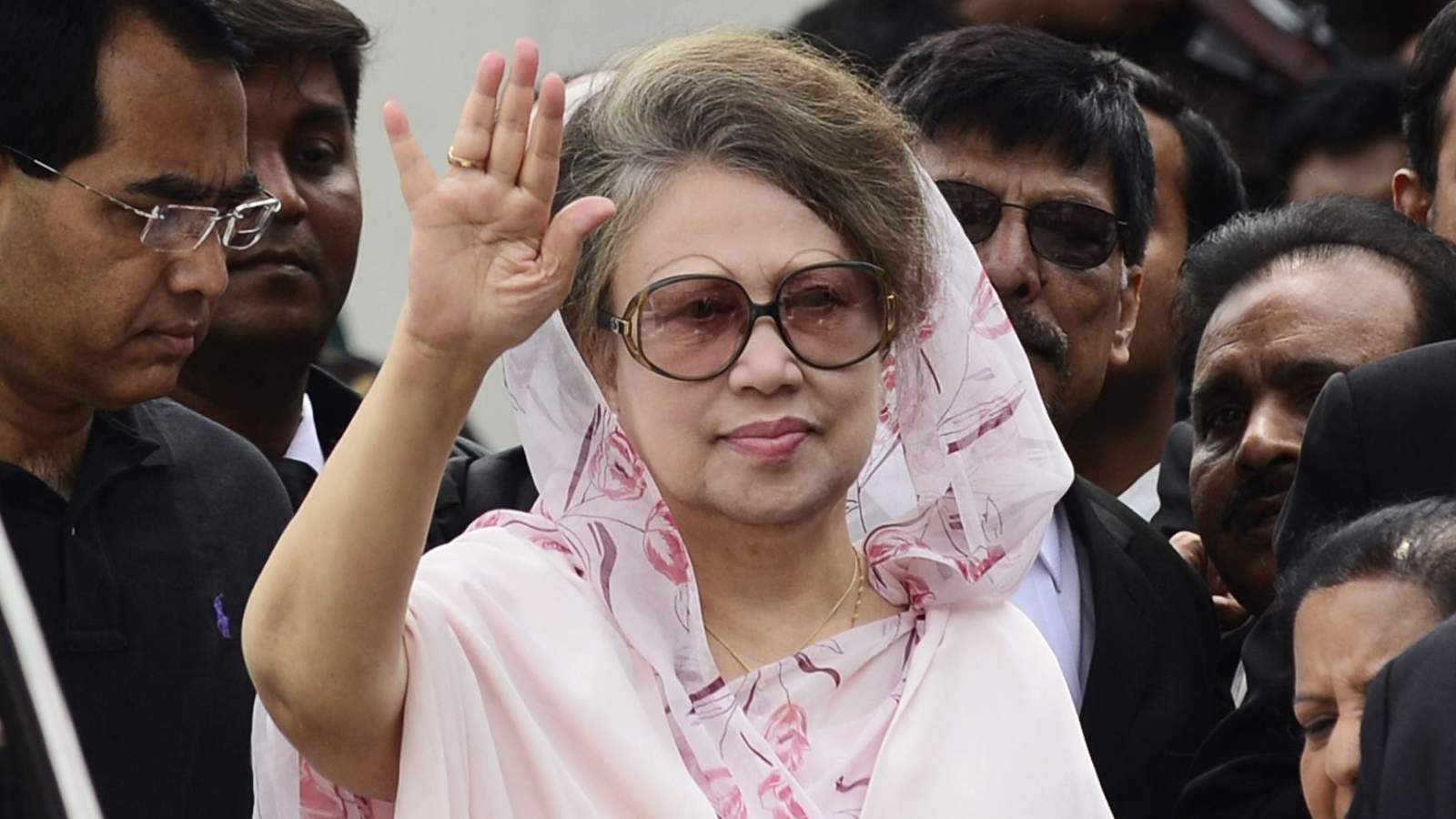
Quick Read
- Khaleda Zia, Bangladesh’s first female prime minister, died at 80 after a prolonged illness.
- She led Bangladesh through democratic reforms, endured imprisonment, and fierce rivalry with Sheikh Hasina.
- Three days of state mourning were declared, and her son Tarique Rahman will now lead the BNP in the upcoming election.
Bangladesh is in mourning. On Tuesday, December 30th, 2025, Khaleda Zia—Bangladesh’s first female prime minister and a towering figure in the nation’s volatile political landscape—died at the age of 80, as confirmed by her party, the Bangladesh Nationalist Party (BNP) (Al Jazeera, BBC). Her death followed a prolonged illness, with her final days spent at Evercare Hospital in Dhaka, surrounded by family and loyal supporters.
The loss is palpable. State mourning was declared for three days, and thousands gathered outside the hospital, a testament to her enduring influence. Interim leader Muhammad Yunus described her as a “symbol of the democratic movement,” acknowledging the depth of emotion reverberating across the country. Khaleda’s funeral will be held in front of parliament, and she will be laid to rest beside her late husband, President Ziaur Rahman, whose assassination in 1981 first propelled her into political life.
Khaleda Zia’s journey was never straightforward. Born on August 15, 1946, in Dinajpur, she married Rahman at 15. Her transformation from a reserved presence beside her husband into a formidable leader began with tragedy. After Rahman’s murder during a failed coup, Khaleda, then a young mother of two, unexpectedly inherited the BNP leadership. Skeptics dismissed her as a novice, but she quickly proved them wrong. Rallying against military rule, she joined forces with her later archrival Sheikh Hasina to oust Hussain Muhammad Ershad in 1990, helping to restore parliamentary democracy to Bangladesh.
Her legacy as prime minister is complex. In 1991, Khaleda won Bangladesh’s first free election in decades, becoming only the second woman to lead a democratic government in a Muslim-majority country after Benazir Bhutto. Her administration introduced compulsory primary education and lifted restrictions on foreign investment. Yet her uncompromising style—boycotting elections, leading mass protests—polarized the nation. Supporters saw her as a champion of democracy; critics accused her of stoking division and corruption.
The rivalry between Khaleda Zia and Sheikh Hasina shaped Bangladesh’s modern history. Often dubbed the “battling begums,” their feud fueled repeated political crises. Khaleda lost power in 1996 but staged a comeback in 2001. Her later years were marked by legal battles: she was convicted on corruption charges in 2018 and spent years under house arrest, which she denounced as politically motivated. Even in declining health, Khaleda symbolized resistance to Hasina’s increasingly autocratic rule, boycotting elections and enduring imprisonment. Only after Hasina’s government was toppled in 2025 did Khaleda regain her freedom and, briefly, the hope of returning to public life.
International leaders joined Bangladesh in mourning. Indian Prime Minister Narendra Modi praised Khaleda’s contributions to Bangladesh’s development and bilateral relations, saying her legacy “will always be remembered.” Pakistan’s Shehbaz Sharif called her a “committed friend of Pakistan,” emphasizing her lasting impact.
Khaleda’s political career was not without controversy. Her government’s alliance with the Islamist Jamaat-e-Islami, allegations of corruption, and her role in boycotting elections drew criticism. In 2018, she and her son Tarique Rahman were convicted of misappropriating orphanage funds—a charge they denied. Earlier this year, Bangladesh’s Supreme Court acquitted them, and Rahman returned from 17 years in exile just days before Khaleda’s death. He is now set to lead the BNP into the upcoming February 12 general election.
Khaleda’s health had deteriorated sharply in recent years. Admitted to hospital in late November 2025, she battled advanced liver cirrhosis, arthritis, diabetes, heart problems, and pneumonia. Physicians described her condition as “extremely critical.” Despite her absence from public life, she remained the face of the opposition, a rallying point for those seeking change.
Her personal life—marked by loss, resilience, and perseverance—mirrored the tumult of Bangladesh itself. Khaleda Zia broke barriers for women in South Asian politics, navigating a patriarchal society and a hostile political climate. Her leadership style inspired both fierce loyalty and trenchant opposition, reflecting the deep divisions in Bangladeshi society.
As the country moves forward, questions linger: Can her son Tarique Rahman unite the BNP and galvanize the opposition in time for the elections? Will Khaleda’s legacy endure as a symbol of resistance and reform, or be overshadowed by controversy? Bangladesh’s future remains uncertain, but the impact of Khaleda Zia’s life—her courage, tenacity, and flaws—will shape the nation’s narrative for years to come.
Khaleda Zia’s passing closes a pivotal chapter in Bangladesh’s history. Her life, marked by personal tragedy and political struggle, defined an era of democratic transition and fierce rivalry. As the nation mourns, her legacy stands as both a beacon and a caution—reminding Bangladesh that the path to democracy is rarely smooth, but always consequential.