
Quick Read
- Hawaii’s Kilauea volcano is in a precursory phase, anticipating ‘Episode 40’ high lava fountaining.
- The USGS Hawaiian Volcano Observatory has extended the forecast window for high fountaining to January 17, 2026.
- Volcano Alert Level remains at WATCH, with all activity confined to Halemaʻumaʻu crater within Hawaiʻi Volcanoes National Park.
- North and south vents are producing spatter, dome fountains, and intermittent lava overflows.
- Tiltmeters show recent deflation after re-inflation, and SO2 emissions are estimated at 1,000 to 5,000 tonnes per day.
Hawaii’s Kilauea volcano, one of the world’s most active and closely watched geological wonders, is once again capturing global attention. After a period of relative calm, the colossal natural force is signaling its readiness for a new chapter of fiery activity, with scientists anticipating what they’ve dubbed ‘Episode 40’ of high lava fountaining at its summit.
For days, the iconic volcano has been in a dynamic precursory phase, exhibiting intermittent, low-level activity that serves as a prelude to a potentially more dramatic display. This ongoing period of unrest has extended the forecast window for the onset of high fountaining, now expected any time between the present and January 17, 2026, according to the latest updates from the USGS Hawaiian Volcano Observatory (HVO).
Anticipation Builds at Halemaʻumaʻu Crater
The heart of Kilauea’s current activity is confined entirely within the Halemaʻumaʻu crater, nestled within the boundaries of Hawaiʻi Volcanoes National Park. This containment is crucial, as it limits the immediate threat to surrounding communities, allowing scientists and park officials to focus on monitoring the evolving situation.
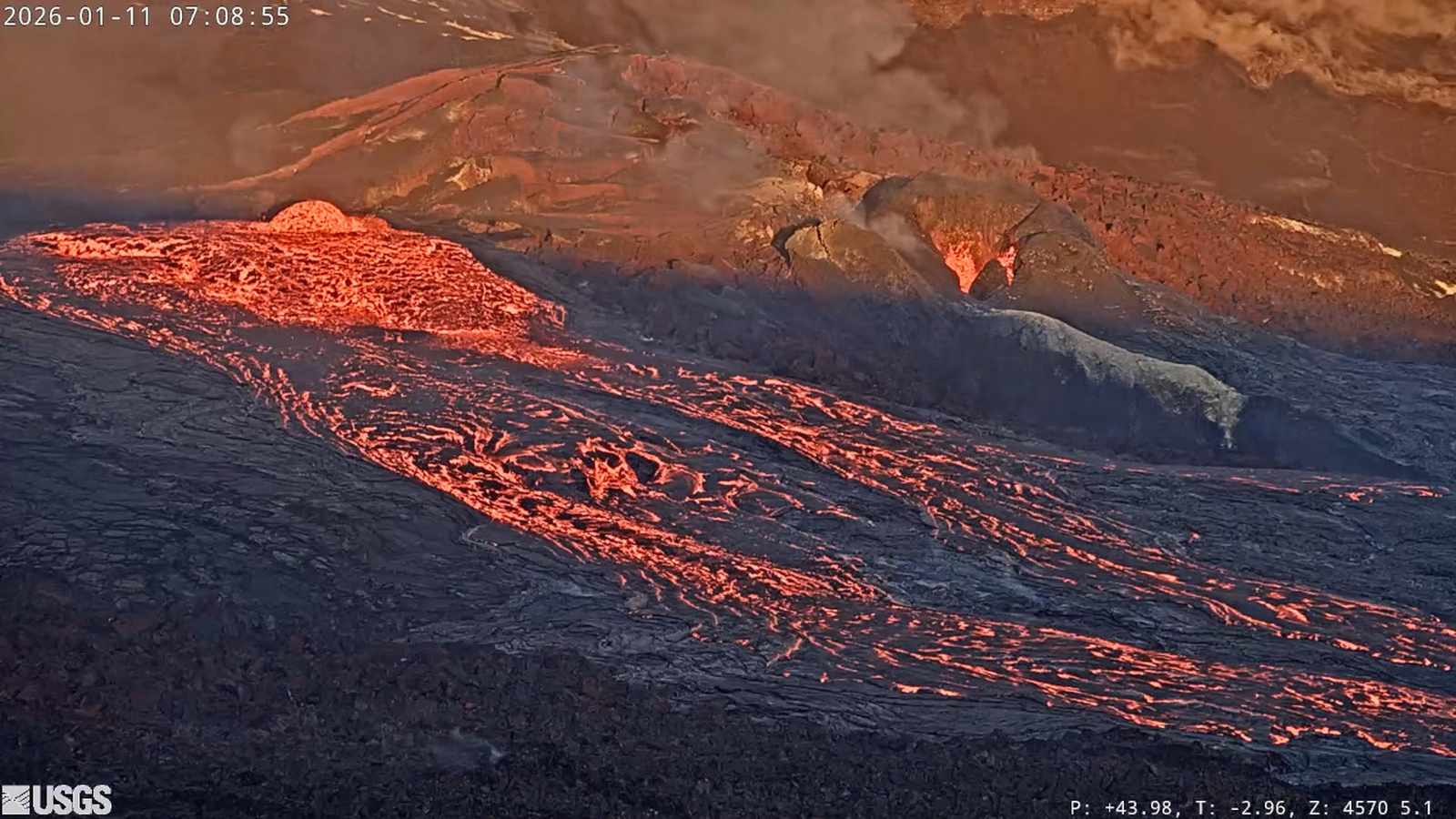
Throughout the preceding days, both the north and south vents within the crater have been particularly active. Observers have reported vigorous spatter, where molten rock fragments are ejected into the air, alongside mesmerizing dome fountains. These fountains form when lava wells up from a vent, creating a dome-like shape before collapsing back into the lava lake. Intermittent lava overflows have also been a consistent feature, with molten rock cascading across the crater floor, painting an ever-changing landscape of fire.
The USGS Hawaiian Volcano Observatory has maintained the Volcano Alert Level at WATCH, a designation that signifies a heightened state of volcanic unrest with potential for eruption. While the current activity is contained, the WATCH level underscores the need for continuous vigilance and readiness for a shift in eruptive behavior.
The Science Behind the Spectacle: Monitoring Kilauea’s Pulse
Understanding Kilauea’s moods requires a sophisticated array of monitoring tools. Scientists at HVO meticulously track various indicators to decipher the volcano’s internal processes. One critical tool is the tiltmeter, which measures minute changes in the slope of the ground, reflecting the inflation or deflation of the magma chamber beneath the summit. These subtle shifts act as a barometer for the pressure within the volcano’s plumbing system.
Since the conclusion of ‘Episode 39’ (the previous eruptive phase), the Uēkahuna tiltmeter (UWD) had recorded a significant 23 microradians of re-inflation beneath Kilauea’s summit. This re-inflation typically indicates a replenishment of magma, building pressure for a subsequent eruption. However, more recently, the UWD tiltmeter showed a slight deflation, dropping to 22 microradians since approximately 4 p.m. yesterday. This deflationary trend is often associated with the ongoing overflows from the north and south vents, suggesting that magma is actively moving and being expelled to the surface, temporarily relieving some of the internal pressure.
Another vital aspect of volcano monitoring involves tracking gas emissions. Volcanic gases, particularly sulfur dioxide (SO2), are powerful indicators of magma depth and movement. Following the end of ‘Episode 39,’ volcanic gas emission rates saw a significant drop. However, current estimates suggest that SO2 emissions remain in the range of 1,000 to 5,000 tonnes per day. This range is typical during previous eruptive pauses, indicating that while the volcano is in a precursory phase, its internal system remains highly active and charged with magmatic gases.
The impact of these sulfur dioxide emissions extends beyond the immediate vicinity of the crater. When SO2 reacts with atmospheric moisture and other gases, it forms volcanic smog, or ‘vog.’ Vog can create hazy conditions downwind, affecting air quality and potentially posing health concerns for residents, particularly those with respiratory sensitivities. The observatory reports light northerly winds, pushing the plume south-southwest of Halemaʻumaʻu, a critical detail for local residents and visitors.
The Dance of Lava: A Glimpse into the Crater
Sunday morning’s update from the USGS Hawaiian Volcano Observatory provided a detailed snapshot of the lava’s intricate movements. While nearly continuous overflows from the north vent characterized much of Saturday and Saturday night, activity there notably decreased after 3 a.m. Sunday. By Sunday morning, only spattering was visible from the north vent, indicating a reduction in the volume of lava being ejected.
The south vent, however, continued its dynamic performance. Intermittent dome fountains persisted throughout the previous day and night, feeding pulses of lava that overflowed several times an hour. As of Sunday morning, these large overflows from the south vent had slowed to approximately one per hour, with the last recorded overflow ending just before 9:10 a.m. HST. Despite the slight decrease in frequency, these overflows continue to feed an active lava flow that stretches over 1500 feet (about 500 meters) across the expansive floor of Halemaʻumaʻu crater. This slow, steady advance of molten rock reshapes the crater floor with each passing hour, creating a fresh, ever-expanding surface.
The prolonged precursory activity, characterized by these intermittent but persistent displays, is a testament to the complex and often unpredictable nature of volcanic eruptions. While scientists can forecast windows of activity, the exact timing and intensity of ‘Episode 40’ remain a subject of ongoing observation and analysis. The continuous monitoring, utilizing advanced instruments and expert geological interpretation, is paramount to ensuring public safety and understanding the fundamental forces shaping our planet.
Kilauea’s Enduring Legacy and Future Outlook
Kilauea has a long and storied history of eruptions, making it a living laboratory for volcanologists. Its effusive, basaltic lava flows are generally less explosive than those of other volcano types, but they can still be incredibly destructive, reshaping landscapes and occasionally threatening infrastructure. The current activity, contained within the National Park, offers a unique opportunity for scientific study without immediate widespread public impact.
The anticipation of ‘Episode 40’ high fountaining highlights the cyclical nature of Kilauea’s eruptions. Periods of inflation, followed by precursory activity, and then often culminating in more vigorous fountaining, are part of the volcano’s natural rhythm. Each episode provides invaluable data, allowing scientists to refine their models and improve their ability to predict future events.
As Kilauea continues its mesmerizing, yet powerful, geological dance, the careful watch by the USGS Hawaiian Volcano Observatory remains critical. The ongoing precursory phase, marked by fluctuating tiltmeter readings and steady gas emissions, underscores the immense, dynamic forces at play beneath the Earth’s surface. While the exact timing of ‘Episode 40’ high fountaining remains elusive, the detailed monitoring provides a crucial window into the volcano’s internal mechanics, allowing for informed preparedness and a deeper appreciation of our planet’s raw power.