
Quick Read
- USC defeated Iowa 26-21 in a rain-soaked comeback, keeping playoff hopes alive.
- Lincoln Riley compared a key defensive stop to a pivotal World Series baseball play, highlighting the role of small margins.
- Riley’s reputation for road victories has faced challenges at USC, with recent wins crucial for playoff aspirations.
- Attention to detail and team culture are central to Riley’s coaching philosophy.
- USC heads to Oregon with playoff hopes hinging on another high-pressure road game.
Lincoln Riley’s Era at USC: Redefining Grit Under Fire
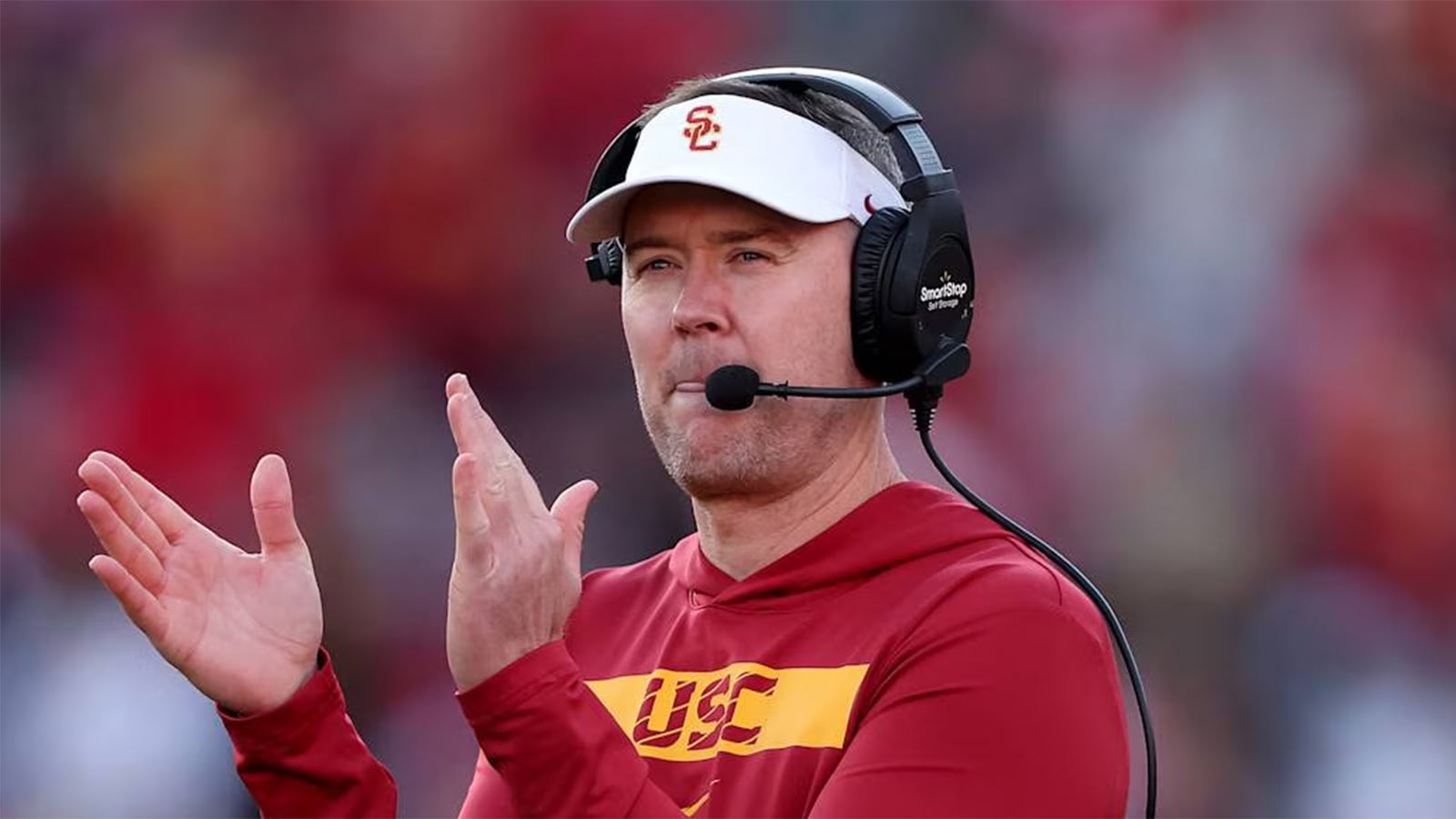
There are seasons in college football where every snap feels like it could tip the scales of destiny. For Lincoln Riley, head coach of the USC Trojans, the 2025 campaign has been a study in navigating those razor-thin margins—where culture, grit, and clutch execution converge in the crucible of high-stakes competition.
On a rain-soaked November afternoon at the Coliseum, the narrative surrounding Riley and his Trojans was as heavy as the downpour itself. USC, battered by injuries and battling persistent stereotypes—“not tough enough, not resilient enough, not Big Ten-enough”—was teetering on the edge. Their College Football Playoff dreams hung in the balance, threatened by a relentless Iowa squad and the weight of national skepticism (Los Angeles Times).
Late in the second quarter, frustration seemed to be winning. The Trojans looked vulnerable, wilting under both the weather and the relentless pressure. But as the game wore on, a transformation occurred. The defense, nearly unraveled by Iowa’s methodical offense, found its footing. And when the final whistle blew, Lincoln Riley was airborne—arms outstretched, celebrating a 26-21 comeback that was, in his words, a “culture win.”
The Anatomy of a Clutch Play: Inches That Decide Everything
Riley’s postgame analysis went beyond football. In his weekly appearance on USC’s Trojans Live, he compared USC’s critical defensive stop against Iowa to a defining moment from Game 7 of the World Series. With Iowa driving late in the fourth quarter, the Hawkeyes faced a fourth down deep in Trojans territory. Their quarterback, Mark Gronowski, found receiver Kaden Wetjen, who appeared poised to extend the drive. But USC’s defenders forced Wetjen out of bounds before he could get a foot down—an incomplete pass, a turnover on downs, and the chance for USC to run out the clock (Trojans Wire).
“We showed the guys the visual from the World Series, from the play at home,” Riley explained. The baseball reference? The Dodgers’ dramatic throw to home plate, where catcher Will Smith kept his foot on the bag just long enough to record a game-saving out, beating Toronto’s Isaiah Kiner-Falefa by mere inches (Yahoo Sports). In both moments, victory hinged on details—on a single foot, a split second, the tiniest of margins.
“When you’re playing these big-time games against really good teams, that’s what it comes down to,” Riley told his squad. “Our guys are straining, and that’s why we’re making our share of plays.”
From Road Warrior to Homefront Battles: Riley’s Changing Reputation
Lincoln Riley arrived at USC with a reputation for dominating on the road. In his five years at Oklahoma, he won 17 of 21 true road games—a statistic that set the bar high. Yet, four years into his USC tenure, that reputation has faced serious challenges. Until a recent victory at Nebraska, Riley hadn’t defeated a quality team on the road since toppling UCLA in November 2022. The only other notable road win came early in his Trojans career, against Oregon State (Los Angeles Times).
Now, as USC heads to Eugene to face No. 8 Oregon with playoff aspirations on the line, Riley’s ability to inspire resilience and execution away from home is under scrutiny. The stakes have never been higher, and the difference between heartbreak and hope may once again come down to a single play—a single inch.
Building a Culture of Resilience: Lessons from the Margin
What separates Lincoln Riley’s USC from its competition isn’t just talent or scheme—it’s a relentless focus on culture. Riley’s “culture win” remark wasn’t just coach-speak; it was an acknowledgment that, in the most pivotal moments, the team’s identity and collective willpower matter as much as play-calling.
The Iowa game showcased this truth. Battered and nearly beaten, the Trojans responded not with panic, but with poise. Defensive adjustments, attention to detail, and sheer determination turned the tide. For Riley, the lesson is clear: “the massive importance of attending to every detail,” as he put it, is what defines champions.
In the world of sports, these are the moments that echo beyond the box score. They’re the plays that players and fans remember for years—the near-misses, the dramatic stops, the split-second decisions that separate victors from the defeated.
The Road Ahead: Playoff Pressure and the Legacy Question
As the Trojans prepare for another high-stakes clash, the narrative surrounding Riley’s tenure is still being written. The questions loom large: Can USC overcome its road woes? Will Riley’s culture-first approach translate into playoff success? And, in a world where inches determine legacies, how will this season’s defining moments shape the future?
For now, Riley’s leadership is marked by an embrace of pressure, a willingness to teach through analogy, and an unwavering belief in his team’s ability to seize the moment. Whether that’s enough to propel USC to the College Football Playoff remains to be seen. But as the Trojans fight for every inch, every detail, and every win, Riley’s journey offers a blueprint for navigating the fine margins that define greatness.
Assessment: Lincoln Riley’s USC tenure is a masterclass in adapting to adversity and building a culture where the smallest details make the biggest difference. The recent victory against Iowa, secured by the slimmest of margins, is not just a testament to tactical acumen, but to the power of collective resilience—a reminder that in elite competition, greatness is often measured in inches.