
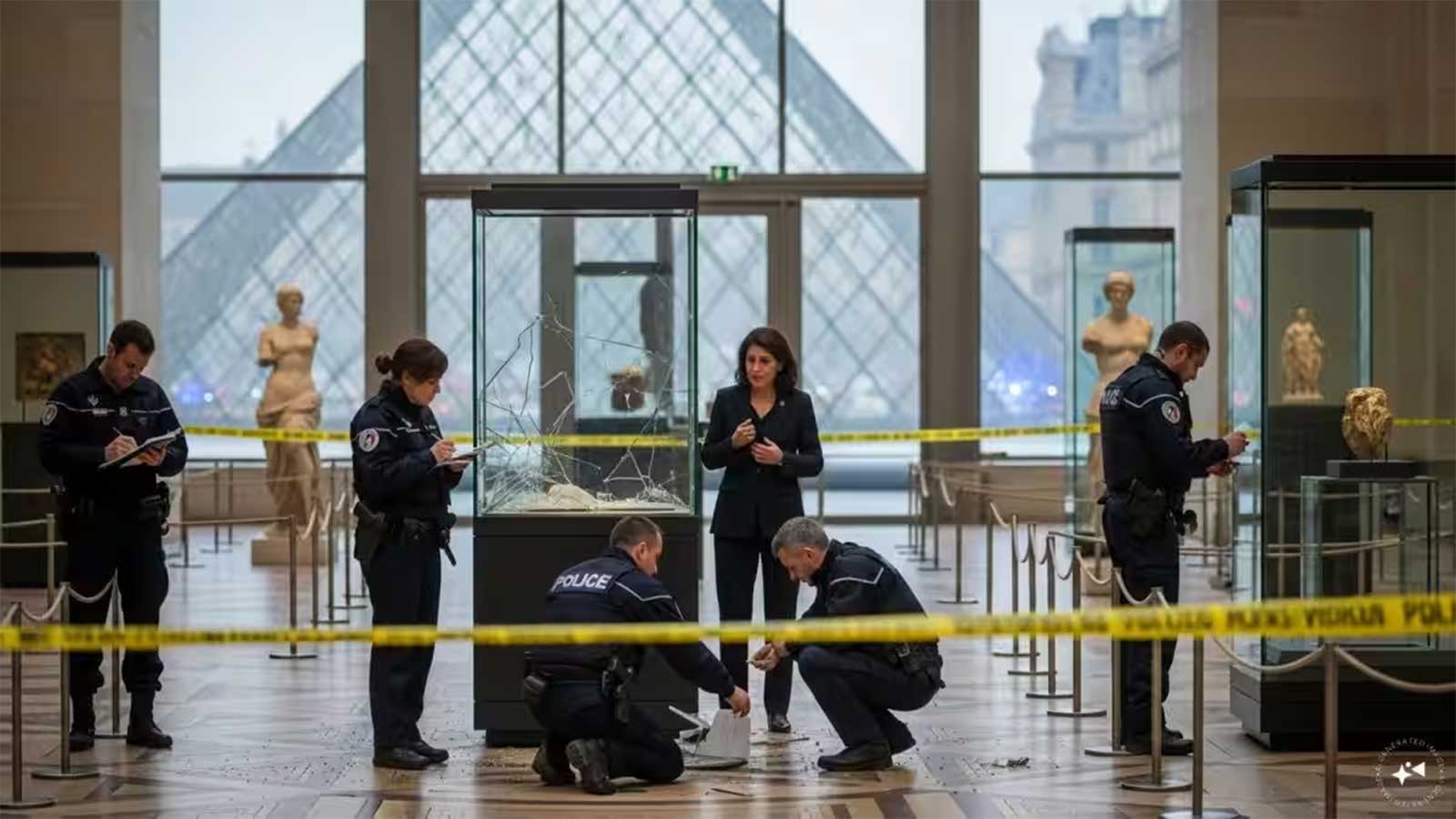
Quick Read
- The Louvre’s video surveillance password was ‘Louvre’, exposing a major security weakness.
- A $102 million jewel heist occurred in just seven minutes, exploiting outdated systems.
- French audits had flagged weak passwords and obsolete software years before the robbery.
- Four suspects have been arrested, but the stolen jewels remain missing.
- French lawmakers are demanding urgent security reforms at the museum.
Louvre’s $102 Million Heist: A Security Breakdown at a Cultural Landmark
When news broke in early November 2025 that the Louvre, the world-renowned Parisian museum, had suffered a $102 million jewel heist, the story captured international headlines. But as the dust settled, a deeper narrative emerged—one that laid bare a series of extraordinary security failures in a place famed for safeguarding history itself.
Password ‘Louvre’: The Surprising Weak Link
In the aftermath of the robbery, investigators and lawmakers quickly zeroed in on the museum’s digital defenses. It was revealed, first by an employee and confirmed by ABC News, that the password for the Louvre’s video surveillance system was simply “Louvre.” This single word, emblematic of the museum’s prestige, turned out to be its Achilles’ heel. The simplicity of the password, which could have been guessed by anyone with basic knowledge of the museum, shocked both cybersecurity experts and the public alike.
French authorities, including museum president Laurence des Cars, faced tough questions from the French Senate. Des Cars admitted that while the alarm and camera systems were technically operational, there had been “a weakness in the perimeter security due to underinvestment.” She stated, “I was appalled by the museum’s security situation when I arrived,” referencing her tenure since 2021. The vulnerability was not just in the digital realm; it extended to physical security as well. Only one external camera was installed outside the Apollo Gallery, the very room where the French crown jewels were kept—and it faced away from the window used by the thieves to enter and exit.
Historic Audit Warnings Ignored
The security weaknesses highlighted by the heist were not entirely new. As Tom’s Hardware and the French publication Libération reported, a 2014 audit by France’s National Agency for the Security of Information Systems (ANSSI) had already flagged the use of “LOUVRE” as a password. The audit also revealed other troubling facts: another museum system built by defense company Thales used “THALES” as its password, and some workstations still ran Windows 2000—an operating system unsupported since 2010 and vulnerable to modern cyberattacks.
Despite this, the museum’s leadership had not enacted a comprehensive overhaul. Earlier in 2025, another audit was conducted, but its findings remain undisclosed. The museum’s curator acknowledged the ongoing need for modernization, but by the time the heist occurred, those changes hadn’t materialized.
The Heist: Seven Minutes of Chaos
According to Paris public prosecutor Laure Beccuau, the entire operation lasted just seven minutes. The thieves broke in through the Apollo Gallery window, using a truck-mounted mechanical cherry picker. The robbery was swift and calculated, taking advantage of the museum’s outdated security infrastructure. Four suspects were later arrested: a taxi driver, a garbage collector and delivery worker, a 37-year-old man, and his domestic partner. Notably, their DNA was found at the scene, and two of the suspects partially admitted involvement. One was apprehended at Charles de Gaulle Airport trying to leave for Algeria.
Despite these arrests, none of the jewels have been recovered. Prosecutors say that “all avenues are being explored,” but at least one suspect remains at large. The Apollo Gallery, home to the stolen crown jewels and other treasures, has been closed since the incident—a stark reminder of the museum’s shaken reputation.
National Embarrassment and a Call to Modernize
The fallout has been swift. French lawmakers are demanding accountability and a full review of museum security across the country. The Louvre’s leadership faces mounting pressure to modernize not just its physical defenses, but its digital infrastructure as well. The incident has become a symbol of how even the most celebrated institutions can fall victim to complacency and underinvestment.
For France, the loss is more than monetary—it’s a blow to national pride and a wake-up call for cultural heritage protection. The absence of the jewels is felt keenly, but so too is the realization that the museum’s famed status could not shield it from basic, preventable mistakes.
Lessons for the World’s Museums
The Louvre heist stands as a cautionary tale for museums and cultural institutions globally. Relying on default or easily guessed passwords, running outdated software, and neglecting regular security audits can leave priceless artifacts vulnerable. The event has sparked international debate about digital security standards in the art world and raised questions about how museums can adapt to increasingly sophisticated threats.
For now, investigators continue their search for the missing jewels, while the Louvre undertakes an urgent review of its security protocols. The message is clear: prestige alone is no defense against the realities of modern crime.
The Louvre heist is a stark reminder that even the most iconic institutions must evolve to meet new threats. The revelation of “Louvre” as a password reflects not just a technical lapse, but a broader failure to prioritize security in an era of growing risks. As museums worldwide take note, the incident may ultimately drive a culture of vigilance and reform in protecting our shared heritage.