
Quick Read
- Charles Kushner publicly criticized France’s response to rising antisemitism.
- Macron condemned Kushner’s statements as undiplomatic and unacceptable.
- France’s foreign ministry formally rebuked Kushner, citing the Vienna Convention.
- France is set to recognize Palestinian statehood, sparking tension with Israel and the U.S.
- The U.S. administration continues to support Israel and opposes Palestinian statehood.
Macron Confronts Kushner’s Accusations on France’s Antisemitism Response
French President Emmanuel Macron has found himself at the center of a diplomatic storm after Charles Kushner, the U.S. ambassador to France and father of Jared Kushner, publicly accused France of failing to confront the dramatic rise of antisemitism. The dispute burst into the open in August when Kushner published a pointed letter in The Wall Street Journal, expressing ‘deep concern over the dramatic rise of antisemitism in France and the lack of sufficient action by your government to confront it.’
In the letter, Kushner drew a direct line between France’s foreign policy—particularly its critical stance toward Israel and moves to recognize Palestinian statehood—and domestic attacks on Jews. He urged Macron to enforce hate-crime laws rigorously, ensure the safety of Jewish institutions, and distance France from any gestures perceived as legitimizing Hamas and its allies.
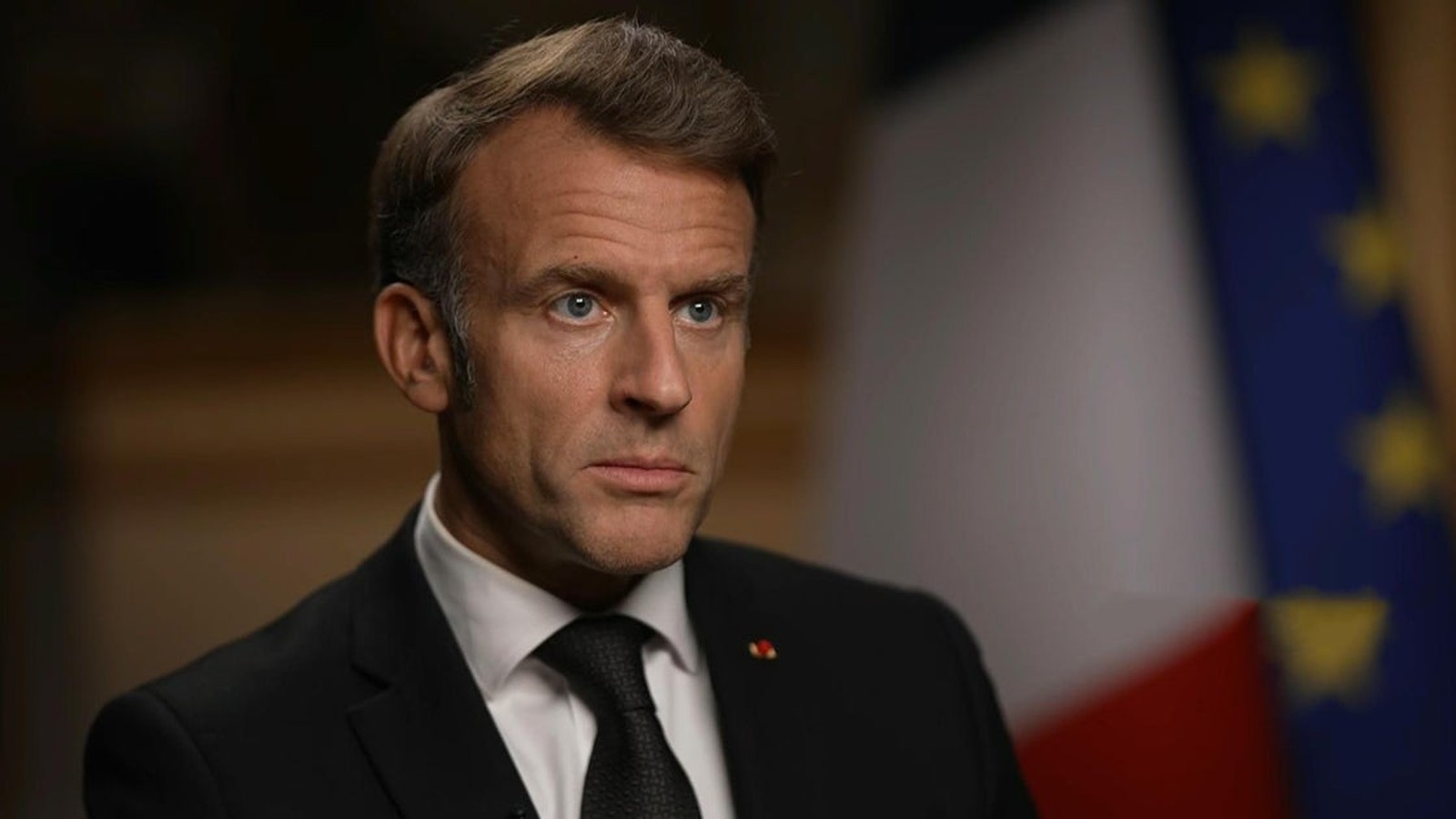
Macron, in a frank interview with Margaret Brennan on CBS’s ‘Face the Nation,’ did not mince words. He called Kushner’s criticism ‘unacceptable’ and ‘a mistake for someone who is supposed to be a diplomat.’ The French president emphasized, ‘If you are a diplomat, you have to follow the rule of diplomacy.’ Macron argued that public rebukes by diplomats risk undermining bilateral relations and insisted that French ambassadors would never be allowed to make similar statements about the internal affairs of another country.
Diplomatic Fallout: Vienna Convention and Formal Rebuke
The French foreign ministry responded swiftly, summoning Kushner for a formal rebuke and referencing the 1961 Vienna Convention on Diplomatic Relations, which obligates diplomats not to interfere in the internal affairs of their host countries. France’s ministry stated that Kushner’s remarks ‘run counter to international law,’ underscoring the seriousness with which Paris viewed the breach.
The U.S. State Department, meanwhile, stood by Kushner, telling Associated Press that ‘he is our U.S. government representative in France and is doing a great job advancing our national interests in that role.’ The episode has exposed a deepening rift between two longtime allies, with Macron signaling that American taxpayer money should not finance such public interventions.
Antisemitism, Anti-Zionism, and Policy Lines
Kushner’s letter asserted that ‘anti-Zionism is antisemitism — plain and simple.’ Macron, however, pushed back, pointing out that criticism of Israeli government policy does not automatically equate to antisemitism. ‘I was the first president in France to adopt the definition of antisemitism, making it the equivalent of anti-Zionism,’ Macron said, but he stressed that disagreement with Israeli Prime Minister Benjamin Netanyahu’s policies is not inherently antisemitic.
Macron’s stance is nuanced. He acknowledged that sometimes criticism of Israel is motivated by hatred of Jews, but rejected the blanket assertion that all criticism is antisemitic. ‘It doesn’t mean that you are not allowed to be in disagreement with the government of Israel,’ he told Brennan. The French president emphasized that his calls for Palestinian statehood and his objections to the war in Gaza do not threaten French Jews, nor do they stem from antisemitic intent.
France’s Palestinian Statehood Push: Global Ramifications
The controversy arrives amid France’s bold decision to recognize Palestinian statehood, set to be announced at the United Nations General Assembly in New York. Macron’s move, developed alongside Saudi Arabia, involves a multi-phase plan: first, a ceasefire between Israel and Hamas and the release of hostages; second, the restoration of humanitarian aid and Gaza’s reconstruction; and third, a two-state solution.
France’s recognition joins a chorus of Western nations—Britain, Australia, and Canada—willing to endorse Palestinian self-determination. The decision is more than symbolic: it marks a break from the U.S. administration, which has blocked Palestinian Authority members from attending the diplomatic gathering and remains a steadfast supporter of Israel. The growing isolation of the current Israeli government is palpable, as it refuses to end the war in Gaza despite mounting international pressure.
Macron has positioned France as a mediator, persuading Palestinian Authority leader Mahmoud Abbas to denounce Hamas, commit to reforms, and hold elections. ‘Recognizing the Palestinian state today is the only way to provide a political solution to a situation which has to stop,’ Macron argued. Netanyahu, however, fiercely opposed the move, accusing Macron of fueling antisemitism and jeopardizing Jewish safety.
U.S.-France Relations: Strains and Uncertainties
The Kushner-Macron clash underscores a broader recalibration in Western policy toward the Israeli-Palestinian conflict. President Trump’s administration has taken a hard line, proposing the relocation of Gazans to other countries and maintaining robust military support for Israel. Macron’s willingness to diverge from Washington, and to challenge Israeli policy, signals a shift in France’s diplomatic posture.
For many observers, the episode raises questions about the proper role of ambassadors, the boundaries of diplomatic speech, and the impact of foreign policy on minority communities. Macron’s rebuke of Kushner is not simply about protocol—it reflects the tension between moral advocacy and diplomatic restraint. The incident has become a flashpoint for broader debates on antisemitism, free speech, and the politics of recognition.
As the world watches developments at the United Nations, the reverberations of this dispute will be felt far beyond Paris and Washington. Both governments face the challenge of balancing international obligations with domestic concerns, all while maintaining the delicate art of diplomacy.
Macron’s response to Kushner’s criticism is more than a matter of diplomatic etiquette—it is a clear assertion of France’s sovereign right to shape its policies free from external interference. By insisting on the distinction between legitimate critique and bigotry, Macron navigates the fraught terrain of identity politics and international law, reminding the world that leadership sometimes means standing firm against even the closest of allies.