
Quick Read
- Marty Supreme is a 2025 film by Josh Safdie, starring Timothée Chalamet.
- The movie is set in 1950s New York but features a soundtrack of 1980s hits.
- Composer Daniel Lopatin blended 80s synths with orchestral elements to mirror the film’s theme of memory and ambition.
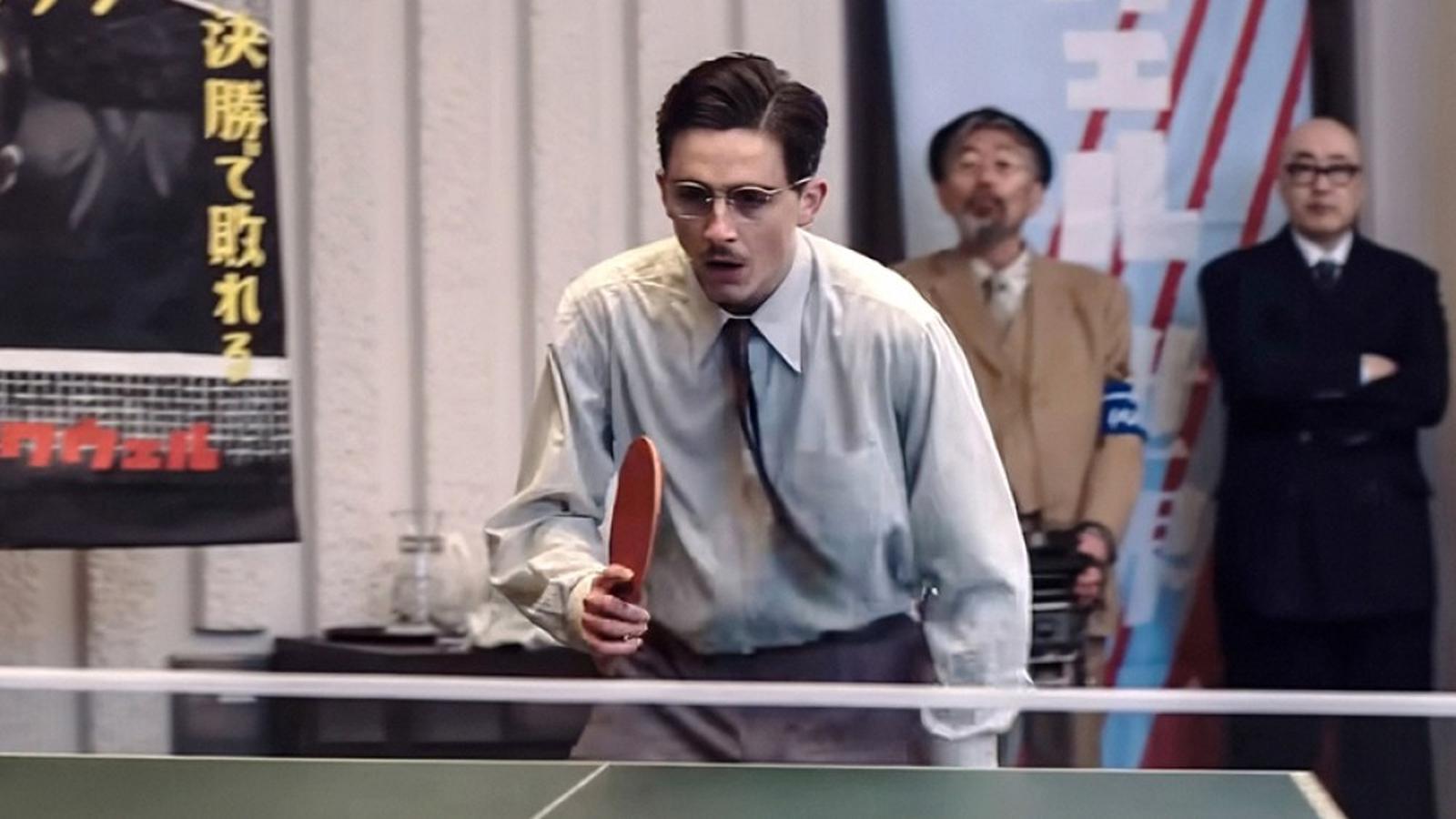
Josh Safdie’s latest film, Marty Supreme, isn’t your typical period drama. The story follows Marty, played by Timothée Chalamet, a restless young man from New York’s Lower East Side in the 1950s, whose greatest ambition is to dominate the world of table tennis. But Safdie, known for his audacious filmmaking style, throws an unexpected curveball: the soundtrack is packed with iconic 1980s hits, including Tears for Fears’ “Everybody Wants to Rule the World,” Peter Gabriel’s “I Have the Touch,” and New Order’s “The Perfect Kiss.”
On paper, the fusion of 80s synth-pop and 50s visuals might seem jarring, but it’s precisely this anachronism that gives the film its pulse. As Safdie recounted to Variety, the inspiration came from watching grainy footage of a 1948 British Open table tennis match. He saw a wiry, cocky player whose energy reminded him of Marty’s character. Safdie then experimented by overlaying Peter Gabriel’s music on the archival video—and something clicked. “There was a contemporary quality to seeing the anachronistic music paired with the ‘40s or early ‘50s,” he said. It wasn’t just nostalgia, but a conversation between eras, where the past haunts the future, and the future haunts the past.
The film’s themes echo this temporal dialogue. In the 1980s, President Reagan fueled America’s longing for the supposed innocence of the 1950s, creating a cultural loop. Movies like “Back to the Future” literally traveled back in time, and Safdie’s film taps into this same cyclical energy. At one point, he even considered an alternate ending set in the 1980s: Marty, now older, attends a Tears for Fears concert with his granddaughter, reflecting on his youth through the lyrics of “Everybody Wants to Rule the World.” Though the scene was cut, the spirit lingers throughout the film’s soundtrack.
The score, crafted by Daniel Lopatin (known as Oneohtrix Point Never), adds another layer. Lopatin, a pioneer of vaporwave—a genre that itself remixes and abstracts 1980s sounds—was the perfect collaborator. He approached the music as an extension of Marty’s personality: energetic, buoyant, always striving. Lopatin’s score uses fast, percussive mallet strikes to mimic ping-pong balls, echoing the rhythms of table tennis and the pulse of 80s synth-pop. “There’s an energy to him, a buoyancy and a lightness that is mirrored in the game itself,” Lopatin explained.
Delving deeper, Lopatin was inspired by memory and time, building the score as a kind of abstraction: what would it feel like to remember coming of age in the 1950s while hearing Tears for Fears blasting in your ears? The result is a sonic wave where past and present dissolve into each other. Lopatin layered digital synthesizers like the Yamaha DX7—an icon of 80s sound—with flutes, saxophones, and strings, creating a bridge between Marty’s youthful ambition and the era-bending spirit of the film.
Ultimately, Marty Supreme becomes more than a story about table tennis—it’s a meditation on how we carry the past into the future, and how ambition can be both a memory and a force driving us forward. The soundtrack is no mere background; it’s a character in its own right, animating the film with the restless energy of Marty himself. Safdie believes that when music, story, and character sync perfectly, the result is a movie “teeming with life.”
By daring to blend eras and genres, ‘Marty Supreme’ invites viewers to question the boundaries of nostalgia and innovation. The film’s heartbeat is its refusal to let time dictate its rules—proving that energy, ambition, and music can make any story timeless.
Sources: Variety