
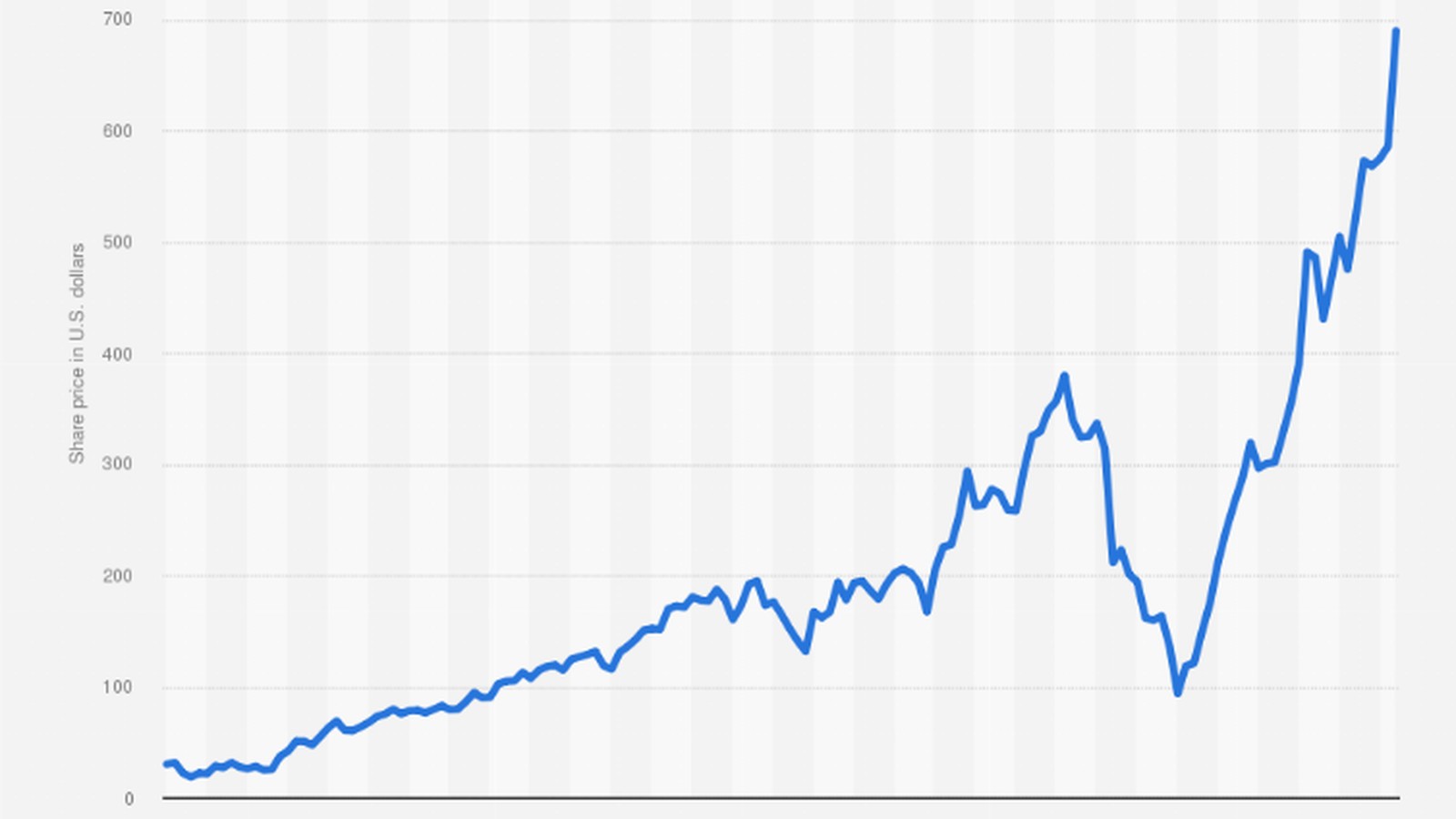
Quick Read
- Meta Platforms (META) shares traded at $661.46 on February 9, 2026, down 1.31% for the day.
- Analysts project Meta could reach a $4 trillion valuation by 2032, driven by AI monetization.
- The company reported a 24% revenue increase to $59.9 billion in Q4 2025, with Q1 2026 guidance pointing to 30% year-over-year growth.
- Institutional investors like Lingohr Asset Management and Vanguard Group significantly boosted their Meta holdings in 2025.
- The next major catalyst is Meta’s earnings guidance on April 29, 2026, which will provide clarity on AI-driven ad pricing and capex.
YEREVAN (Azat TV) – Meta Platforms Inc. (NASDAQ: META) shares traded at $661.46 on Monday, February 9, 2026, attracting significant investor attention as a compelling analysis outlines a potential path to a $4 trillion valuation by 2032. This ambitious projection is firmly anchored in the social networking giant’s accelerating artificial intelligence (AI) momentum, which is increasingly translating into robust revenue growth and improved profitability across its advertising, commerce, and messaging platforms.
Meta’s AI-Driven Growth Strategy
Meta’s recent financial performance underscores the efficacy of its AI strategy. The company reported a 24% revenue jump to $59.9 billion for the fourth quarter of 2025, surpassing analyst estimates, with earnings per share (EPS) reaching $8.88 against a consensus of $8.16. Furthermore, Meta’s guidance for the first quarter of 2026 points to approximately 30% year-over-year revenue growth, signaling sustained acceleration. This growth is largely attributed to AI-targeted ads, enhanced ad relevance, and the expansion of click-to-message formats within WhatsApp and improved Shops checkout experiences, which collectively boost advertiser return on investment (ROI) and pricing power, according to Meyka.com.
Industry leaders are taking note of Meta’s advancements in AI. Jensen Huang, CEO of Nvidia, has publicly recognized Meta as an AI profit pioneer. Huang highlighted the company’s vast user base, extensive data, and significant compute infrastructure buildout as key factors enabling it to effectively monetize AI model gains. This endorsement aligns with Meta’s strategic decision to extend its MTIA (Meta Training and Inference Accelerator) from inference to training, indicating a sustained hyperscaler demand for AI infrastructure and a long-term commitment to AI revenue capture.
Institutional Investment and Market Sentiment
Institutional investors have shown varied but significant interest in Meta Platforms. Lingohr Asset Management GmbH, for instance, dramatically increased its holdings in Meta by 692.3% in the third quarter of 2025, acquiring an additional 11,194 shares to bring its total to 12,811 shares, valued at $9.41 million. This made Meta its ninth-largest holding, comprising 2.3% of its investment portfolio, as reported by MarketBeat.
Other major institutional players also boosted their stakes in the second quarter of 2025. Vanguard Group Inc. grew its position by 0.8%, now owning over 192.5 million shares worth $142.15 billion. State Street Corp. increased its holdings by 1.9% to 86.9 million shares, valued at $64.16 billion. Geode Capital Management LLC and Charles Schwab Investment Management Inc. also saw modest increases of 1.3% and 1.8% respectively. Norges Bank notably purchased a new stake valued at approximately $23.16 billion. However, some funds, such as First Eagle Investment Management, have trimmed their positions, reflecting a mixed sentiment that combines profit-taking with conviction in the stock’s long-term potential. Despite some trimming, institutional investors collectively own 79.91% of Meta’s stock.
Conversely, Meta has seen some insider selling. CFO Susan J. Li sold 6,875 shares in November 2025, reducing her direct ownership by 7.22%. CAO Aaron Anderson and COO Javier Olivan also made smaller sales during the same period. While these sales are modest in isolation, they contribute to narratives of near-term profit-taking, according to SEC filings.
Financial Outlook and Analyst Projections
Meta Platforms currently boasts a market capitalization of approximately $1.67 trillion. The stock trades near a price-to-earnings (P/E) ratio of 28.15, with a price-to-earnings-growth (PEG) ratio of 1.13. The company maintains strong operating margins at 41.4% and net margins at 30.1%, with a robust return on equity (ROE) of 38.61%. Meta also declared a quarterly dividend of $0.525 per share, paid on December 23, 2025, representing a 0.3% dividend yield.
Wall Street analysts largely maintain a bullish outlook on Meta. The stock holds a consensus rating of ‘Moderate Buy’ with an average price target of $847.40, according to MarketBeat data. Several firms revised their price targets upwards in late January 2026: Stifel Nicolaus increased its target from $785.00 to $820.00, Bank of America from $810.00 to $885.00, and Robert W. Baird from $815.00 to $830.00. Rothschild & Co Redburn set a particularly high price objective of $900.00. These revised targets reflect confidence in Meta’s ability to capitalize on its AI investments and sustained revenue growth.
Navigating Future Catalysts and Risks
The next major catalyst for Meta Platforms will be its earnings guidance announcement on April 29, 2026. Investors will be closely monitoring signals regarding AI-driven ad pricing, the adoption rate of Shops, and the pacing of capital expenditures (capex). While Meta’s elevated 2026 capex guide signals continued investment in AI infrastructure, concerns exist about the capital-intensive nature of this buildout, with capex near 34.7% of revenue, which could potentially pressure margins if returns on invested capital (ROIC) do not expand significantly beyond the current 18%.
Several risks could weigh on Meta’s stock performance. Broad market pressures, including fears of an AI spending bubble leading to a wider Big Tech sell-off, have impacted the sector. Regulatory scrutiny regarding data collection practices and renewed compliance concerns also pose reputational and legal risks in key markets. Sell-side caution, such as Needham’s warning of a potential 10-15% downside due to valuation and capex risks, could amplify short-term selling if investors perceive margin pressure from rising AI spend, as noted by MarketBeat.
Despite these headwinds, Meta’s consistent execution in leveraging AI to enhance core product monetization and drive revenue growth positions the company favorably for long-term value creation, making the projected $4 trillion valuation by 2032 a plausible, albeit challenging, trajectory reliant on sustained operational discipline and effective capital allocation.