
Quick Read
- The documentary ‘Mr. Nobody Against Putin’ received an Oscar nomination for Best Documentary Feature at the 98th Academy Awards.
- The film, a Czech-Danish co-production, centers on Russian teacher Pavel Talankin, who secretly documented pro-war indoctrination in schools after the 2022 Ukraine invasion.
- Talankin’s footage was smuggled out of Russia, and he later received asylum in the European Union.
- After premiering at Sundance in 2025, the film embarked on a year-long festival run, winning multiple international awards, before securing distribution from Kino Lorber, timed with its Oscar buzz.
- The nomination highlights the evolving and challenging landscape for independent documentary distribution, where filmmakers often face hurdles in securing traditional deals.
The critically acclaimed Czech-Danish co-production, “Mr. Nobody Against Putin,” has achieved a significant milestone, securing an Oscar nomination for Best Documentary Feature at the 98th Academy Awards. Announced on January 22, 2026, this recognition not only highlights the film’s powerful and timely narrative of individual resistance against state-sponsored indoctrination but also casts a spotlight on the increasingly complex and challenging landscape for independent documentary distribution in the global film industry.
A Teacher’s Courageous Stand Against Indoctrination
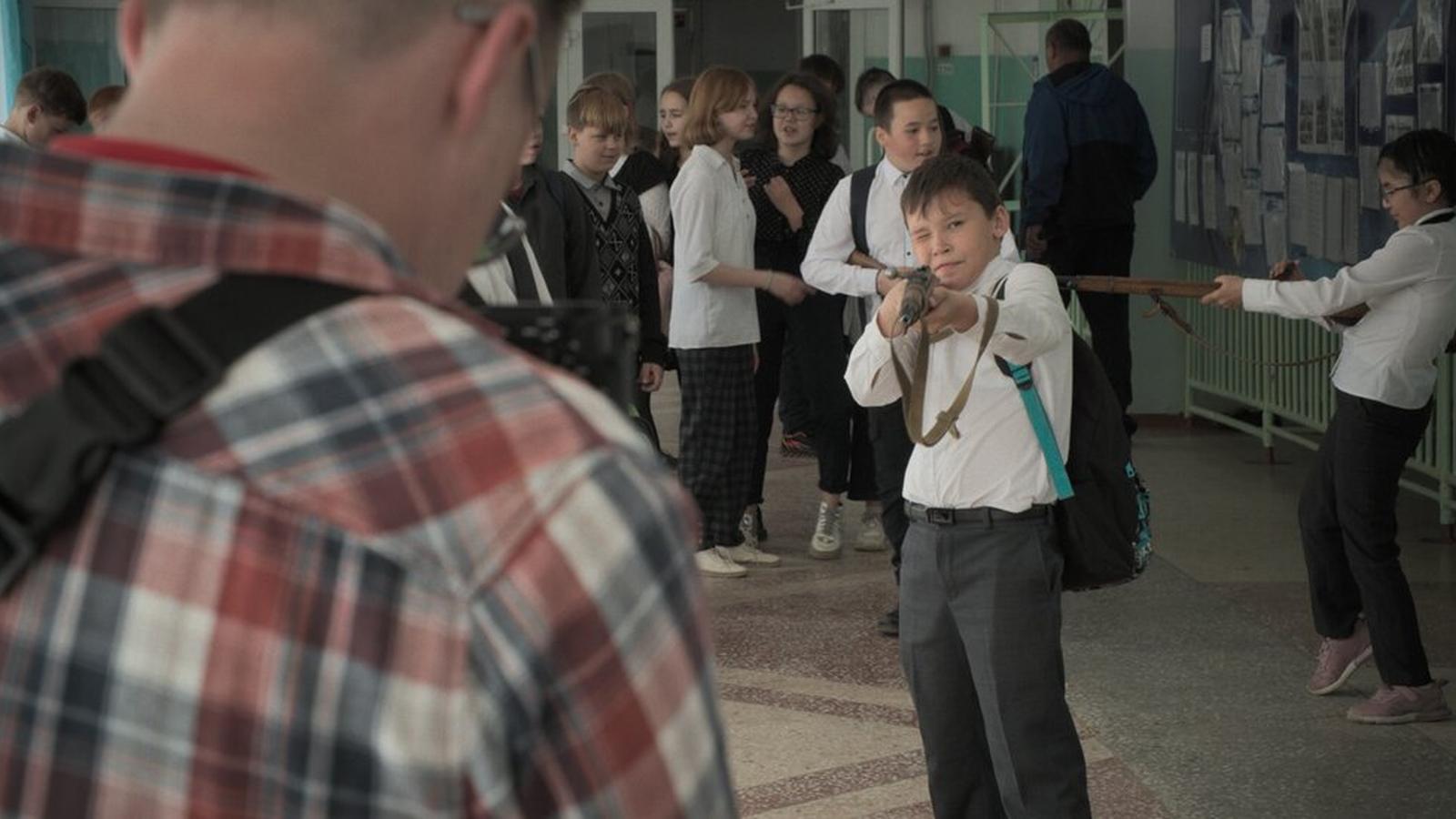
Directed by David Borenstein and Pavel Talankin, “Mr. Nobody Against Putin” centers on Pavel Talankin, a primary school teacher in Karabash, Russia. Following Russia’s full-scale invasion of Ukraine in 2022, Talankin’s role as a school videographer and event coordinator took a dramatic turn. He was instructed to film patriotic lessons and state-mandated activities, designed to instill pro-war messages in students as part of a government-mandated curriculum.
Instead of complying, Talankin made a courageous decision: he began secretly documenting the pervasive atmosphere of fear, indoctrination, and moral compromise surrounding him. “Every day, I had to film children reciting slogans and teachers repeating lies,” Talankin stated. “I decided I didn’t.” This clandestine footage, recorded under immense personal risk, became the backbone of the 102-minute documentary. Talankin eventually fled Russia and was granted asylum in the European Union, with the smuggled footage forming a poignant testament to his resistance.
The New York Times lauded the film as an “effective look of one man’s resistance against President Vladimir V. Putin’s patriotic curriculum policy,” emphasizing Talankin’s role as a “congenial mentor” known for fostering a progressive space for students before the government’s intervention. The film powerfully illustrates the moral dilemma faced by ordinary citizens under authoritarian regimes and the profound impact of individual acts of defiance.
From Sundance Premiere to Oscar Contender
The Oscar nomination for “Mr. Nobody Against Putin” represents the culmination of a year-long journey that began with its premiere at the Sundance Film Festival in 2025. Despite its critical acclaim, the film initially struggled to secure a major distribution deal, a common hurdle for independent documentaries in today’s market. Producers initially pursued larger opportunities, but when these did not materialize, the film embarked on an extensive international festival circuit.
Its journey included screenings at dozens of domestic and international festivals, garnering a slew of awards from prestigious events such as Cinetopia in the United States, Biografilm in Italy, DocsBarcelona in Spain, and ZagrebDox in Croatia. It also resonated deeply with Czech audiences, receiving the Audience Award at the Ji.hlava International Documentary Film Festival and enjoying a theatrical release in Czech cinemas through distributor Bontonfilm in November.
The film’s sustained buzz and critical recognition eventually led to its Oscar shortlisting, followed by the coveted nomination. Arthouse distributor Kino Lorber, which had been engaged with the film since its Sundance premiere, seized the opportunity, acquiring the rights and rushing to release it on January 22, 2026, coinciding with the Oscar nominations announcement. This strategic timing aimed to capitalize on the heightened excitement and hype surrounding the film, demonstrating a new approach to distribution in a challenging market.
The nomination itself was noted as an “upset” by Prague Reporter, as “Mr. Nobody Against Putin” surpassed presumptive favorites like “2000 Meters to Andriivka” and “Cover-Up” to secure its place among the final five nominees for Best Documentary Feature. This unexpected success further underscores the film’s compelling narrative and artistic merit.
Czech Creative Fingerprints and International Collaboration
While the harrowing story of “Mr. Nobody Against Putin” unfolds in Russia, a significant portion of its final shape and creative input originated in Czechia. The film is a collaborative effort between Denmark’s Made in Copenhagen and Prague-based PINK Productions, led by producers Radovan Síbrt and Alžběta Karásková. The Czech contribution was extensive, spanning crucial post-production work handled by Prague’s UPP studio under Ivo Marák, an original score composed by Michal Rataj, and visual materials contributed by photographer František Svatoš.
Furthermore, the project received essential backing from key Czech institutions, including the Czech Audiovisual Fund, Czech Television, and the Czech Film Center. This international collaboration, particularly the strong involvement of the Czech film industry, has been a point of pride for its producers. Karásková described the awards campaign as “a culmination of a long and difficult journey,” highlighting how the film’s international reception reflects both its artistic achievement and the vital importance of cross-border partnerships in bringing such impactful stories to a global audience.
Navigating a Challenged Documentary Distribution Market
The trajectory of “Mr. Nobody Against Putin” serves as a compelling case study for the evolving challenges faced by independent documentaries. According to IndieWire, the market for indie docs is “really, really challenged,” with traditional buyers and streamers less inclined to acquire or license films as they once did, especially outside of specific genres like true crime or celebrity biographies. This shift means that securing a traditional distribution deal, particularly one with a significant advance, is no longer an expected outcome for many filmmakers.
Lisa Schwartz, Chief Distribution and Revenue Officer for Kino Lorber, noted that “necessity is the mother of invention” in this market, forcing filmmakers and producers to “think outside the box.” Many are now “taking it into their own hands and getting creative,” even if it means a “big, heavy lift” of self-distribution and extensive marketing efforts. Sales agents acknowledge this dire reality, advising filmmakers to be “scrappier and a little less precious” about their projects. Deals that do materialize may only cover distribution costs, with no advance, and additional marketing (P&A) spend for theatrical releases is often a non-starter without significant name recognition.
Jenifer Westphal, CEO of Wavelength, a company with films at Sundance this year, echoed these sentiments, stating that for documentaries, “the equity play… is over. I don’t think anyone’s expecting to make equity back or anything like that.” She emphasized that filmmakers must prioritize: “there’s money, there’s eyeballs, or there’s awards. Pick one, because generally you don’t get all three.” While a Sundance premiere remains a “golden ticket” for exposure, the focus has shifted from immediate sales to a “long plan” of building audience engagement and awards potential.
For “Mr. Nobody Against Putin,” its year-long festival run and international streaming releases, coupled with the eventual Oscar nomination, illustrate this “marathon, not a sprint” approach. Kino Lorber’s delayed acquisition, timed to maximum buzz, is a direct response to this new market reality, demonstrating how critical acclaim and awards potential can still drive distribution, even if the path is unconventional.
The Oscar nomination for “Mr. Nobody Against Putin” is a testament to the enduring power of documentary filmmaking to bring urgent, politically charged narratives to global attention, even as the industry grapples with profound shifts in how these stories are funded, distributed, and ultimately seen. Its success highlights that while traditional commercial avenues may be dwindling, the pursuit of artistic recognition and the compelling force of truth can still carve a path for vital cinematic works.