
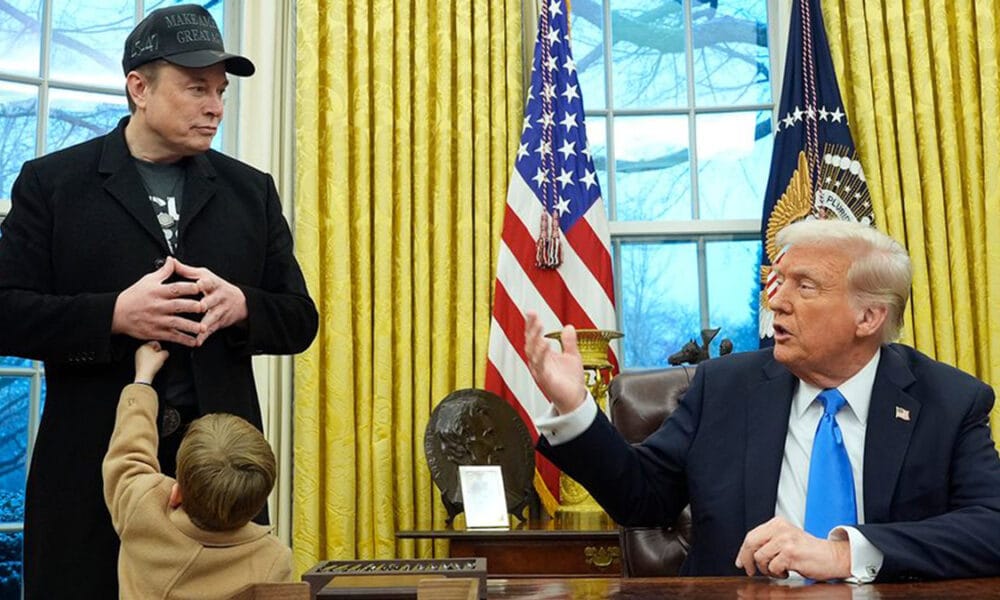
Trump Administration Clarifies Elon Musk’s White House Role
In a late-night court filing on Monday, the Trump administration addressed the ongoing controversy surrounding Elon Musk’s role within the government, asserting that he is not an employee of the Department of Government Efficiency (DOGE). Instead, the administration clarified that Musk serves as a White House advisor, a position comparable to that held by Anita Dunn, a former advisor to President Biden.
Court Filing States Musk is a Senior Advisor, Not a DOGE Employee
The clarification was submitted as a signed declaration by Joshua Fisher, director of the Office of Administration, to the D.C. District Court Judge Tanya Chutkan. This filing was a direct response to a lawsuit filed by position and his level of authority. According to Fisher’s declaration, Musk holds the position of “a non-career Special Government Employee” within the White House Office, functioning as a “Senior Advisor to the President.”
Comparison to Anita Dunn: Contextualizing Musk’s Advisory Role
To provide further context, the Trump administration drew a parallel between Musk’s role and that of Anita Dunn, a former top advisor in the Biden White House. Dunn, a long-time political strategist with ties to $1 Barack Obama, served as a Senior Advisor to President Biden, focusing on political strategy and communication. By referencing Dunn’s advisory role, the administration aimed to illustrate that employing Senior Advisors with specific expertise is a common practice across different administrations, and that Musk’s position is within established norms.
Judge Chutkan’s Skepticism: Concerns Over Executive Overreach
Judge Tanya Chutkan, presiding over the case brought by the state attorneys general, expressed skepticism regarding the arguments presented in defense of Musk’s role. During a hearing on Monday, Judge Chutkan questioned the actual impact and authority of DOGE, asking what specific harm the department imposed and whether any federal employees had been terminated as a result of its actions. Her line of questioning indicates a concern about potential executive overreach and the extent of power delegated to DOGE and its advisors.
State Attorneys General Lawsuit: Challenging Musk’s Authority
The lawsuit, initiated by 14 state attorneys general, directly challenges what they describe as the “unlawful delegation of executive power to Elon Musk.” The states argue that granting significant authority to Musk, an unelected individual, constitutes an illegal expansion of executive power. They assert that empowering a private citizen with broad access to government functions and data undermines democratic principles and could lead to detrimental policy decisions.
DOGE’s Mandate and Controversy: Data Access and Budget Oversight
The controversy stems from the Department of Government Efficiency’s (DOGE) mandate to streamline government operations and cut wasteful spending. However, concerns have been raised about DOGE’s access to sensitive systems, including critical IRS systems containing taxpayer information, and its broad oversight of multiple federal agencies, including the Departments of Education, Labor, Health and Human Services, Energy, Transportation, and Commerce. Critics argue that DOGE’s actions, particularly under the influence of an external advisor like Musk, could lead to the dismantling of essential protections for citizens and undue influence by private interests.
For international news visit Azat TV World Section.