
Quick Read
- NASA’s Artemis II mission launch is delayed to no earlier than April 2026 due to a helium flow issue in the SLS rocket.
- The SLS rocket and Orion spacecraft will be rolled back to the Vehicle Assembly Building (VAB) for repairs.
- This new problem emerged after a successful wet dress rehearsal that had seemingly resolved previous hydrogen fuel leak issues.
- The crew of four astronauts will embark on a 10-day trip around the Moon, marking the first human deep-space travel since 1972.
- The mission is a critical step towards establishing a long-term human presence on the Moon and future Mars exploration.
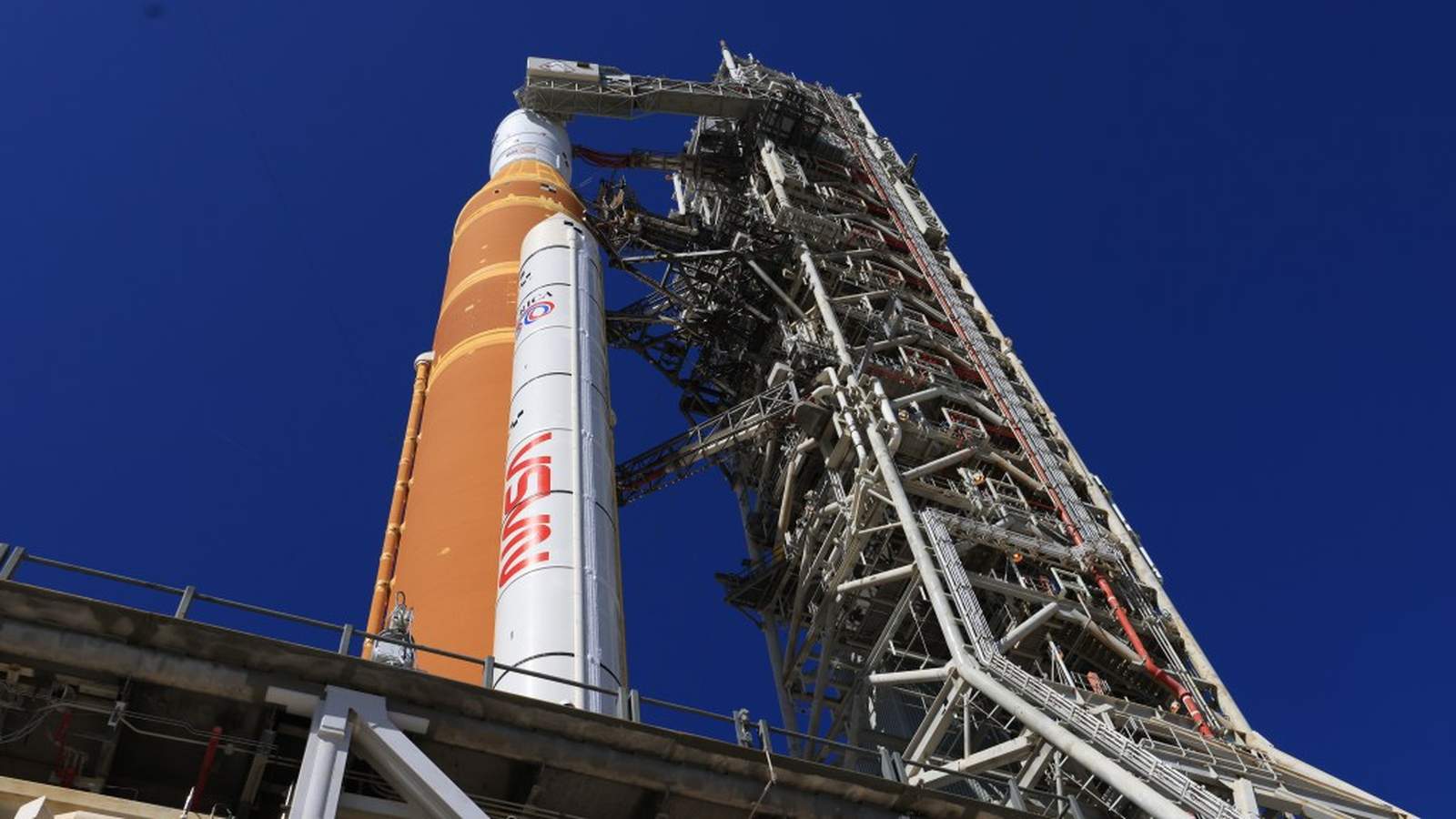
CAPE CANAVERAL (Azat TV) – NASA’s ambitious Artemis II mission, designed to send four astronauts on a historic journey around the Moon, has encountered another technical setback, forcing a rollback of its Space Launch System (SLS) rocket and pushing the launch target to no earlier than April 2026. This latest delay impacts a critical step in humanity’s renewed effort to establish a long-term presence on the lunar surface and eventually venture to Mars.
The U.S. space agency announced on Saturday that engineers detected an unexpected issue with the flow of helium in the upper stage of the SLS rocket. Helium is crucial for pressurizing fuel tanks and purging propellant lines, especially given the super-cold temperatures of the liquid hydrogen and oxygen propellants. This discovery came as a surprise, emerging after a ‘wet dress rehearsal’ fueling test had concluded successfully on Thursday, with officials initially expressing confidence in a potential March launch.
Artemis II Mission Faces New Technical Glitch
The helium problem necessitates moving the massive 3.5 million-pound SLS rocket and its Orion spacecraft off Launchpad 39B at Kennedy Space Center and back into the Vehicle Assembly Building (VAB) for servicing. This intricate 4-mile journey, which can take up to 12 hours, was scheduled to begin early Wednesday, February 25. NASA Administrator Jared Isaacman indicated that the issue, whether a faulty filter, a misbehaving valve on the rocket, or a problem with a quick disconnect umbilical, must be addressed in the VAB.
This decision represents an abrupt reversal from earlier optimism. Just last Friday, following the wet dress rehearsal, NASA leaders had characterized the test as a success, believing they had resolved persistent hydrogen fuel leaks that plagued earlier rehearsals. However, the unexpected helium anomaly has taken mission teams back to the drawing board, casting doubt on the previously assessed April launch windows of April 1, 3, 4, 5, and 6, and potentially opening up dates in May and June.
From Hydrogen Leaks to Helium Flow Issues
The Artemis program has faced a rocky road to launch, with technical challenges repeatedly delaying its missions. The hydrogen leaks, a notorious problem since the uncrewed Artemis I test flight in 2022, had been a primary concern. Efforts to replace seals around the rocket’s propellant lines appeared successful during the most recent wet dress rehearsal. However, Artemis launch director Charlie Blackwell-Thompson noted that while the hydrogen issue seemed fixed, the exact cause of some unexpected moisture near the seals remained unclear, suggesting a complex interplay of factors.
The emergence of the helium issue highlights the inherent complexities of deep-space missions. Helium’s inert properties and ability to remain gaseous at cryogenic temperatures make it ideal for rocket operations, but its unexpected failure to flow forced engineers to use a backup method to keep the rocket safe. Accessing and remediating such issues often requires the extensive facilities of the VAB. Rolling the rocket back and forth also adds stress to the vehicle, potentially aggravating existing hardware sensitivities, including the very hydrogen seals that were recently replaced.
The Crew and Objectives of Artemis II
When it eventually launches, Artemis II is slated to carry NASA astronauts Reid Wiseman, Victor Glover, and Christina Koch, alongside Canadian Space Agency astronaut Jeremy Hansen. Their 10-day mission will involve a slingshot trajectory around the Moon, marking the first time humans have traveled to deep space since the Apollo program concluded in 1972. The mission’s primary objectives include testing Orion’s life support systems with a crew aboard, demonstrating critical maneuvers, and verifying the spacecraft’s performance in the lunar environment.
The mission’s launch windows are meticulously calculated to meet stringent criteria, ensuring the spacecraft can be safely inserted into its flight path, complete its journey, and return to Earth. These conditions include precise alignment for fuel burns, maintaining adequate sunlight on the European Service Module’s solar array, and allowing careful monitoring of astronaut life support systems from high Earth orbit.
Long-Term Lunar Ambitions and the Road Ahead
Artemis II is a crucial precursor to Artemis III, which aims to land astronauts on the Moon’s south pole, including the first woman and person of color. The success of these missions is foundational to NASA’s broader goal of establishing a sustained lunar presence through the Artemis program, paving the way for future human exploration of Mars. The extensive investigation undertaken after the Artemis I mission, which saw unexpected heat shield erosion, underscores the agency’s commitment to astronaut safety for crewed flights.
The repeated delays, including an eight-month postponement for Artemis I after three rollbacks, illustrate the challenges of pioneering new space exploration technologies. Each setback, while frustrating, provides invaluable data and learning opportunities for engineers and mission planners. The ongoing efforts to diagnose and resolve these complex technical issues are essential to ensuring the safety and success of the crewed mission, reinforcing the meticulous and often arduous nature of human spaceflight.
The continued technical hurdles faced by the Artemis II mission underscore the immense complexity and inherent risks involved in pushing the boundaries of human space exploration, where precision and safety must always take precedence over schedule.