
Quick Read
- NASA confirmed that the DART mission successfully altered the orbit of the asteroid moon Dimorphos.
- The impact reduced the asteroid’s orbital period by 33 minutes and shifted its path around the Sun.
- New evidence shows asteroids are geologically active, frequently exchanging material through slow-motion impacts.
WASHINGTON (Azat TV) – Recent scientific analysis of NASA’s Double Asteroid Redirection Test (DART) mission has confirmed a milestone in human history: the intentional alteration of a celestial body’s path around the Sun. By crashing a spacecraft into the asteroid moon Dimorphos in 2022, researchers proved that kinetic impact technology can effectively nudge the trajectory of a space object, a breakthrough that carries significant implications for future planetary defense strategies.
Understanding the Mechanics of Planetary Defense
The DART mission targeted Dimorphos, a 170-meter-wide moon orbiting the larger asteroid Didymos. According to findings published in The Planetary Science Journal, the kinetic strike not only reduced the moon’s 12-hour orbit around its parent body by approximately 33 minutes but also successfully shifted the entire system’s trajectory around the Sun by 0.15 seconds. While these figures may appear marginal, experts emphasize that even minor adjustments, when applied early enough, can prevent future catastrophic impacts on Earth.
Beyond Impact: The Discovery of Cosmic Snowballs
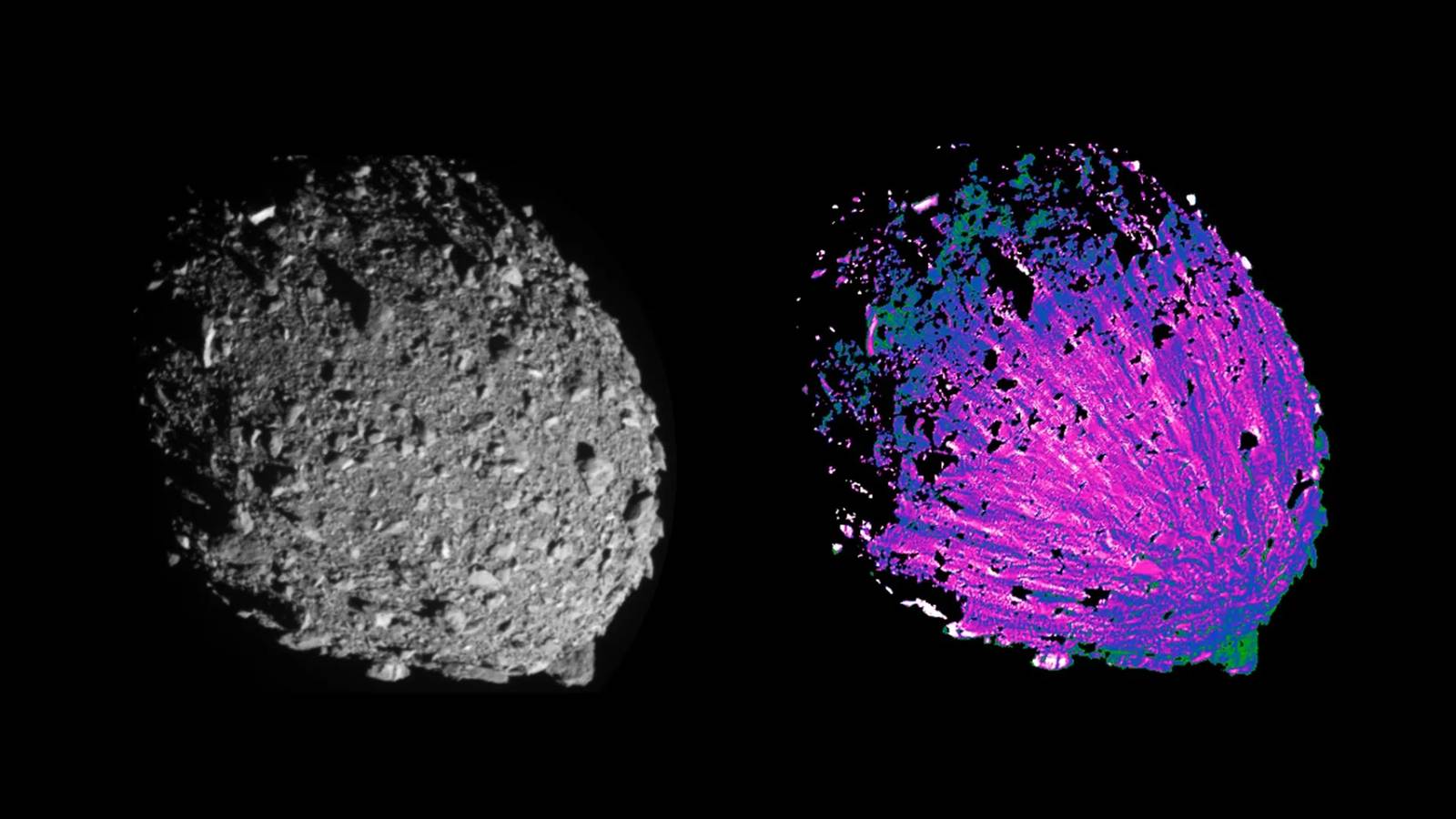
New analysis of images captured during the mission has revealed a previously unknown dynamic between binary asteroid systems. Researchers from the University of Maryland identified faint, fan-shaped streaks on the surface of Dimorphos, which they describe as evidence of slow-moving “cosmic snowballs.” These debris patterns suggest that sunlight, through the Yarkovsky-O’Keefe-Radzievskii-Paddak (YORP) effect, accelerates the rotation of Didymos, causing it to shed material that eventually settles on its companion. This continuous exchange of mass proves that near-Earth asteroids are far more active and geologically dynamic than previously understood.
The Stakes for Future Space Exploration
The success of the DART mission provides a foundational blueprint for planetary defense, yet it also highlights the complexities of space resource management. As NASA continues to refine its orbital tracking capabilities and develops space-based telescopes designed to spot potential threats, the ability to manipulate these bodies raises long-term questions regarding resource extraction and the safety of space infrastructure. While the Didymos system poses no threat to Earth, the capability to influence celestial paths serves as both a powerful tool and a responsibility for future generations of space explorers.
The confirmation that human action can measurably alter the orbital mechanics of a solar system body marks a transition from observational astronomy to active celestial management, fundamentally changing how space agencies assess, prioritize, and mitigate the risks posed by near-Earth objects.