
Quick Read
- National Geographic captured the Artemis II launch from just 1,500 feet away.
- The footage was recorded at an extreme 2,000 frames per second for ultra slow-motion.
- This allowed for the visualization of details invisible to the naked eye during blast-off.
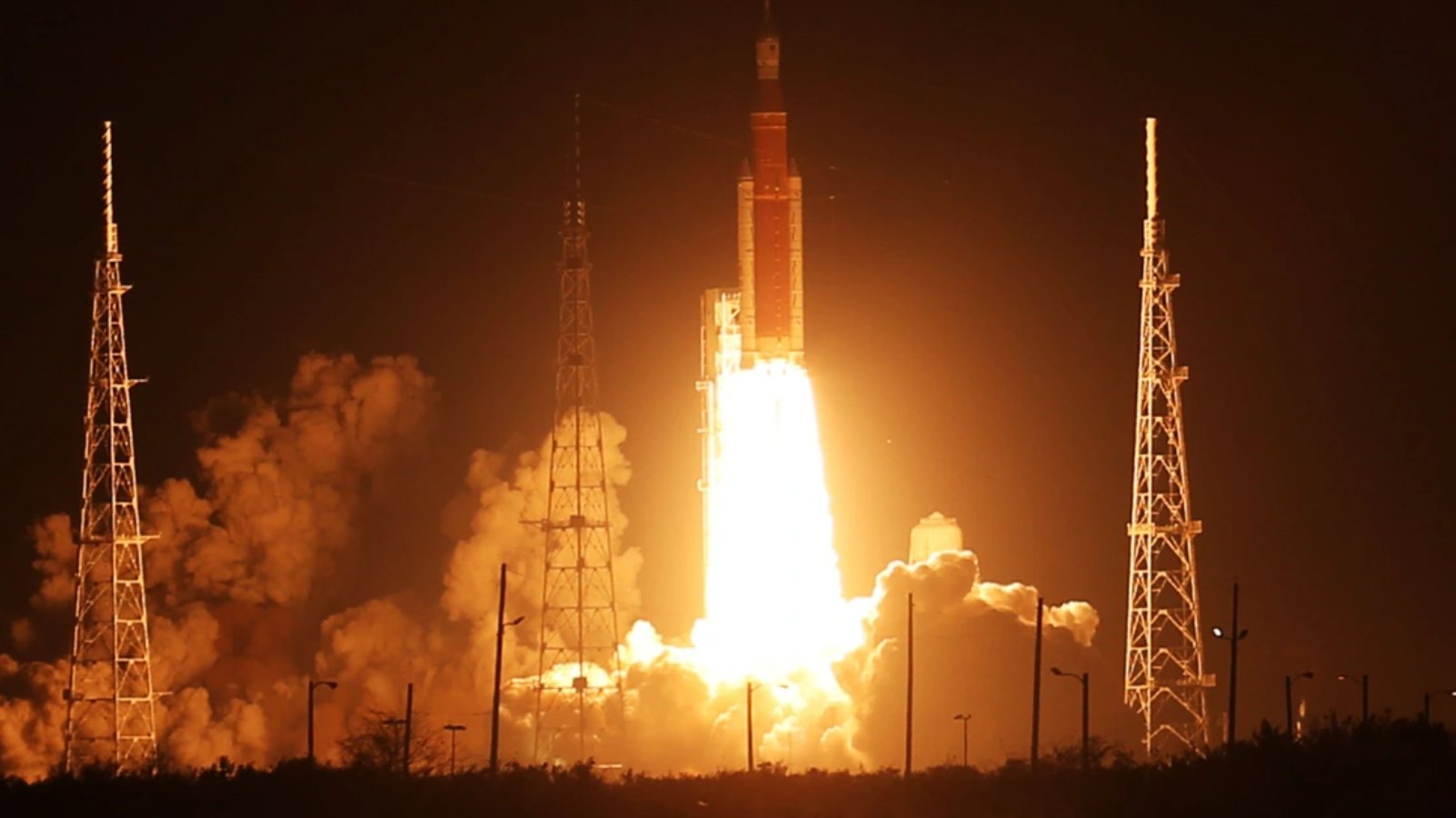
CAPE CANAVERAL, Fla. (Azat TV) – National Geographic has released breathtaking footage of the Artemis II launch, captured with a specialized high-resolution camera positioned just 1,500 feet from the blast-off site. The camera recorded the event at an astonishing 2,000 frames per second, revealing details imperceptible to the naked eye due to the intense speed and shockwaves involved.
Artemis II Launch Filmed in Unprecedented Detail
The Artemis II mission, a crucial step in NASA’s lunar exploration program, experienced its launch with a unique visual record thanks to the efforts of National Geographic. The organization deployed a custom camera setup to capture the fiery ascent of the rocket, focusing on extreme slow-motion to document the raw power and intricate phenomena occurring during liftoff. The resulting video highlights the blazing boosters and the rolling shockwaves, offering a new perspective on the immense forces at play.
Specialized Camera Captures Hidden Details
The camera, operated by videographers Eric Flynn and Mark Thiessen, was specifically designed to withstand the proximity to the launch and capture the highest fidelity imagery. Recording at 2,000 frames per second allowed for an ultra-slow-motion playback that dissects the complex sequence of events, from the initial ignition to the rocket’s steady climb into the atmosphere. This technique revealed intricate details of the exhaust plumes, atmospheric disturbances, and the structural stresses on the launch vehicle that are typically lost in standard recordings.
National Geographic’s Commitment to Visual Storytelling
This initiative underscores National Geographic’s ongoing commitment to documenting significant scientific and exploratory events through cutting-edge visual technology. By capturing the Artemis II launch in such extraordinary detail, the organization provides valuable content not only for public engagement but also for potential scientific analysis of launch dynamics. The project demonstrates the power of combining advanced camera technology with proximity to capture moments of immense power and historical importance.
The deployment of advanced, high-frame-rate cameras like the one used by National Geographic for the Artemis II launch signifies a growing trend in scientific and space exploration documentation, where visual fidelity is increasingly prioritized to understand complex phenomena and engage a wider audience with the intricacies of space missions.