
Quick Read
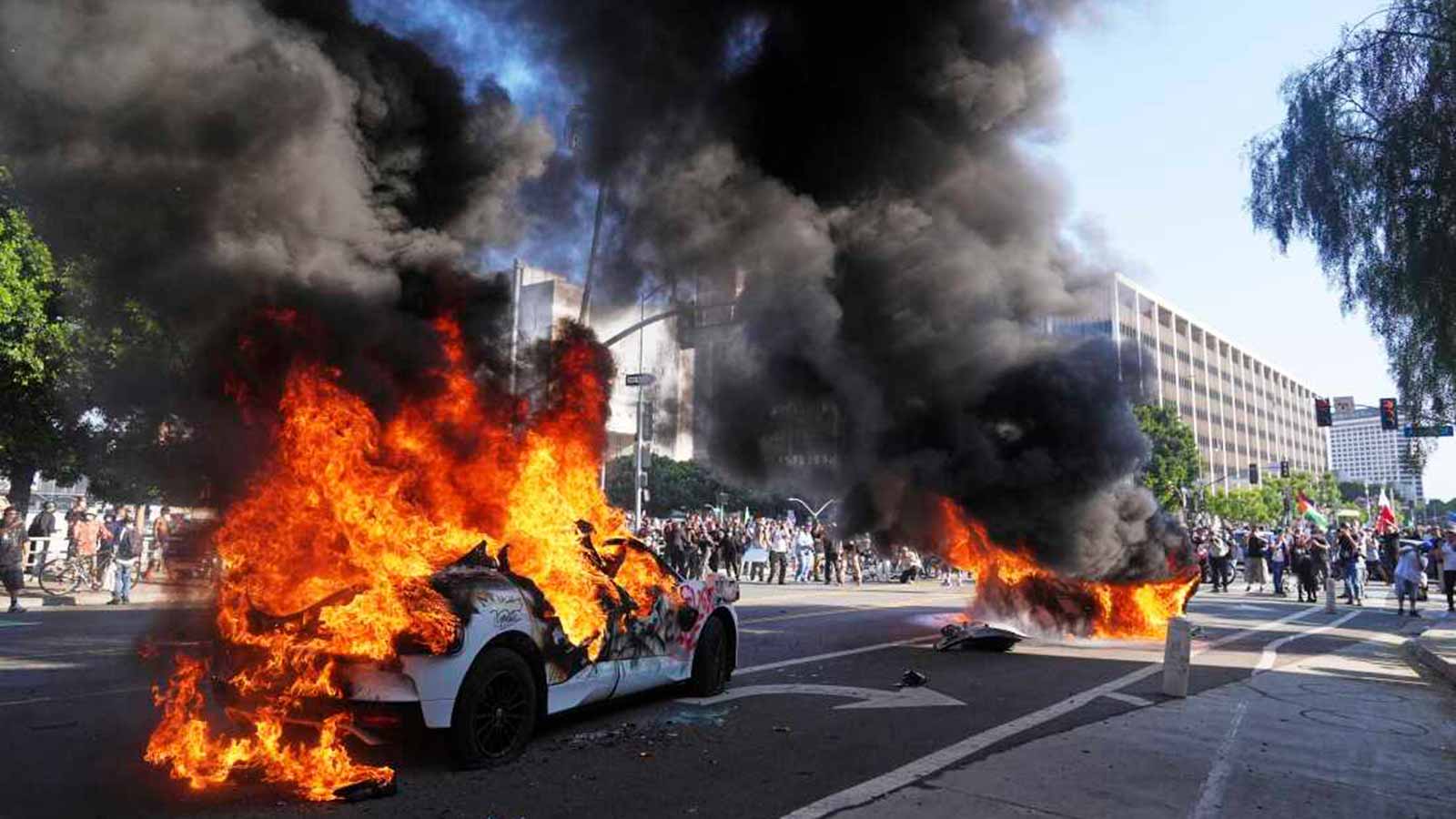
- Protests against ICE raids in Los Angeles enter their fourth day.
- Approximately 2,700 National Guard troops and Marines have been deployed.
- California leaders have challenged the federal deployment in court.
- Tensions escalate as residents demand justice for detained immigrants.
- Protests remain largely peaceful despite sporadic clashes.
The streets of Los Angeles have become a focal point of escalating tensions between federal authorities and local communities as protests against immigration raids enter their fourth day. What began as a rallying cry for immigrant rights has now drawn in the deployment of 2,700 troops, including 700 Marines, marking one of the most extensive domestic military operations in recent years. These developments have sparked public outrage, legal battles, and a renewed spotlight on federal immigration policies.
Protests spark federal troop deployment
On June 9, 2025, protests erupted in Los Angeles following a series of aggressive immigration raids conducted by U.S. Immigration and Customs Enforcement (ICE). These raids, which targeted workers in the garment district and day laborers, have left families shattered and communities in turmoil. According to the Guardian, federal agents detained dozens of individuals, including some with no criminal records. Among those arrested was David Huerta, president of SEIU California, who was apprehended while serving as a community observer.
Despite teargas and rubber bullets used over the weekend, protests continued to grow. On Monday, thousands rallied across Los Angeles, joined by demonstrations in cities like New York, Chicago, and San Francisco. The American Civil Liberties Union (ACLU) hosted a demonstration downtown, calling for an end to ICE raids. Families of detained individuals, many of whom remain incommunicado, shared harrowing accounts of their loved ones being apprehended, sparking emotional pleas for justice.
Governor Newsom challenges federal authority
The deployment of 2,000 National Guard troops and an additional 700 Marines has drawn sharp criticism from California leaders. Governor Gavin Newsom called the federal mobilization “authoritarian,” accusing the Trump administration of overstepping its bounds. Late on Monday, Newsom revealed that while federal officials announced the arrival of thousands of troops, only 300 were actively deployed, with the rest stationed in federal buildings without clear orders, as reported by the Guardian.
California has taken legal action, filing a lawsuit against the Trump administration. The lawsuit argues that the president’s decision to federalize state National Guard troops violates the state’s sovereignty. California Attorney General Rob Bonta described the move as an “unprecedented power grab” designed to escalate tensions for political gain.
Immigrant voices amplify resistance
Immigrants and their advocates have been at the forefront of the protests, sharing deeply personal stories that highlight the human cost of these raids. Yurien Contreras, whose father was detained during a raid, recounted the moment ICE agents handcuffed him and chained him from the waist and ankles. Speaking to reporters, Contreras said, “What happened was not right. It was not legal. In this country, we all have the right to due process.”
Lawyers from the Immigrant Defenders Law Center have raised serious concerns about the treatment of detainees. They allege that individuals were held without food, water, or bedding for over 12 hours in a federal building basement. Many detainees were reportedly denied access to legal representation, prompting further condemnation from Los Angeles Mayor Karen Bass. “This city is a proud city of immigrants,” Bass stated. “We will not stand for our residents being treated as pawns in a political game.”
Tensions rise with militarized response
The deployment of Marines, a rare occurrence in domestic operations, has been met with widespread criticism. Local law enforcement and federal authorities have defended the move as necessary to restore order, citing isolated incidents of vandalism and clashes. However, civil rights groups argue that the militarized response has only exacerbated tensions.
The Los Angeles Police Department reported firing over 600 rubber bullets during the weekend protests. Several journalists were injured, including an Australian reporter shot at close range while filming. Critics have pointed out that such actions undermine the right to peaceful assembly and escalate already volatile situations.
Trump administration officials, including border czar Tom Homan, have defended ICE’s actions, claiming they targeted individuals with criminal records. However, local activists argue that many of those detained were hardworking residents contributing to the community. “When a city like this is targeted, you’re going to see a massive outpouring of resistance,” said Sergio Perez, executive director of the Center for Human Rights and Constitutional Law, to the Guardian.
Historical echoes and broader implications
The current deployment of federal troops in Los Angeles evokes memories of the 1992 LA riots and the 1965 Watts riots, both of which involved federal intervention. However, this marks the first time in decades that troops have been deployed without the governor’s request, raising questions about the balance of state and federal authority.
Los Angeles County, home to 3.5 million immigrants, has become a symbol of resistance against aggressive federal immigration policies. As the protests continue, the broader implications for immigrant rights and state sovereignty remain at the forefront of national discourse. Advocates emphasize that this moment is about more than just one city—it is a fight for the fundamental rights and dignity of all residents.
The unfolding events in Los Angeles serve as a stark reminder of the ongoing struggles surrounding immigration policy and federal overreach. As protests persist and legal battles escalate, the nation watches closely, knowing that the outcomes here could set a precedent for years to come.