
Quick Read
- Virginia defeated UNC 17-16 in overtime at Kenan Stadium.
- UNC’s offense posted 353 yards but failed to score in the second half.
- Virginia’s defense forced two interceptions and held UNC under 100 yards after halftime.
- A mass shooting at a Maxton party left two dead and eleven injured.
- Robeson County Sheriff’s Office says the shooting was an isolated incident; no arrests reported yet.
Virginia Edges North Carolina in Overtime Thriller
Saturday afternoon in Chapel Hill, the air was thick with anticipation. The University of North Carolina Tar Heels, desperate for a statement win, squared off against the No. 16 ranked Virginia Cavaliers. For UNC, the season had already been punctuated by close calls and tough losses, but this matchup felt like a shot at redemption—a chance to break a winless streak against Power Four teams. The crowd at Kenan Stadium buzzed, hopeful that their team could finally turn the tide.
From the opening drive, it was clear that neither side would yield easily. UNC’s offense, led by quarterback Gio Lopez, showed flashes of promise, racking up 353 total yards. Yet, football is a game of inches, and sometimes, the smallest misstep can define a contest. Early in the first quarter, Lopez connected with Kobe Paysour on a short route inside the ten-yard line. Paysour, stretching for the goal, lost control of the ball as it hit the pylon—a fumble that resulted in a touchback. Virginia seized the opportunity, capitalizing with a field goal to take the lead.
The Cavaliers’ offense, meanwhile, seemed to struggle to find its rhythm. Injuries to key players and a battered offensive line left quarterback Chandler Morris under constant pressure, sacked twice in the first half and six times overall. Virginia managed only 19 rushing yards, making each passing play feel like a gamble. Still, Morris found his stride late in the first half, linking up with wide receiver Trell Harris for a 30-yard touchdown—a play made possible by Harris’ grit, breaking a tackle and sprinting into the end zone.
UNC answered with resilience. Lopez drove his team downfield, sneaking into the end zone himself to tie the game at 10 before halftime. The Tar Heels threatened again before the break, but a missed 50-yard field goal kept the contest knotted at intermission.
Second Half: Defensive Standoff and Special Teams Impact
If the first half was about offensive sparks, the second half belonged to the defenses. Both squads tightened up, forcing turnovers and exchanging interceptions—first UNC’s Andrew Simpson picking off Morris, then Virginia’s Mitchell Melton returning the favor. The teams combined for five consecutive punts, each possession a grind for field position.
Virginia’s defense found its groove, holding UNC to under 100 yards in the second half and giving their offense repeated chances. Melton’s tipped pass and improbable interception in the red zone was a pivotal moment, snuffing out a promising Tar Heel drive and swinging momentum back to the Cavaliers. Special teams also played a quiet but crucial role. Virginia’s Daniel Sparks delivered precise punts, while Will Bettridge nailed a 34-yard field goal. Jayden Thomas, filling in for an injured teammate, averaged 15 yards per return, helping Virginia win the battle for territory.
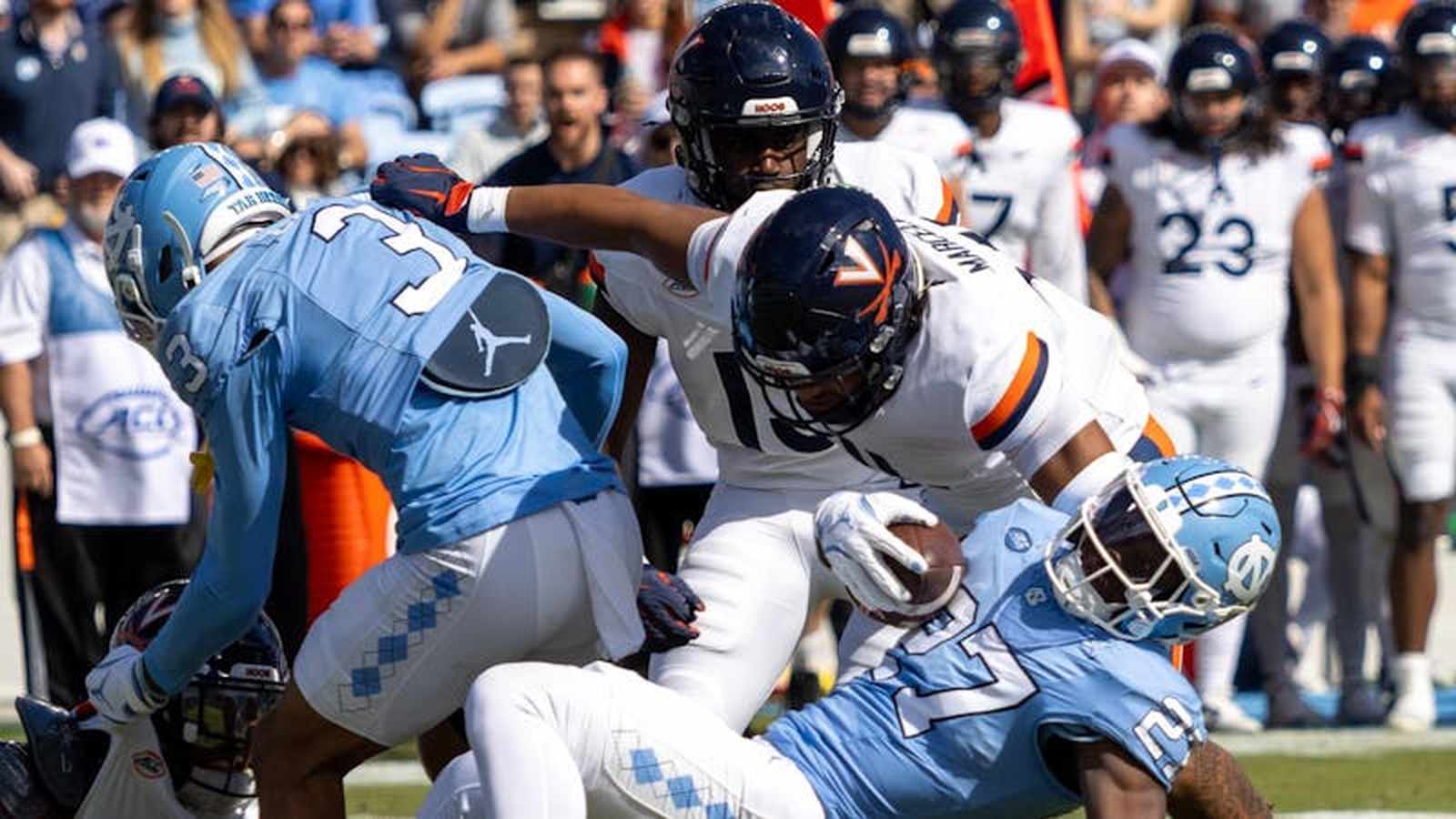
Offensively, both teams struggled to break through. For Virginia, play calling came under scrutiny—deep shots on third down and a reluctance to run the ball in key goal line situations. Yet, in overtime, the Cavaliers finally leaned into their ground game, handing the ball to J’Mari Taylor for a direct snap and a one-yard touchdown, echoing a winning play from earlier in the season.
Overtime Drama: Inches Decide the Outcome
Overtime in college football is unforgiving, and Saturday’s battle was no exception. Virginia struck first, Taylor powering into the end zone to put the Cavaliers up 17-10. UNC responded with urgency—a bubble screen to Gavin Gause brought them within one, and the Tar Heels lined up for a two-point conversion, the chance to snatch victory from the jaws of defeat. Lopez found Benjamin Hall on a short route, but Hall was stopped just inches from the goal line. The stadium gasped; Virginia had survived, 17-16.
For UNC, it was the fifth straight loss to a Power Four opponent. The Tar Heels will travel to Syracuse next, still searching for answers and a spark to revive their season. For Virginia, the win kept them perfect in conference play, but the offensive struggles left questions lingering about their ability to sustain success.
Maxton Mass Shooting: Tragedy Strikes Eastern North Carolina
While football drama gripped Chapel Hill, a far darker event unfolded in Maxton, a small town in Robeson County. Early Saturday morning, a large party on Dixon Drive erupted into chaos as gunfire broke out. More than 150 people fled the scene as shots rang out, leaving two dead and eleven injured. The Robeson County Sheriff’s Office responded swiftly, declaring the shooting an isolated incident with no ongoing threat to the community. Yet, the shockwaves rippled through the region, raising fresh concerns about safety at public gatherings.
The identities of those killed have not been released, pending notification of families. Several victims remain hospitalized, some in critical condition. Investigators are urging anyone with information to come forward, hoping to piece together the events that led to the violence. As of Saturday afternoon, no arrests had been made, and the search for answers continues.
Local authorities emphasized that the incident appeared targeted, not random, and reassured residents that there was no further danger. Social media lit up with tributes and calls for unity, as Maxton—a town often overlooked in statewide headlines—became the focal point of a somber conversation about gun violence in North Carolina.
Community Response and Ongoing Questions
In the wake of the Maxton shooting, community leaders and law enforcement are working to support victims’ families and restore a sense of security. The Robeson County Sheriff’s Office has set up a hotline for tips, urging witnesses to come forward. Public vigils are being planned, and local organizations are rallying to provide resources for those affected.
Meanwhile, in Chapel Hill and across the state, sports fans are dissecting the weekend’s football results. For the Tar Heels, the narrow loss stings, a reminder of how close they came to a season-defining win. For Virginia, questions about offensive consistency linger, even as the team celebrates another conference victory.
This weekend in North Carolina was a study in contrasts: athletic drama unfolding under stadium lights, and tragedy striking a quiet community in the dark. Both stories—one of resilience, the other of heartbreak—reflect the unpredictable rhythms of life in the state.
From the triumphs on the gridiron to the sobering reality of violence, North Carolina’s weekend reminded us that victory and loss come in many forms. The football field offered hope and heartbreak in equal measure, while the streets of Maxton bore witness to tragedy that defies easy answers. Both demand reflection—and a commitment to move forward, together.