
Quick Read
- Nvidia has launched NVLink Fusion, a new technology to enhance chip-to-chip communication.
- The tech will be licensed to third-party chipmakers for building advanced AI systems.
- MediaTek and Marvell are among the first adopters of NVLink Fusion.
- CEO Jensen Huang announced this at Computex 2025 in Taipei.
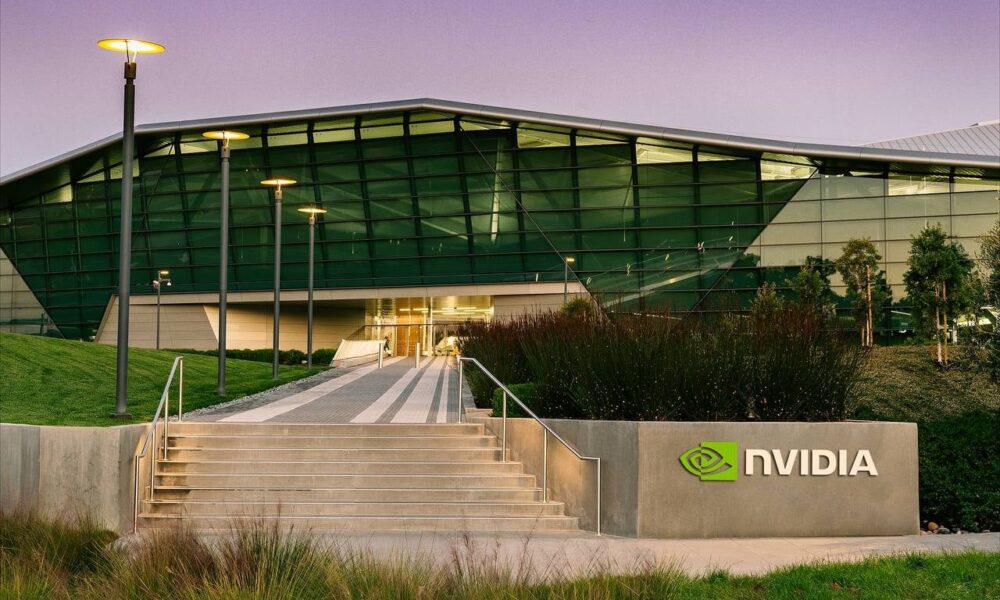
- Nvidia also revealed plans to build a new headquarters in Taipei.
Nvidia Launches NVLink Fusion to Accelerate AI Development
Nvidia, a global leader in artificial intelligence (AI) and graphics processing technologies, has unveiled NVLink Fusion, a groundbreaking chip-to-chip interconnect technology. This latest development aims to enhance communication between AI chips, a critical factor in building and deploying next-generation AI systems. The announcement was made by Nvidia CEO Jensen Huang during Computex 2025 in Taipei, highlighting the company’s commitment to advancing AI innovation.
 What is NVLink Fusion?
NVLink Fusion represents the latest iteration of Nvidia’s NVLink technology, initially developed using expertise from Mellanox Technologies, an Israeli networking company acquired by Nvidia in 2019 for $6.9 billion. The technology facilitates high-speed data exchange between chips, making it an essential component in advanced AI systems. For instance, NVLink is already used in Nvidia’s GB200 system, which integrates two Blackwell GPUs with a Grace CPU.
With NVLink Fusion, Nvidia is extending its reach by licensing the technology to third-party chipmakers for the first time. This move enables other companies to build custom AI systems with multiple interconnected chips, thereby democratizing access to cutting-edge AI infrastructure.
Early Adopters and Industry Impact
Among the first companies to adopt NVLink Fusion are MediaTek and Marvell Technology. These industry leaders plan to integrate the technology into their next-generation chip designs, signaling a broader industry shift toward collaborative innovation. Other partners include Alchip, Fujitsu, and Qualcomm, all of whom are expected to leverage NVLink Fusion to enhance their AI capabilities.
The licensing of NVLink Fusion marks a significant milestone for Nvidia, as it transitions from being a sole provider of AI hardware to a collaborative force enabling the development of custom AI solutions across the tech ecosystem. This strategic move is expected to accelerate the adoption of AI technologies globally.
Announcements at Computex 2025
Jensen Huang’s keynote at Computex 2025 provided a comprehensive overview of Nvidia’s evolving role in the AI industry. He highlighted the company’s transformation from a video game graphics chip maker to the dominant player in AI chip design. This shift has been particularly pronounced since the launch of ChatGPT in 2022, which triggered a surge in demand for AI technologies.
During the keynote, Huang also unveiled Nvidia’s expanded product roadmap. Key announcements included:
- The Blackwell Ultra, expected to launch later in 2025.
- The Rubin series, followed by Feynman processors slated for release in 2028.
- A new desktop AI system called DGX Spark, designed for researchers, with shipments starting within weeks.
Additionally, Nvidia announced plans to establish a new headquarters in the northern suburbs of Taipei, further solidifying its presence in Asia. This move underscores Nvidia’s commitment to fostering innovation in one of the world’s most dynamic tech hubs.
Why NVLink Fusion Matters
The introduction of NVLink Fusion is a response to the growing complexity of AI workloads, which require seamless communication between multiple chips. Traditional methods of chip interconnect often fall short in handling the massive data exchanges needed for advanced AI applications. NVLink Fusion addresses this challenge by providing a high-speed, reliable solution for chip-to-chip communication.
This technology is expected to play a pivotal role in the development of large-scale AI models and applications. By enabling faster data transfer and improved scalability, NVLink Fusion will empower researchers and developers to push the boundaries of what AI can achieve.
Nvidia’s Broader Vision
Beyond the launch of NVLink Fusion, Nvidia’s announcements at Computex 2025 reflect its broader vision for the future of computing. The company is positioning itself as a leader not only in AI hardware but also in the software and systems needed to support AI innovation.
For example, Nvidia has been designing CPUs compatible with Microsoft Windows using Arm Holdings architecture. This diversification of its product portfolio demonstrates Nvidia’s commitment to meeting the evolving needs of the tech industry.
Moreover, the company’s investments in AI research and development are complemented by strategic partnerships and infrastructure expansions, such as the new Taipei headquarters. These efforts underscore Nvidia’s role as a catalyst for global AI advancements.
Nvidia’s launch of NVLink Fusion marks a significant step forward in the evolution of AI technologies. By enabling faster and more efficient chip communication, the company is laying the groundwork for the next generation of AI systems. As Nvidia continues to innovate and collaborate with industry leaders, its impact on the tech landscape is set to grow exponentially.
Source: Calcalistech, Chinadailyasia, Bilyonaryo