
Quick Read
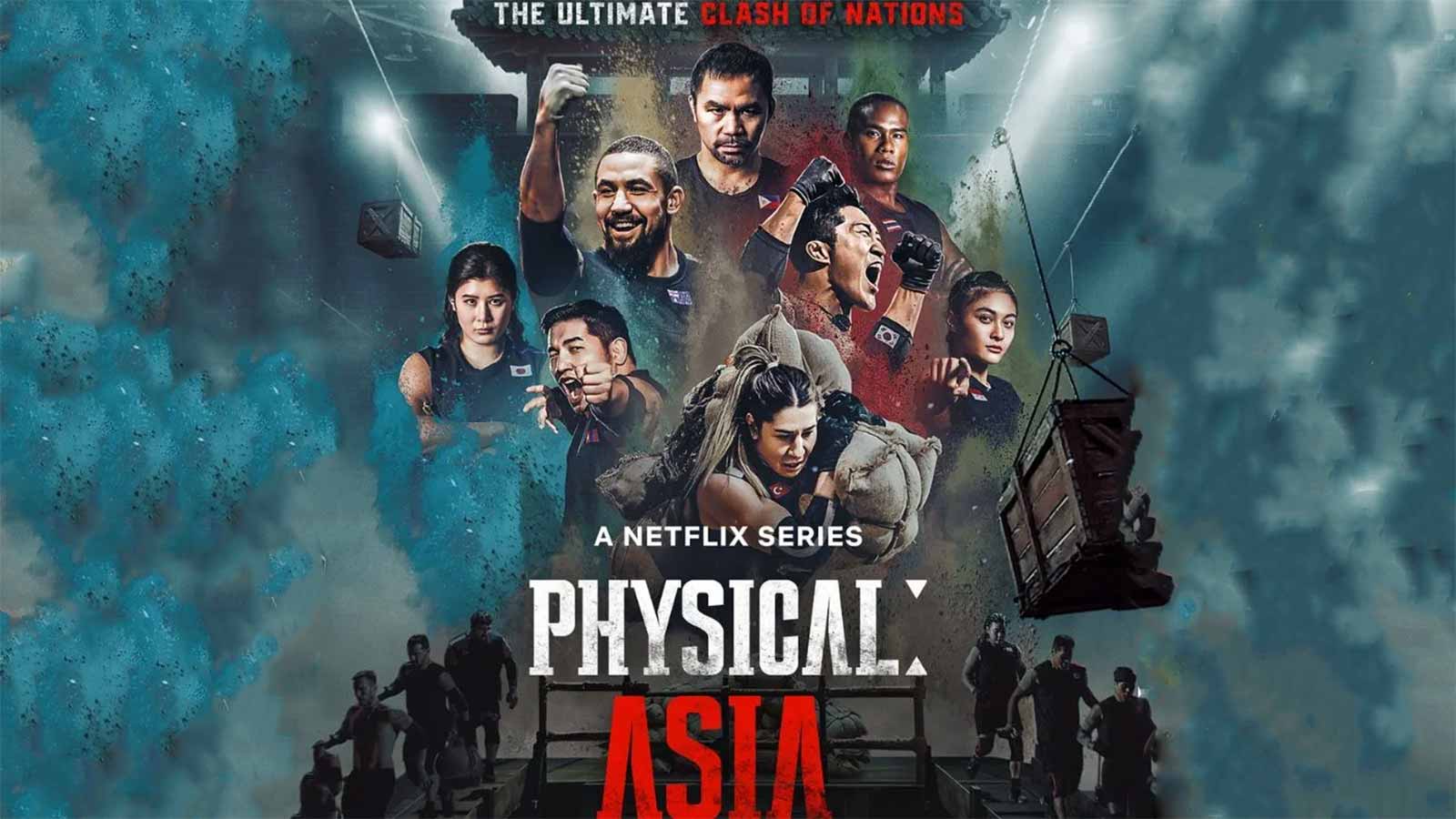
- Physical: Asia features 48 athletes from eight Asian-Pacific countries competing in team-based survival challenges.
- Manny Pacquiao leads Team Philippines, which includes champions from MMA, powerlifting, track, rugby, and CrossFit.
- Teams face off in quests demanding strength, strategy, and teamwork for a prize of one billion Korean won.
- Traditional and modern sports are showcased, highlighting Asia’s athletic heritage.
- Team Philippines faces elimination after a loss to Mongolia, with their fate hinging on a deathmatch against Thailand.
Physical: Asia – Where Strength Meets National Pride
When Netflix announced its new reality competition, Physical: Asia, the fitness world braced for a spectacle unlike any other. Eight countries. Forty-eight elite athletes. A series of grueling quests that test not only muscle and endurance, but also the very spirit that drives a nation to greatness. At the heart of this battle stands Manny Pacquiao, boxing legend and national icon, now leading Team Philippines in a contest where victory means more than a trophy—it’s about honor, unity, and resilience.
The Format: A New Arena for International Competition
Building on the success of South Korea’s Physical: 100, Netflix’s latest spin-off, Physical: Asia, shifts the spotlight from individual achievement to collective triumph. Each of the eight teams—South Korea, Japan, Thailand, Mongolia, Turkey, Indonesia, Australia, and the Philippines—brings together six athletes whose backgrounds span judo, rugby, boxing, MMA, powerlifting, and even parkour. The challenges, or “quests,” are designed to push the limits of physical endurance while demanding teamwork and tactical brilliance.
Director Jang Ho-gi envisions the show as a “new type of Olympics,” where traditional sports meet modern athleticism. Some of the challenges pay homage to the 1988 Seoul Games, blending heritage and innovation in a contest that transcends generations and borders (The National News).
Manny Pacquiao: From Boxing Ring to Survival Arena
For Manny Pacquiao, the leap from boxing legend to team captain is more than a change in attire. His entrance—trading his iconic robe for a suit and sunglasses—signals a new chapter. No longer fighting alone, Pacquiao now carries the hopes of his nation alongside five other athletes, each chosen for their unique strengths:
- Mark “Mugen” Striegl: MMA fighter and Southeast Asian Games gold medalist in Sambo, bringing grappling prowess and quick reflexes.
- Ray Jefferson Querubin: Powerlifter and multiple-time “Philippines Strongest Man,” the team’s anchor in brute strength.
- Robyn Lauren Brown: Gold medalist in the 400m hurdles, whose speed and agility set her apart.
- Justin Coveney: Rugby veteran with explosive power and resilience.
- Lara Lorraine Deang Liwanag: CrossFit competitor, versatile in strength, stamina, and functional fitness.
“We’re a complete team,” Pacquiao shares. “Someone strong, someone fast, and we’re good at planning and strategy. We know how to approach each challenge to win.” (Lifestyle Inquirer)
Rival Teams and Regional Strengths
The competition is fierce. Each nation brings its own flavor:
- South Korea (Kim Dong-hyun): Unified resilience and host country advantage.
- Turkey (Recep Kara): Oil wrestling roots and enduring spirit.
- Japan (Yushin Okami): Master tacticians, precise and calculated.
- Thailand (Superbon Singha Mawynn): Unyielding Muay Thai spirit.
- Indonesia (Igede Dharma Susila): Explosive energy and power.
- Australia (Robert Whittaker): Overwhelming athletic might.
- Mongolia (Orkhonbayar Bayarsaikhan): Giants of the Steppe, legendary wrestlers.
Each episode showcases not just athletic competition, but the cultural traditions that define Asian sports—from Korea’s ssireum (folk wrestling) to Thailand’s Muay Thai and Mongolia’s wrestling heritage.
The Stakes: Money, Glory, and National Identity
At the center of the arena: one billion Korean won and a chance to bring honor home. But for most competitors, the true prize is national pride. Director Jang explains, “When you have your national flag on your chest, the pride grows so much stronger. The intensity is on another level.” The first episode set the tone, with Pacquiao’s arrival prompting cheers and gasps from fellow athletes. For many, competing alongside the only eight-division world champion in history is a dream realized.
Behind the scenes, Jang reveals that casting Pacquiao was a priority. After several attempts, he was invited to Pacquiao’s home, where a home-cooked meal and a glimpse of the champion’s training routine sealed the deal. Pacquiao’s commitment to guiding a Filipino team was immediate—and the weight of expectation followed.
Challenges, Setbacks, and the Survival Mindset
The show’s format keeps teams on edge. After four episodes, Team Philippines found itself on a knife-edge—a costly error in the “shipwreck” cargo-haul challenge led to a loss against Mongolia. Now, their survival depends on a “ball-stealing” deathmatch against Thailand, with results set to air in the next episode batch. Pacquiao acknowledges the uphill battle: “I know it will be a tough challenge. It’s a tight and competitive field with equally strong athletes from other countries. It’s definitely going to be exciting.”
Across all teams, athletes face not just physical exhaustion but the psychological strain of representing their countries. Mistakes are magnified, and every victory is a shared celebration.
Transcending Sports: The Heart of Physical: Asia
What sets Physical: Asia apart from other fitness competitions is its blend of athleticism and national identity. The show’s format celebrates both the diversity and unity of Asian sports culture. It’s not just about who is the strongest or fastest—it’s about how teams adapt, strategize, and support one another under pressure.
For Pacquiao, the experience is a reminder of what sport can mean for a nation. The boxer who once stood alone now finds strength in numbers—and in the pride that comes from carrying his flag alongside teammates. For viewers, the show is both entertainment and a lesson in resilience, teamwork, and the pursuit of excellence.
As the competition unfolds, the question remains: Which nation will rise above the rest? Who will turn adversity into triumph, and whose story will inspire the next generation of athletes?
Assessment: Netflix’s Physical: Asia redefines fitness reality TV by fusing athletic excellence with national pride, creating a stage where teamwork and cultural heritage matter as much as strength or speed. In a field packed with legends and emerging stars, Manny Pacquiao’s leadership of Team Philippines highlights the transformative power of unity and resilience in sport—a message that transcends borders and speaks to every viewer’s sense of identity.