
Quick Read
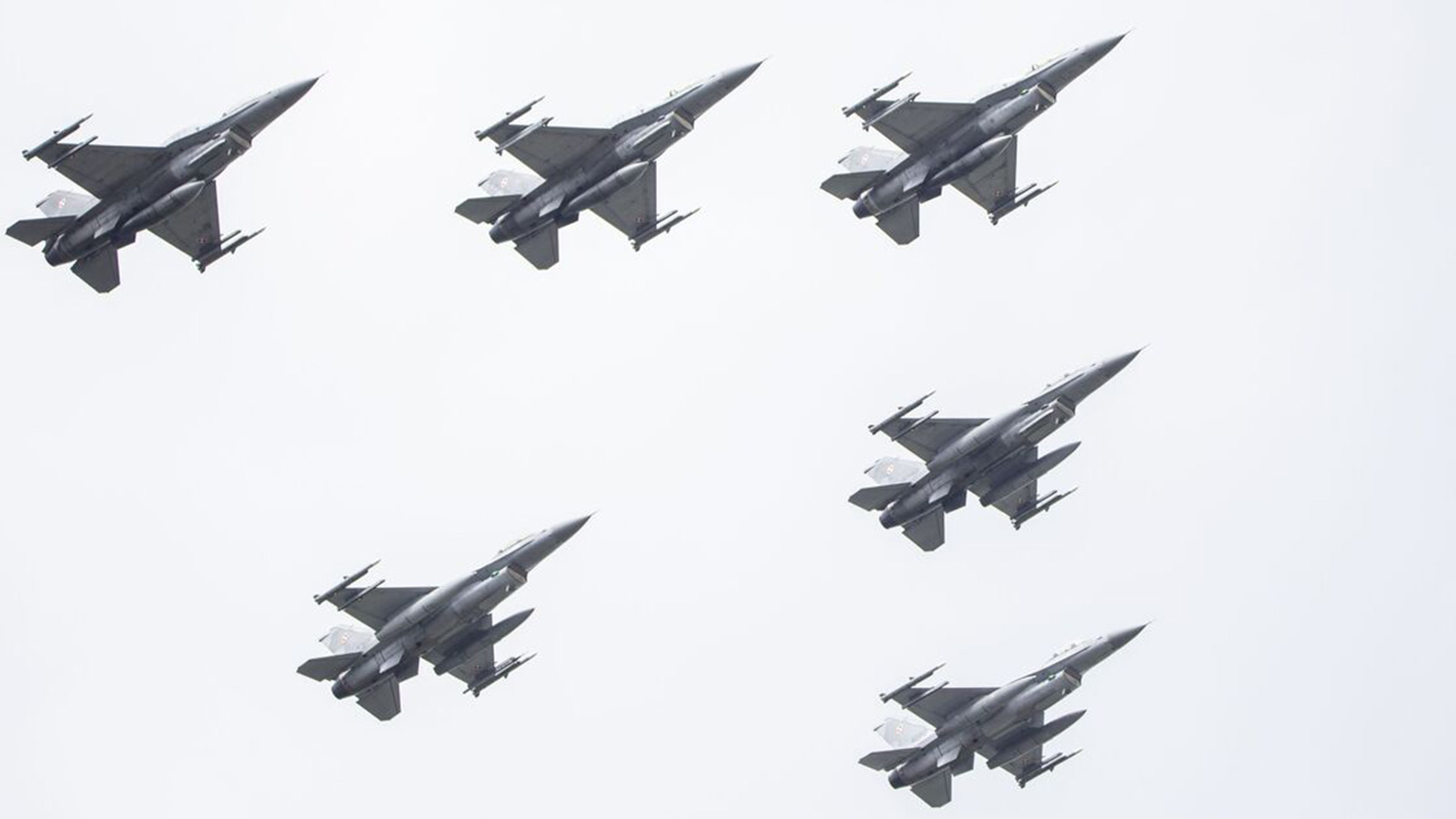
- Poland scrambled fighter jets overnight after Russian air strikes on Ukraine.
- Russian MiG-31 jets breached Estonian airspace for 12 minutes before NATO intervention.
- Over 600 drones and missiles were fired at Ukraine, killing at least three.
- European airports faced cyber attacks, suspected to be part of Russia’s destabilization efforts.
- NATO launched the ‘Eastern Sentry’ mission to reinforce its eastern flank.
Russian Air Attacks Spark Scramble Across NATO’s Eastern Flank
In the stillness of the early morning, the roar of fighter jets cut through the skies over Poland. The reason: a wave of Russian missiles and drones, launched deep into Ukrainian territory, had triggered the highest state of readiness in Poland’s air defenses. As explosions echoed in Ukrainian cities and villages, Polish jets took flight—not toward battle, but toward vigilance.
According to Poland’s operational command, the scramble was not a routine exercise. It was a direct response to Russian long-range aviation carrying out strikes on Ukraine. The Polish Air Force, alongside NATO allies, moved swiftly to protect national airspace and reassure communities near the border. By dawn, the operation was complete and ground-based air defense systems returned to their regular watch. But the message was clear: the region’s nerves are frayed, and the stakes are rising.
Sky News and Newswav both reported the scale of the Russian assault—over 600 drones and missiles unleashed on Ukraine overnight, leaving at least three dead and dozens wounded. The attacks targeted residential buildings, not just military infrastructure, amplifying the human cost and fueling regional anxiety.
Incursions and Provocations: Testing NATO’s Resolve
Yet the missiles are only one side of the story. In recent days, Russian fighter jets have repeatedly breached the airspace of NATO member states, including Poland, Estonia, and Romania. The most brazen incident came when three Russian MiG-31s entered Estonian territory for twelve tense minutes, flying just north of the capital Tallinn before being escorted out by Italian F-35s. Moscow claimed the flight was “scheduled” and “in strict accordance” with airspace rules, but Estonian officials saw it as a deliberate provocation.
Military analysts—including the Institute for the Study of War—warn that these incursions are not random. Rather, they are calculated moves to test NATO’s capabilities and reactions, probing for weaknesses ahead of any possible future conflict. Fabrice Pothier, a former director of planning policy at NATO, described Vladimir Putin’s approach as “teasing and testing” the alliance’s resolve, trying to put the West on the defensive and distract attention from the war in Ukraine.
These provocations have triggered diplomatic ripples. Estonia summoned a Russian diplomat to lodge a formal protest, while Poland invoked NATO’s Article 4 consultations—a mechanism reserved for moments when a member’s territorial integrity or security is threatened. Discussions at the North Atlantic Council are scheduled for early next week, with member states assessing joint responses.
Drone Warfare and Defensive Innovations
Alongside fighter jets, Russian drones have been a persistent threat. Just last week, several drones entered Polish airspace, forcing Polish and allied forces to shoot them down—the first such action by NATO since Moscow’s full-scale invasion of Ukraine in 2022. The Kremlin dismissed the incident as accidental, blaming jamming systems, but European leaders suspect a deliberate strategy to probe and unsettle.
The repeated drone incursions have accelerated plans for a defensive “drone wall” along the EU’s eastern border. Andrius Kubilius, the European Defence and Space Commissioner, described a system that would combine sensors, jamming equipment, and advanced defenses to detect and neutralize drones. He believes the EU could complete the drone wall within a year, underscoring how quickly security paradigms are shifting in response to new threats.
Ukraine, meanwhile, has offered to share its hard-earned expertise in countering large-scale air attacks. Foreign Minister Andrii Sybiha called for closer cooperation between Eastern European countries and Ukraine, proposing joint air defense systems to protect shared skies. As he put it, “No other country has the expertise to counter such large-scale combined air attacks. We are prepared to share it with our partners.”
Escalating Tensions and the Human Impact
For civilians in the crosshairs, these developments are more than headlines—they are a daily reality. In Dnipro, a Ukrainian woman described the terror of waking to shattered windows and the sound of drones overhead. Her child, frightened by the infamous Iranian-designed Shahed drones, clung to her as explosions rocked their building. Another resident recounted the frantic descent from the fourth floor amid fire, flying glass, and destruction—“Everything is destroyed! Everything is on fire!”
Russian governor Vyacheslav Fedorishchev, meanwhile, acknowledged Ukrainian strikes on oil infrastructure in the Samara region. Ukraine’s military sees such attacks as part of a systematic campaign to undermine Russia’s logistical and economic capabilities, particularly its fuel supply lines. Military analyst Michael Clarke explained that while these strikes may not directly cripple Russia’s war effort, they remind Russian citizens of the costs of conflict and complicate logistics for the armed forces.
Cyber Attacks Add Another Layer of Instability
The security crisis is not confined to the skies. A cyber attack disrupted operations at several major European airports—including Heathrow, Brussels, and Berlin—forcing manual check-ins and causing delays and cancellations. While no official culprit has been named, some officials suspect Russian involvement as part of an ongoing campaign to destabilize Europe and sow chaos.
Madeleine Moon, $1 of the NATO Parliamentary Assembly, told Sky News that the airport disruptions might be another facet of Russia’s efforts to erode confidence and create uncertainty among European citizens. “I assume that what is happening in European airports at the moment is also part of an ongoing attempt to destabilise, to create tension, to create disruption and to create concern amongst British and European citizens that they can do nothing to defend themselves against Russia,” she warned.
NATO’s Response: Eastern Sentry and Strategic Vigilance
In the wake of these provocations, NATO has launched “Eastern Sentry”—a new defensive mission designed to reinforce the alliance’s eastern flank from the Baltic States to Romania and Bulgaria. Multiple member states, including Denmark, France, Germany, the UK, and the Czech Republic, have committed resources to the operation. US General Alexus Grynkewich emphasized that the additional forces would “plug gaps in the line” and allow rapid concentration of assets wherever needed.
As the frontlines in Ukraine remain largely static, the broader contest is shifting toward the airspace and infrastructure of Eastern Europe. The question now is not just how NATO will respond to individual incidents, but how it will adapt to a future in which air and cyber threats are intertwined, persistent, and unpredictable.
Donald Trump, speaking from the Oval Office, acknowledged the seriousness of the Russian incursion into Estonian airspace. “Could be big trouble,” he said, promising to review the situation and respond in due course. His remarks reflect the gravity with which Western leaders are now viewing these provocations—a stark change from the earliest days of the war.
Europe stands at a crossroads, facing not only the violence of missiles and drones but the subtler dangers of psychological and cyber warfare. Poland’s swift scramble, Estonia’s protest, and NATO’s coordinated response reveal a continent learning—sometimes painfully—how to defend itself against an adversary determined to push boundaries. The coming weeks will test both the unity and the adaptability of the alliance as it confronts challenges that blur the line between conventional and unconventional conflict.