
Quick Read
- Pope Francis passed away at the age of 88 and will be buried in Santa Maria Maggiore Basilica in Rome.
- This marks a break from the tradition of papal burials in the grottoes beneath St. Peter’s Basilica.
- Francis chose the basilica for his devotion to Mary and his frequent visits there during his papacy.
- His burial will be simple, with no decorations, as per his wishes.
- Santa Maria Maggiore is one of Rome’s oldest and most significant basilicas.
Pope Francis’s Final Resting Place: A Break from Tradition
Pope Francis, who passed away on Easter Monday at the age of 88, will be laid to rest in the Basilica of Santa Maria Maggiore in Rome on Saturday. This decision marks a significant departure from the tradition of burying popes in the grottoes beneath St. Peter’s Basilica within Vatican City. Instead, Francis chose a simpler and more personal resting place that reflects his deep devotion to Mary, the mother of Jesus, and his pastoral humility.
Why Santa Maria Maggiore?
Santa Maria Maggiore, also known as St. Mary Major, is one of Rome’s four papal basilicas and one of the oldest churches in the city, dating back to the 4th century. Located in the Esquilino neighborhood, the basilica has been a central part of Francis’s spiritual life. During his time as a priest and later as a cardinal, Jorge Mario Bergoglio (Pope Francis’s birth name) frequently visited the basilica during his trips to Rome. After becoming pope, he continued this tradition, visiting Santa Maria Maggiore over 100 times during his 12-year papacy, often to pray before and after his international trips.
Francis’s connection to the basilica is rooted in his deep devotion to Mary. The basilica houses the venerated Byzantine icon of Mary, known as the Salus Populi Romani (Protectress of the Roman People), which Francis often prayed before. His choice of burial site reflects his spiritual bond with the basilica and its Marian significance. In an interview with Javier Martínez-Brocal, a Vatican correspondent, Francis revealed that he had chosen his burial spot in the basilica’s left nave near the Paolina Chapel, close to the icon he cherished. “When he saw the niche, Francis replied: ‘This is my place, I want to be buried here,’” Martínez-Brocal recounted.
A Simple Burial, True to His Wishes
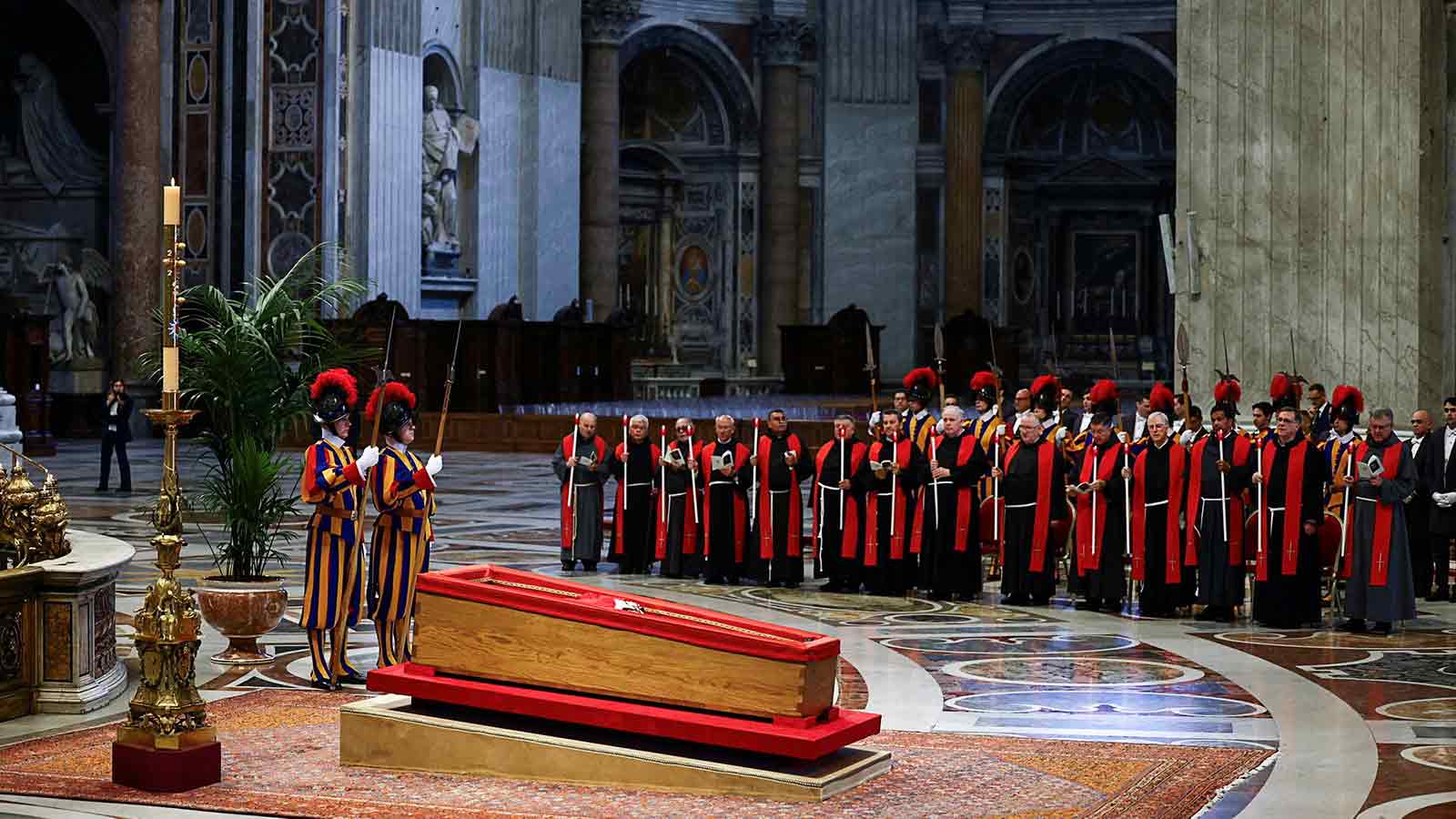
Francis’s burial will be markedly simple, in line with his humble approach to life and his papacy. His coffin, made of plain wood and lined with zinc, will be placed in a small niche that previously served as storage for candlestick holders. The tomb will bear no elaborate decorations, featuring only the inscription of his papal name in Latin: Franciscus. This simplicity aligns with the guidelines he approved in April 2023, which allowed for a less ornate funeral and burial process. “He didn’t want to be shown lying on cushions; he wanted to be more like a pastor,” Martínez-Brocal explained.
The Significance of Santa Maria Maggiore
Santa Maria Maggiore is steeped in history and religious significance. The basilica is believed to be the first church in Rome dedicated to the Virgin Mary, constructed after a miraculous snowfall in August 358 on Esquiline Hill. Its stunning architecture includes a coffered ceiling gilded with gold brought back from the Americas by Christopher Columbus, intricate mosaics, and chapels designed by renowned artists like Michelangelo. The basilica also houses relics such as a piece of the manger where Jesus was laid, making it a significant pilgrimage site for Catholics worldwide.
In addition to its spiritual importance, the basilica is a cultural and historical landmark. It is the final resting place of several notable figures, including the 17th-century Italian sculptor and architect Gian Lorenzo Bernini. Pope Francis’s decision to be buried here further elevates the basilica’s prominence, drawing pilgrims and tourists eager to pay their respects to the late pontiff.
Breaking with Papal Burial Traditions
Francis’s choice to be buried outside Vatican City is a rare departure from centuries-old traditions. Most popes are interred in the grottoes beneath St. Peter’s Basilica, a practice that underscores the centrality of the Vatican in the Catholic Church. By opting for Santa Maria Maggiore, Francis emphasized his pastoral mission and his desire to remain close to the people, particularly the poor and marginalized.
On the day of his burial, Francis’s coffin will be transported in a procession from St. Peter’s Square to Santa Maria Maggiore. The funeral service, led by Cardinal Giovanni Battista Re, will be attended by dignitaries from 170 foreign delegations, as well as tens of thousands of faithful. After the funeral, the basilica will open its doors to the public, allowing visitors to pay their respects at Francis’s tomb.
A Legacy of Humility and Devotion
Pope Francis’s decision to be buried in Santa Maria Maggiore encapsulates the values that defined his papacy: humility, simplicity, and a deep devotion to Mary. His final resting place, a modest niche in a basilica he loved, stands as a testament to his commitment to living and leading as a servant of God and the people. As the Catholic Church prepares to elect his successor, Francis’s legacy will continue to inspire millions around the world.