


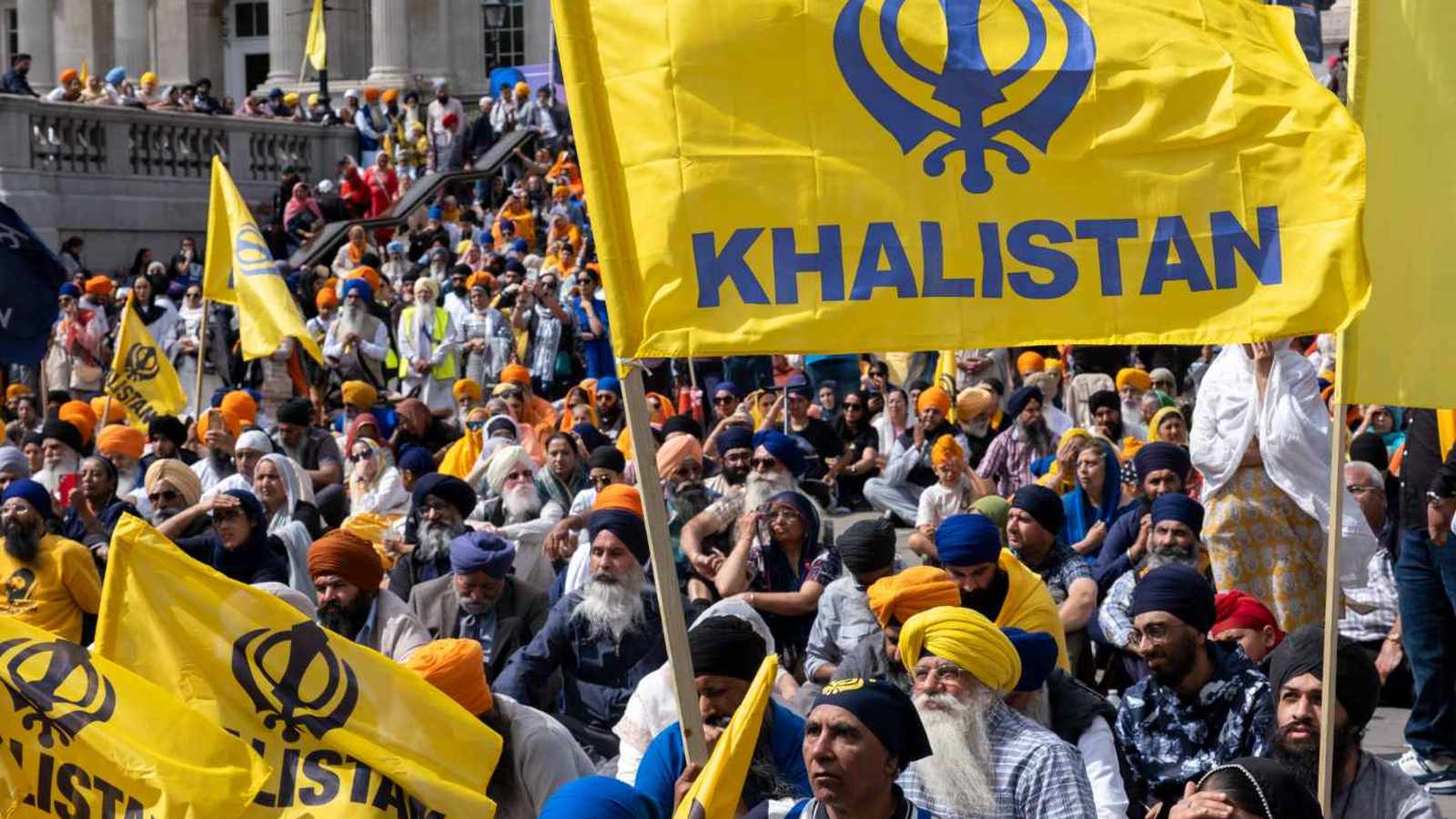
OTTAWA (Azat TV) – Renewed efforts by pro-Khalistan elements within the global Sikh diaspora are escalating tensions in Canada, manifesting as alleged harassment and intimidation campaigns against Hindu Canadians, their temples, and Indian diplomatic officials. These developments are unfolding amidst a critical period for Canada-India relations, specifically during Prime Minister Mark Carney’s ongoing official visit to India, where he aims to strengthen bilateral ties and advance a comprehensive free trade agreement.
Escalating Harassment by Pro-Khalistan Elements
The Hindu Canadian Foundation (HCF) issued a strong warning regarding a disturbing trend of escalating harassment and intimidation attributed to pro-Khalistan elements across Canada. The HCF claims these groups are manipulating the right to protest to orchestrate aggression against Hindu communities and Indian diplomatic missions. Initially focused on Indian consulates, the scope of these actions has significantly broadened to include individual Hindu Canadians and their places of worship, signaling a shift in tactics.
High-profile political figures have also been targeted in this campaign, including Foreign Minister Anita Anand, Prime Minister Mark Carney, and British Columbia Premier David Eby. The HCF asserts that these actions cross a line from peaceful protest into bullying and extremism, stating that such tactics have no place in Canadian society, regardless of the democratic right to free expression. This sentiment underscores critical questions about the limits of dissent and its potential to become harmful.
Canada-India Diplomatic Relations and PM Carney’s Visit
The rise in pro-Khalistan activism in Canada coincides with Prime Minister Mark Carney’s crucial diplomatic tour, which began in Mumbai with meetings with business leaders and is set to continue in New Delhi for talks with Prime Minister Narendra Modi. The primary objective of this visit is to make progress on a comprehensive free trade agreement, a goal that has been intermittently discussed for years.
However, the diplomatic backdrop remains complex. Relations between Canada and India previously strained significantly after former Prime Minister Justin Trudeau stated in September 2023 that there were ‘credible allegations’ of a potential link between Indian agents and the killing of pro-Khalistan figure Hardeep Singh Nijjar in British Columbia. India vehemently denied these accusations. Following Mark Carney’s ascension to Prime Minister in March 2025, a concerted effort has been made to reset relations, including the reinstatement of High Commissioners and subsequent bilateral engagements.
The HCF has expressed support for Prime Minister Carney’s visit, which will also include trips to Australia and Japan, viewing it as an opportunity to strengthen bilateral relations and diversify trade partnerships for Canadians of Indian heritage. The foundation also believes that pro-Khalistan groups have ‘weaponised the narrative around India,’ unfairly vilifying the country and fostering division.
Government Response and Foreign Interference Concerns
In response to the escalating tensions, the Canadian Prime Minister’s Office affirmed Canada’s commitment to combating ‘any forms of transnational repression, transnational organised crime, and any contravention of the Criminal Code or rule of law on Canadian soil.’ Foreign Minister Anita Anand, accompanying Prime Minister Carney on his trip, stated that Canada would continue to raise issues related to public safety and security. Minister of Public Safety Gary Anandsangaree also acknowledged ‘outstanding issues’ with India that require further work.
However, Liberal Party MP Sukh Dhaliwal criticized an unnamed official’s statement that seemed to downplay India’s transnational repression, arguing it contradicted assessments by Canadian agencies. This highlights internal disagreements within Canada regarding the handling of India-related security concerns. A government task force monitoring the April 2024 Federal election did not mention any foreign interference incidents by India in its report, although China and Russia were cited. This contrasts with a January 2025 report from the Public Inquiry into Foreign Interference, which stated that India was the second most active country engaging in electoral foreign interference in Canada, albeit perceiving that Canada did not take India’s national security concerns about Khalistani separatism ‘sufficiently seriously.’
Global Diaspora Impact of Khalistan Movement
The implications of these tensions extend beyond Canada’s borders, reflecting broader global patterns of diaspora politics. Similar trends of advocacy, sometimes bordering on extremism, have been observed in the United States, the UK, and Australia, impacting diplomatic and social relations within these nations. The HCF and other organizations are now expected to push for increased legislative measures to protect religious freedoms and ensure community safety, while Indian diplomatic missions and Hindu places of worship may see enhanced security protocols.
The renewed and increasingly visible efforts by pro-Khalistan elements within the global Sikh diaspora, particularly their impact on community safety and democratic institutions in Canada, are forcing the movement into a new phase of global attention. While the long-term goal of an autonomous Sikh homeland remains politically elusive on the international stage, these current events demonstrate how the movement’s actions are directly influencing diplomatic relations and domestic social harmony, compelling a reevaluation of its perceived invisibility.