
Quick Read
- Romania is intensifying its search for more main battle tanks, potentially beyond its initial Abrams order.
- Lieutenant General Dragoş-Dumitru Iacob confirmed the search at a defense conference on January 22, 2026.
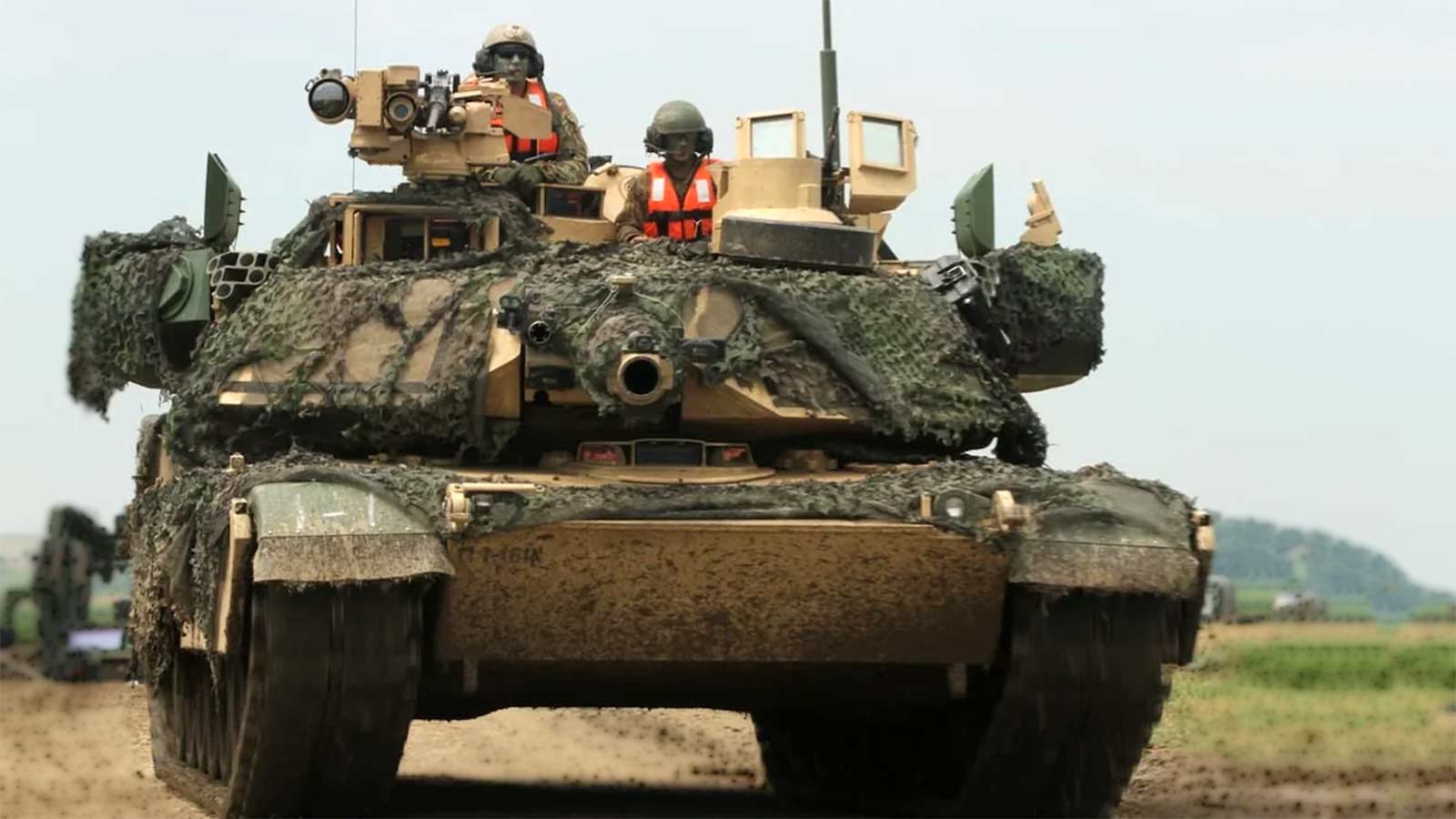
- Romania ordered 54 M1A2 SEPv3 Abrams tanks and 12 support vehicles in 2025.
- NATO has a French-led multinational battlegroup in Cincu, Romania, with heavy armor and artillery.
- NATO’s ‘Eastern Sentry’ initiative boosts vigilance and deploys innovative tech against new threats like drones in the region.
Romania is significantly intensifying its efforts to acquire more main battle tanks, signaling a strategic pivot towards diversifying its armored vehicle fleet beyond its initial order of M1A2 System Enhancement Package version 3 (SEPv3) Abrams tanks. This proactive stance, confirmed by Lieutenant General Dragoş-Dumitru Iacob, deputy chief of defence for the Romanian Armed Forces, at Defence IQ’s International Armoured Vehicles conference in Farnborough, UK, on January 22, 2026, highlights Romania’s unwavering commitment to strengthening its defense capabilities and enhancing NATO’s collective security on the eastern flank.
The announcement comes as Romania continues to play a critical role in NATO’s response to the evolving security landscape in Eastern Europe, particularly following Russia’s full-scale invasion of Ukraine in 2022. While General Iacob indicated that the process had advanced to “investigating options,” sources at the conference suggested that progress on this initiative could be much swifter than publicly implied, with a significant milestone potentially being reached within a matter of “months.” This urgency underscores a clear recognition within the Romanian defense establishment of the imperative to modernize and expand its heavy armor capabilities to meet contemporary threats.
Romania’s Strategic Tank Acquisition Drive
Romania’s current defense modernization program already includes a substantial order for 54 M1A2 SEPv3 Abrams tanks, alongside 12 support vehicles, placed in 2025 under what is designated as Phase I. This acquisition was a foundational step in upgrading Romania’s armored forces, moving away from older, Soviet-era designs to state-of-the-art Western technology. The M1A2 SEPv3 variant represents a significant leap in capability, featuring enhanced armor, improved targeting systems, upgraded communications, and greater lethality. It is designed to operate effectively in modern, complex battlefields, providing superior protection and firepower.
However, the new push to look beyond this initial Abrams order suggests a broader, more ambitious strategy. The sheer scale of the eastern flank, coupled with the lessons learned from the ongoing conflict in Ukraine regarding the importance of armored maneuver capabilities, likely drives this expanded search. Diversifying the tank fleet could offer several advantages, including reducing reliance on a single supplier, potentially optimizing costs, and allowing for greater flexibility in operational deployment and logistical support. Romania’s defense planners are likely evaluating various modern main battle tank platforms from different manufacturers, assessing their suitability in terms of combat effectiveness, maintenance requirements, interoperability with existing NATO systems, and overall cost-effectiveness.
Bolstering NATO’s Eastern Flank Presence
Romania’s intensified tank acquisition efforts are intrinsically linked to NATO’s broader strategy of reinforcing its eastern flank. Since 2022, NATO has significantly augmented its presence in Romania, establishing a robust multinational battlegroup led by the French Army at the Cincu Training Area. This battlegroup is a potent deterrent, comprising a comprehensive array of military assets including artillery, heavy armor, reconnaissance troops, and mechanised infantry. Its composition allows for immediate and effective response to any potential aggression, demonstrating NATO’s resolve to defend every inch of Allied territory.
Crucially, these forces are designed not only as a frontline deterrent but also as a scalable asset. In the event of a crisis, the Cincu battlegroup has the capacity to absorb thousands more troops and expand in size to a full brigade. This scalability ensures that NATO can rapidly adapt its defensive posture to evolving threats, providing a credible and formidable response. Romania, geographically positioned at a critical juncture on the Black Sea, serves as a vital hub for NATO’s operations in the region, making its enhanced military capabilities a cornerstone of the alliance’s collective defense.
Integrated Deterrence and Air Policing
Beyond ground forces, NATO’s commitment to Romania’s security extends to its airspace. The alliance regularly deploys advanced air defense assets to Romania, including a rotating detachment of fighter jets that provide continuous air policing coverage. These deployments supplement the host nation’s own air force, creating a layered and robust aerial defense system. The necessity for such a vigilant air presence has become increasingly apparent, with airspace violations in Allied territory becoming more common, particularly from uncrewed aerial systems (drones) and reconnaissance flights emanating from the conflict zone in Ukraine.
To address these multifaceted threats, NATO has also launched a new activity called ‘Eastern Sentry.’ This initiative is specifically designed to boost NATO’s vigilance along the entire eastern flank, integrating more air, land, and sea-based military assets. A key aspect of Eastern Sentry is its focus on innovative technologies to tackle new and emerging challenges, such as the proliferation of drones and electronic warfare tactics. By combining traditional military hardware with cutting-edge technological solutions, NATO aims to create a comprehensive and impenetrable defensive shield. Taken together, these layered forces – from advanced tanks on the ground to fighter jets in the sky and sophisticated surveillance systems – form a potent deterrent to aggression and a credible force capable of defending Romanian territory against any threat.
Modern Warfare and Future Capabilities
The decision to explore additional tank options beyond the Abrams speaks to a broader understanding of modern warfare requirements. Today’s battlefields demand not only raw firepower but also sophisticated situational awareness, robust networking capabilities, and adaptability. Future tank acquisitions will likely prioritize platforms that can seamlessly integrate into NATO’s command and control structures, share real-time intelligence, and operate effectively in diverse environments, from urban combat to open plains.
The logistical challenges of maintaining a mixed fleet of tanks, while significant, can be offset by the strategic advantages of having a diverse set of capabilities. It allows for specialization and optimization based on specific operational needs and can foster greater resilience in supply chains. Moreover, by actively seeking out new options, Romania positions itself at the forefront of military modernization, ensuring its forces are equipped with the best possible tools to confront future threats. This also sends a clear message to potential adversaries that Romania, backed by NATO, is prepared to invest heavily in its defense and territorial integrity.
Romania’s concerted effort to expand its main battle tank inventory and enhance its overall defense posture, in close coordination with NATO, underscores a pragmatic and robust adaptation to the current geopolitical realities. This comprehensive strategy, encompassing advanced ground forces, integrated air defense, and innovative surveillance, reflects a proactive commitment to deterring aggression and ensuring regional stability, thereby solidifying its indispensable role within the alliance’s collective security framework.