


Ongoing Federal Investigation
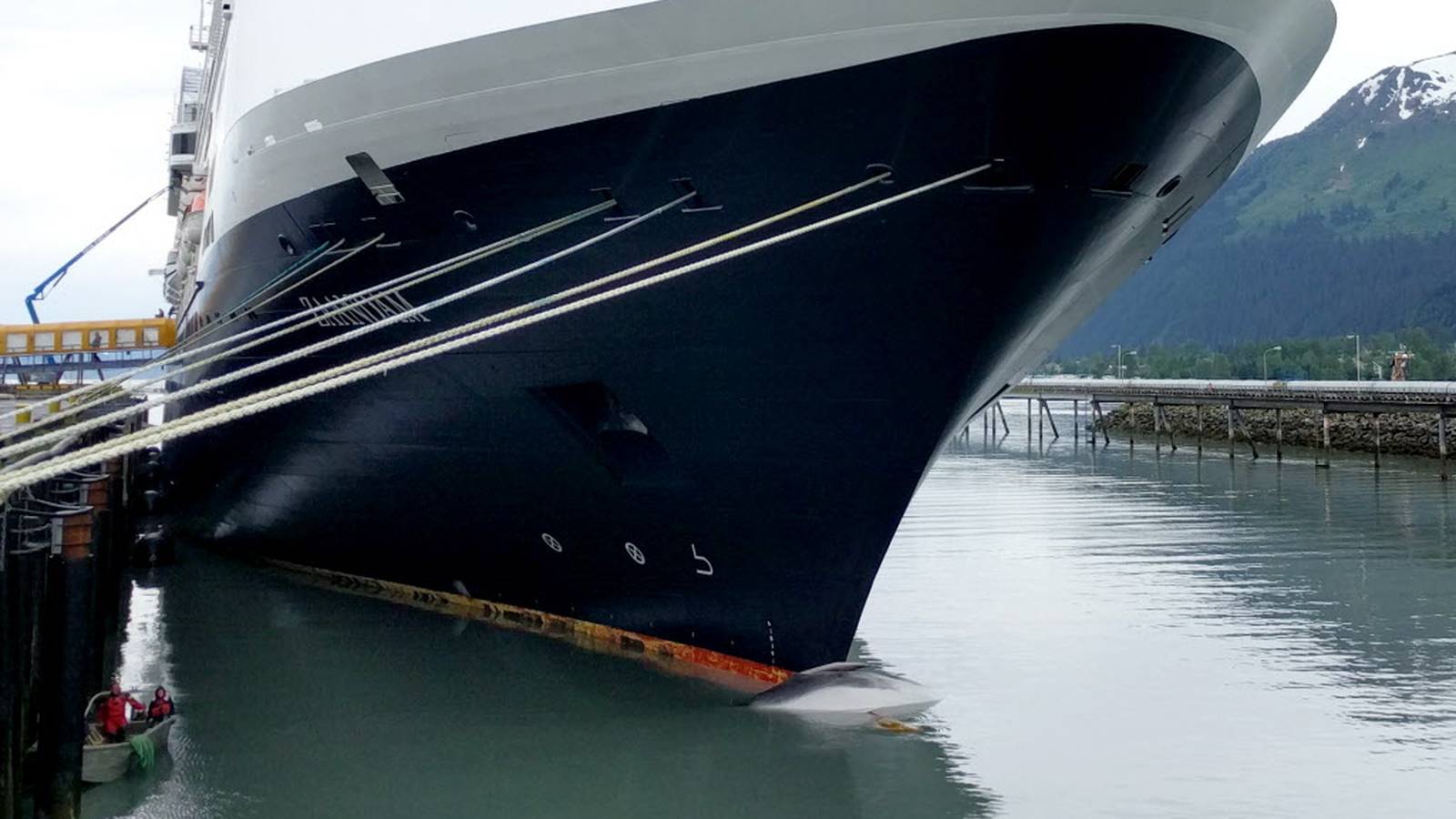
The National Oceanic and Atmospheric Administration (NOAA) Fisheries Alaska is currently investigating a vessel strike involving the Ovation of the Seas, a Royal Caribbean cruise ship, which arrived in Seward, Alaska, on June 19 with the carcass of a 61-foot pregnant fin whale draped across its bow. Preliminary necropsy results indicate the whale suffered blunt force trauma to the jaw, spine, and ribs, consistent with a high-impact collision.
Calls for Policy Reform
On June 24, the Center for Biological Diversity formally petitioned Royal Caribbean to implement mandatory speed restrictions of 10 knots or less when navigating known whale habitats. Cooper Freeman, the organization’s Alaska director, stated that the incident represents a significant setback for the species, which is protected under both the Endangered Species Act and the Marine Mammal Protection Act.
While NOAA continues its investigation to determine the exact circumstances of the strike—including whether the crew was aware of the whale’s presence—the cruise line has issued a statement confirming its cooperation. “We are saddened to hear that one of our ships struck a whale while on its way to Seward,” a Royal Caribbean spokesperson said. “We take any impact to marine ecosystems very seriously.”
Legal and Environmental Stakes
Under the Marine Mammal Protection Act, the death of a protected species via vessel strike is classified as a “take.” Whether this results in legal enforcement depends on the findings of the ongoing investigation. Conservationists argue that while federal mandates for speed reduction have been slow to materialize, cruise operators like Royal Caribbean have the capacity to adopt safer navigation protocols immediately to prevent future fatalities in these high-traffic corridors.