
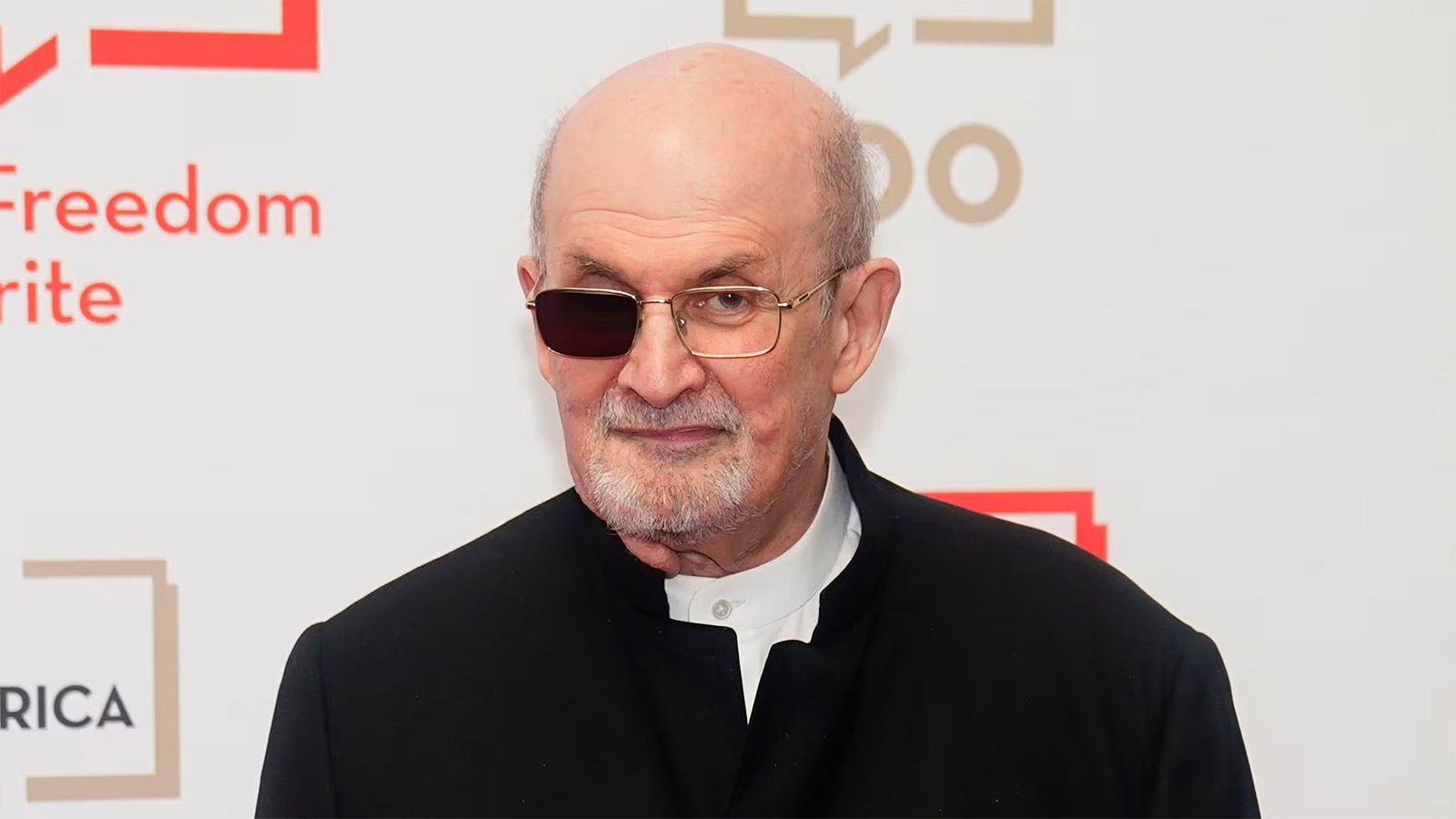
Quick Read
- Salman Rushdie voiced his concerns about AI’s impact on writers during the 2025 Hay Festival.
- He humorously noted that AI poses no real threat until it can craft a book that makes people laugh.
- This marked Rushdie’s most prominent UK appearance since his 2022 attack.
- He shared reflections on resilience, his recovery, and the release of his latest book, ‘The Eleventh Hour.’
Renowned author Salman Rushdie has highlighted a potential tipping point for writers as artificial intelligence continues to evolve. Speaking at the 2025 Hay Festival in Wales, the acclaimed novelist shared his views on the intersection of AI and creativity, blending humor with caution in his remarks.
Rushdie pinpoints AI’s creative limitation
During the event, Rushdie dismissed the idea that AI currently poses a real threat to writers, citing its inability to produce humor as a major shortfall. ‘It has no sense of humor – you don’t want to hear a joke told by ChatGPT,’ he quipped. ‘If there’s a moment when there’s a funny book written by ChatGPT, I think we’re screwed,’ he added, drawing laughter from the audience. The 77-year-old author admitted that he prefers to ‘pretend artificial intelligence doesn’t exist’ and revealed he has never tried using AI tools himself. His remarks underscore the enduring belief in the irreplaceability of human wit and creativity in literature.
A resilient return to public life
The festival marked Rushdie’s most high-profile public appearance in the UK since the August 2022 stabbing attack that left him with severe injuries, including blindness in one eye and damage to his liver. Addressing the crowd, Rushdie reflected on the attack, calling it an ‘important moment’ when he and his wife Eliza revisited the scene of the incident to reclaim his narrative. ‘It will be nice to talk about fiction again because ever since the attack, really, the only thing anybody’s wanted to talk about is the attack. But I’m over it,’ he said, emphasizing his desire to move forward with his craft.
The enduring legacy of ‘The Satanic Verses’
Rushdie’s literary career has long been intertwined with controversy. His 1988 novel, ‘The Satanic Verses,’ provoked global outrage for its depiction of the Prophet Muhammad, leading Iran’s then-spiritual leader, Ayatollah Ruhollah Khomeini, to issue a fatwa calling for his execution. The resulting threats forced Rushdie into years of hiding. Reflecting on these experiences, he said he never envisioned writing about himself, as his goal was always to ‘make stuff up.’ This sentiment resonates strongly in his latest work, ‘The Eleventh Hour,’ which he described as a return to the stories and fiction that define his career.
Insights on creativity, resilience, and storytelling
At the Hay Festival, Rushdie also touched on broader themes of storytelling in a polarized world. He argued that in an era when agreeing on the truth is increasingly challenging, stories and fables have become more vital than ever. While he joked about the financial realities of being a writer – ‘unless you’re writing about child wizards,’ in a playful nod to JK Rowling – Rushdie underscored the importance of creating works that audiences can inhabit rather than ones that attempt to teach.
Rushdie’s candid reflections and humor were a testament to his resilience. Despite the physical and emotional scars left by his 2022 attack, he continues to champion the transformative power of literature, offering both a warning and a celebration of the human spirit.
As artificial intelligence advances, Rushdie’s words serve as a reminder of the irreplaceable spark of human creativity. For now, it seems the pen – and the joke – remains mightier than the algorithm.