


The Rise and Fall of Russ Holliday: A Star Quarterback’s Catastrophe
For Russ Holliday, football was never just a game—it was his entire identity. As a college quarterback with a rocket arm and a swagger to match, he seemed destined for greatness. But in Hulu’s new series Chad Powers, Glen Powell brings this fallen star to vivid, uncomfortable life. Holliday’s career implodes not just because of a single, boneheaded mistake during the Rose Bowl—a dropped ball, a game lost, a team humiliated—but because of what comes after. In a moment of raw, televised disgrace, Russ lashes out at a young fan in a wheelchair, toppling the child’s chair in a fit of frustration. The world watches, recoils, and the gates of football slam shut. Roger Ebert calls Holliday “an arrogant, belligerent jerk,” and the show never sugarcoats the fallout: no team will hire him, his fame curdles into notoriety, and even casual passersby pretend not to recognize him in public.
From Couch to Catfish: A Redemption Attempt in Disguise
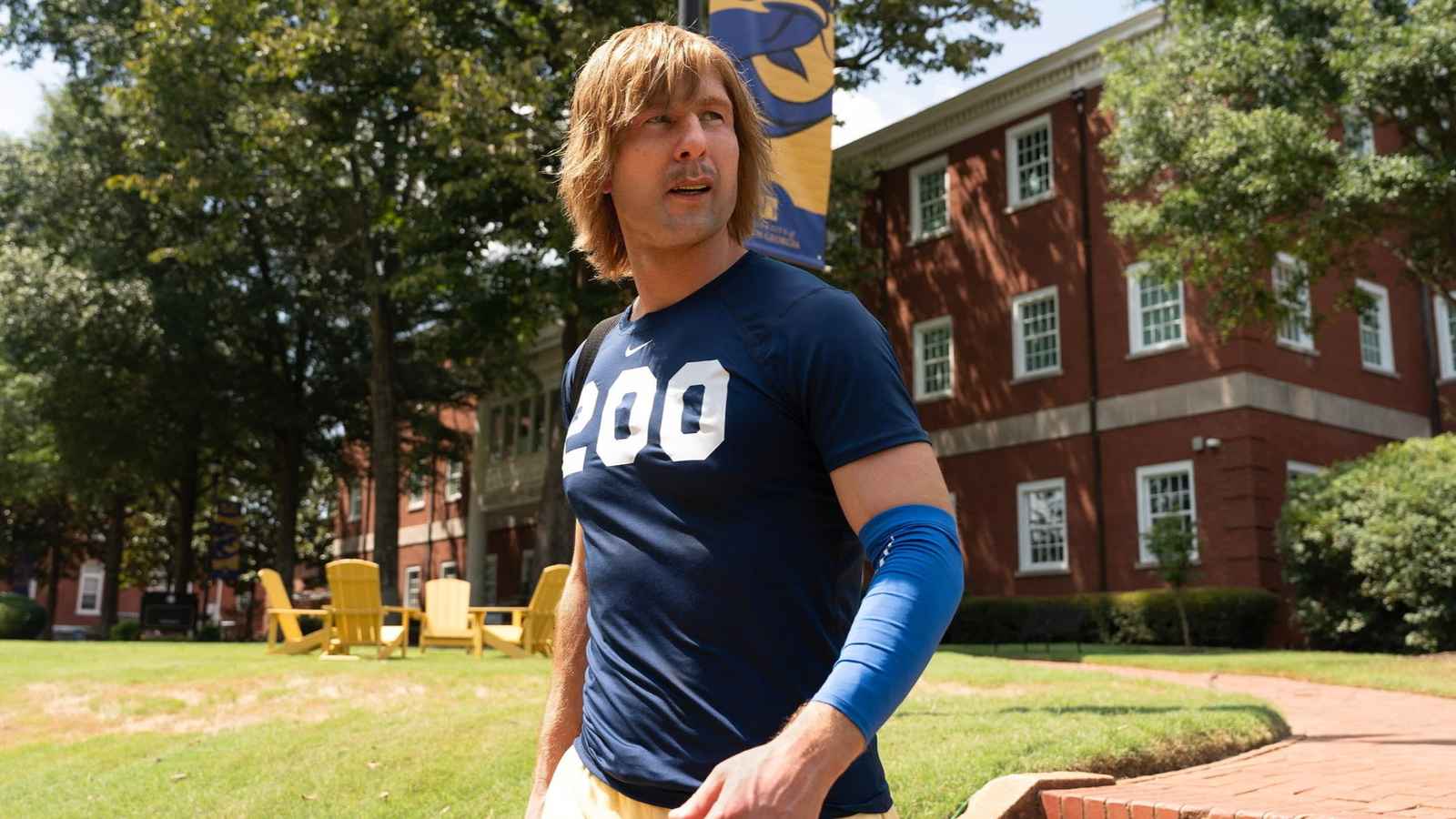
Eight years later, Russ is still adrift, living with his father Mike—a Hollywood makeup artist, played with a gruff edge by Toby Huss. The days blur together in a haze of failed crypto ventures, awkward reality TV cameos, and bitter self-loathing. Yet, beneath the bravado, there’s a sense of desperation. When Russ catches wind of open tryouts for the South Georgia Catfish, a struggling college football team, a wild idea takes root. With help from his dad’s prosthetics kit and a new ally—Danny Cruz, the Catfish’s irrepressible mascot—Russ concocts a new persona: Chad Powers. The transformation is more than skin deep; it’s a last-ditch bid for relevance, a “Mrs. Doubtfire” meets Friday Night Lights kind of scheme. “I’m gonna do a ‘Mrs. Doubtfire,’” Russ quips, “just with football.” TribLive notes how the show leans into the absurdity, mining cringe comedy from Chad’s bizarre backstory and off-the-cuff lies—claiming Benjamin Franklin as his football inspiration, for instance.
Impostor on the Field: Satire, Stereotypes, and Surreal Humor
As Chad, Russ’s prodigious talent is impossible to hide, even beneath the prosthetics. He quickly earns a spot on the team, though not without suspicion. The head coach, Jake Hudson (Steve Zahn), keeps Chad at arm’s length, preferring the wholesome backup quarterback Gerry Dougan. The show revels in the logistics of maintaining the ruse: sweat threatens to melt the makeup, showers and swimming pools become perilous, and press interviews turn into a surreal improv session. The supporting cast is a collage of sports tropes—overlooked assistant coaches, a headstrong boosters’ leader (Wynn Everett’s Tricia), and the enigmatic coach’s daughter Ricky Hudson (Perry Mattfeld), herself a former athlete seeking her father’s approval.
Yet, if Ted Lasso spun its sports origins into a warm, optimistic tale, Chad Powers takes an edgier route. The humor is mean-spirited, the camaraderie brittle. Characters help Russ/Chad not out of kindness, but for their own gain. Danny, his closest accomplice, admits he’s motivated by the prospect of tabloid fame as much as second chances. The locker room banter is sharp, with teammates oscillating between disbelief and derision. Even comic relief is tinged with bite: Danny twerks in a fish suit, Tricia smokes wherever she pleases, and Chad is nicknamed “Radio” in a nod to Cuba Gooding Jr.’s film.
Beneath the Prosthetics: Searching for Genuine Connection
Despite its snarky exterior, the show finds moments of real emotional resonance. The odd-couple dynamic between Russ and Danny surprises with genuine sweetness, especially as their unlikely friendship deepens. In episode four, a Halloween store trip turns into an impromptu bonding session, set to the tune of “Phantom of the Opera.” And beneath the layers of disguise, Russ is forced to confront the pain he’s spent years avoiding—the loss of his career, the strained relationship with his father, the longing for forgiveness that, as Mike warns, “runs out” eventually.
It’s in the margins, Roger Ebert argues, that the show’s most interesting stories unfold—particularly in the complex father-daughter dynamic between Jake and Ricky Hudson. Ricky, at first underwritten, gradually emerges as a wounded, introverted figure whose search for acceptance mirrors Russ’s own. Their parallel journeys, both yearning for unconditional love from reticent fathers, add texture to a plot otherwise dominated by slapstick and satire.
The Real Chad Powers: From Eli Manning’s Prank to Hulu’s Satirical Spin
The genesis of Chad Powers is itself a piece of sports pop culture trivia. The character debuted in a comedic sketch for Eli Manning’s ESPN+ show “Eli’s Places,” where Manning, in prosthetics, infiltrated Penn State football tryouts. Hulu’s adaptation, developed by Powell and Michael Waldron (“Loki,” “Heels”), embraces the sketch’s offbeat premise but pushes it further, asking what happens when a disgraced star tries to “fake it till he makes it”—not just on the field, but as a person.
Producer Adam Fasullo, a University of Pittsburgh graduate, infuses the show with subtle nods to his alma mater—from the Catfish team’s blue and gold uniforms to crowd shots borrowed from Pitt games. The series is self-aware, often referencing its own ridiculousness. “F—, this could be a movie!” Russ exclaims, breaking the fourth wall and preempting critiques of streaming-era storytelling. The meta-humor, while occasionally grating, serves as a reminder that the show knows exactly how outlandish its premise is.
Redemption, Fame, and the Price of Reinvention
At its core, Chad Powers is a redemption story—a familiar arc in sports narratives, but with a twist. The stakes may be lower than in classics like “Rocky” or “Remember the Titans,” yet the emotional journey is no less fraught. Russ’s attempt to reclaim his place is as much about escaping his own self-loathing as it is about football. The show asks whether pretending to be a better person can actually make you one—a question that lingers even as the comedy veers into absurdity.
The season finale brings unexpected emotional weight, as Russ faces the consequences of his deception and the limits of forgiveness. The supporting cast, especially Mattfeld and Zahn as Ricky and Jake, shine in quieter moments, revealing vulnerabilities beneath their tough exteriors.
Conclusion: A Satirical Mirror for Sports and Celebrity Culture
Chad Powers isn’t a feel-good sports story, nor is it a simple redemption arc. It’s a messy, biting satire of fame, failure, and the lengths people go to for a second chance. Glen Powell’s Russ Holliday is both the villain and the underdog, a character who forces us to ask whether reinvention is ever truly possible—or whether the masks we wear just reveal what we’re running from. The show’s willingness to embrace discomfort, cringe, and emotional complexity sets it apart from its genre peers, even if its humor sometimes lands with a thud.
Assessment: “Chad Powers” succeeds most when it abandons easy answers and leans into the awkward, complicated reality of seeking redemption in a culture obsessed with image. By centering Russ Holliday’s flawed humanity—and refusing to let him off the hook—the series offers a sharp, self-aware commentary on fame and forgiveness that lingers long after the final whistle.