
Quick Read
- Russia launched its largest airstrike of the war, targeting Kyiv’s government building for the first time.
- The attack involved 800 drones and 13 missiles, killing four people, including an infant.
- President Zelensky condemned the strike as a ‘deliberate crime’ and called for stronger air defenses.
- International responses include potential new sanctions from the U.S. and EU.
- The attack marks a significant escalation, raising concerns about prolonged conflict.
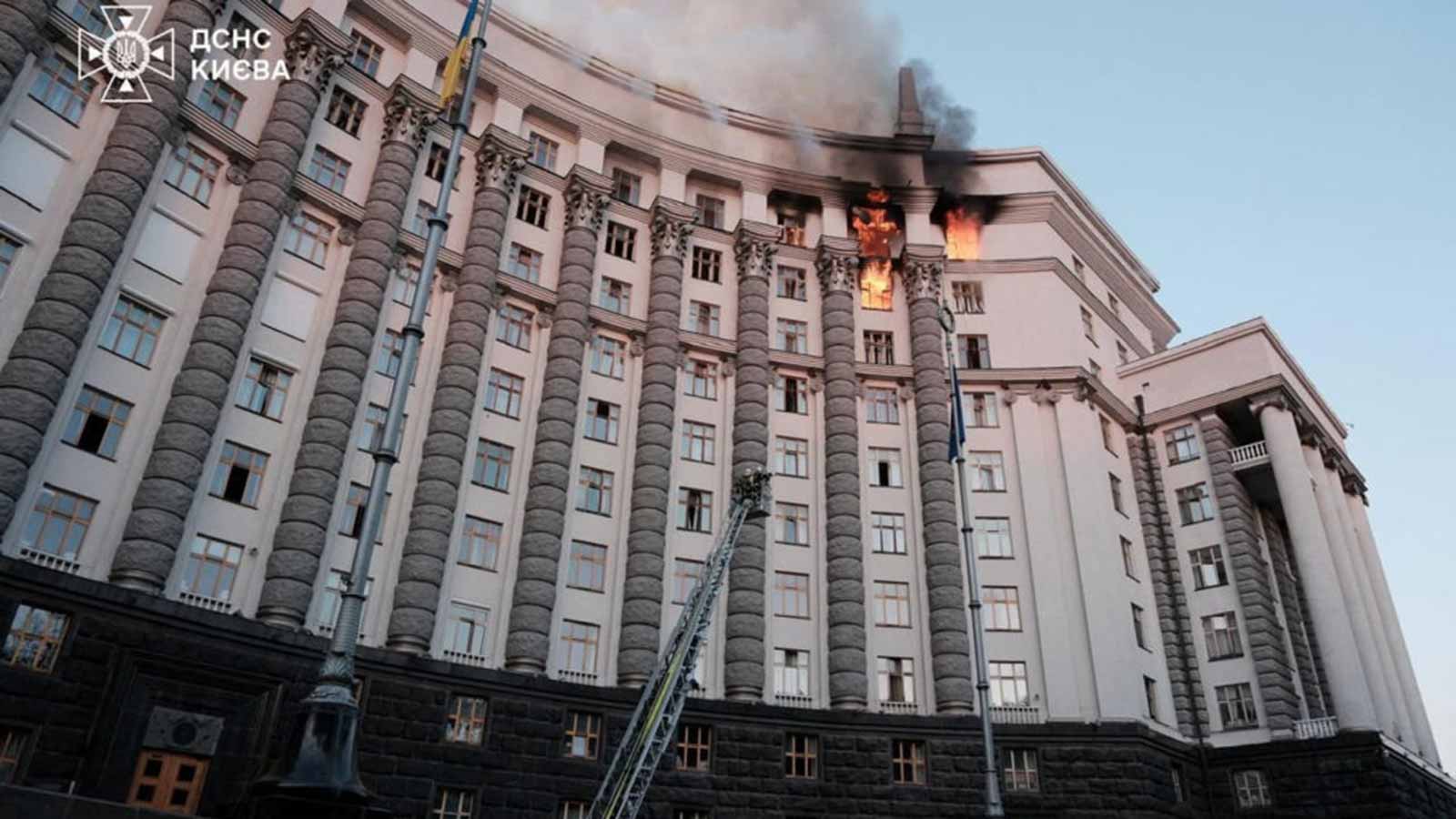
In a chilling escalation of the ongoing war, Russia launched its largest aerial attack on Ukraine since the beginning of the conflict in 2022, targeting Kyiv’s main government building for the first time. The strike, carried out in the early hours of Sunday, September 8, 2025, involved over 800 drones and 13 missiles, leaving at least four people dead, including a three-month-old infant, and injuring dozens more. Ukrainian President Volodymyr Zelensky condemned the attack, describing it as a “deliberate crime and a prolongation of the war.”
The Largest Attack Since 2022: A New Stage in the War
According to Ukrainian military officials, the airstrike marked a significant escalation in Russia’s tactics. The attack targeted critical infrastructure across several regions, including Zaporizhzhia, Kryvyi Rih, Odesa, and the Sumy and Chernihiv areas. However, the most notable strike was on a government building in Kyiv’s Pecherskyi district, where thick smoke was visible as rescue workers battled flames early Sunday morning. This marked the first time a government facility in the capital had been hit since the war began, signaling a “new stage” in the conflict, as noted by Ukraine’s Prime Minister Yulia Svyrydenk on social media.
The destruction in Kyiv also extended to residential buildings, leaving dozens of families displaced. “Russia has doubled the number of drones aimed at civilians, deliberately striking energy infrastructure on the eve of winter,” Svyrydenk said. The Ukrainian Energy Ministry also reported localized blackouts and gas outages, emphasizing that the attacks were aimed at causing maximum hardship for civilians.
International Reactions and Rising Tensions
The global response to the attack has been swift. U.S. President Donald Trump announced plans for a second phase of sanctions against Russia, although details remain unclear. European leaders are expected to visit the United States this week to discuss further actions. EU Council President Antonio Costa confirmed that new sanctions are being closely coordinated between the EU and the U.S. Meanwhile, Kremlin spokesperson Dmitry Peskov dismissed the impact of sanctions, reiterating Russia’s commitment to its “special military operation.”
As reported by News.az, the attack has deepened concerns that a ceasefire remains out of reach. Russia’s deepening ties with China and its continued aggression have further complicated diplomatic efforts. Experts suggest that Russia’s escalation may be a response to internal pressures from pro-war ultranationalists, as well as an attempt to deter Ukrainian drone strikes on Russian energy infrastructure.
Historical Context: A Prelude to Escalation
The attack on Kyiv’s government building follows years of warnings and threats from Moscow. In June 2023, then-Russian Defense Minister Sergei Shoigu cautioned that Ukrainian strikes on Crimea could lead to retaliatory attacks on “decision-making centers” in Kyiv. By November 2024, President Vladimir Putin had vowed to target these centers using advanced missiles, citing Ukraine’s continued attacks on Russian territory. Despite these threats, Russia had refrained from such escalatory measures—until now.
As The Telegraph highlighted, the recent strike is part of a broader strategy to pressure Ukraine and its allies. With Russia’s economy under strain from international sanctions and its war effort costing up to $1 billion daily, Moscow appears to be doubling down on its military objectives. The attack also comes amid mounting war fatigue within Russia, particularly among younger citizens, and growing discontent among pro-war factions demanding more aggressive action.
The Road Ahead: Diplomacy or Escalation?
While President Zelensky has renewed calls for stronger air defenses from Ukraine’s allies, the path to peace remains uncertain. President $1’s efforts to broker a settlement have faltered, and Putin’s actions suggest a lack of interest in negotiations. Analysts warn that continued strikes on Ukrainian government facilities and Western diplomatic institutions could become more frequent, raising the risk of an accidental conflict with NATO.
As winter approaches, the humanitarian toll of the war is expected to grow, with millions of Ukrainians facing the prospect of living without heat or electricity. The international community faces mounting pressure to respond decisively, balancing the need for immediate relief with long-term strategies to deter further aggression.
Russia’s largest airstrike on Ukraine marks a grim milestone in the war, signaling a dangerous escalation with far-reaching consequences. As the world watches, the urgency for a resolution grows, but the path forward remains fraught with challenges.