


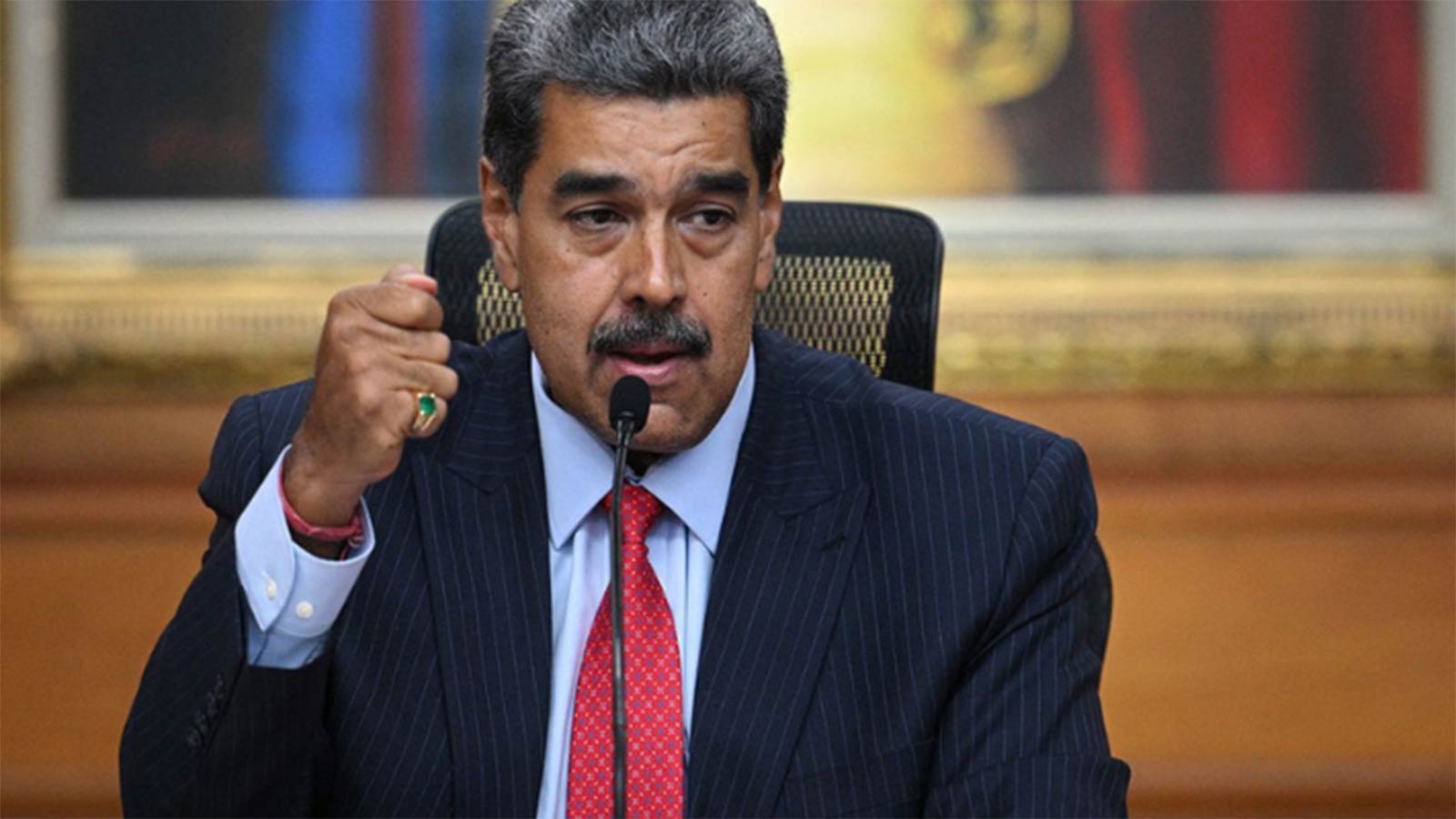
NEW YORK (Azat TV) – Nicolás Maduro’s lawyer claims the Trump administration is blocking the ousted Venezuelan leader from paying his legal fees for his New York drug trafficking case, raising significant questions about his right to a fair defense following his capture by U.S. forces in January. This development comes as U.S. officials continue to defend the military operation that led to Maduro’s ouster, framing it as a crucial step towards regional stability.
Legal Defense Impeded for Ousted Venezuelan Leader
Barry Pollack, the attorney representing Nicolás Maduro, stated in a court filing on Wednesday that U.S. authorities are actively preventing his client from receiving funds from Venezuela to cover his legal expenses. Maduro, who was Venezuela’s president from March 2013 until his capture on January 3 by U.S. forces, has pleaded not guilty to drug trafficking charges and maintains he is a “prisoner of war.” His wife, Cilia Flores, is also a co-accused in the case and has pleaded not guilty.
According to Pollack, the U.S. Department of the Treasury’s Office of Foreign Assets Control (OFAC), which enforces sanctions, initially issued licenses on January 9 allowing him to accept payment for representing both Maduro and Flores. However, just three hours later, OFAC reportedly issued an amended license that specifically blocked the attorney from receiving payment for the former president. Pollack noted that Maduro “cannot otherwise afford counsel” and confirmed his team has challenged OFAC’s decision. Should this challenge fail, Pollack intends to formally complain to the court, emphasizing the critical impact on Maduro’s defense. Maduro’s next scheduled court appearance is March 26.
US Defends Maduro’s Ouster Amid Regional Concerns
The claims regarding blocked legal fees surface amidst ongoing U.S. efforts to solidify its position in the Western Hemisphere following Maduro’s removal. On Wednesday, U.S. Secretary of State Marco Rubio defended the Trump administration’s military operation to capture Maduro during a summit with Caribbean leaders in Basse Terre, St. Kitts and Nevis. Many leaders from the 15-member Caribbean Community (CARICOM) bloc had expressed objections to the U.S. move, raising concerns about its legality.
In a closed-door meeting, Rubio dismissed these concerns, asserting that Venezuela and the wider region were “better off” as a result of Maduro’s ouster. A transcript of his remarks, later distributed by the U.S. State Department, quoted Rubio stating, “Venezuela is better off today than it was eight weeks ago.” He highlighted “substantial” progress made by interim authorities in Venezuela, now led by Delcy Rodriguez, who had served as Maduro’s vice president since 2018 and is reportedly working closely with Washington. Rubio also underscored the Trump administration’s renewed focus on the Western Hemisphere, a policy President Donald Trump has termed the “Donroe Doctrine,” aimed at ensuring Washington’s dominance in the region and addressing issues like crime and economic opportunities.
President Trump himself lauded the operation to remove Maduro from Venezuela to face drug trafficking charges in New York as “an absolutely colossal victory for the security of the United States” during his State of the Union address on Tuesday night. This operation was preceded by a significant U.S. military buildup in the Caribbean Sea.
Geopolitical Shifts and Due Process Implications
The U.S. Treasury Department’s actions regarding Maduro’s legal fees introduce a complex dimension to the international legal landscape. While the U.S. government seeks to project stability and assert its influence in the Caribbean and Latin America, the allegations by Maduro’s lawyer directly challenge the principles of due process and the right to legal representation, even for individuals accused of severe crimes.
The current Venezuelan government, under Delcy Rodriguez, has reportedly aligned with Washington, yet the funds allegedly blocked are meant for the defense of the former leader. This situation highlights the intricate balance between geopolitical objectives, such as promoting democracy and combating drug trafficking, and the fundamental tenets of a fair legal system. The outcome of Pollack’s challenge to OFAC and any subsequent court action could set a precedent for how the U.S. handles legal proceedings involving ousted foreign leaders, particularly when their former governments or assets are under U.S. influence or sanctions.
The ongoing dispute over Nicolás Maduro’s legal fees underscores a critical tension between the strategic foreign policy aims of the United States and the universal legal principle of a fair trial, raising questions about the extent to which an accused’s defense can be constrained by the very government prosecuting him.