
Quick Read
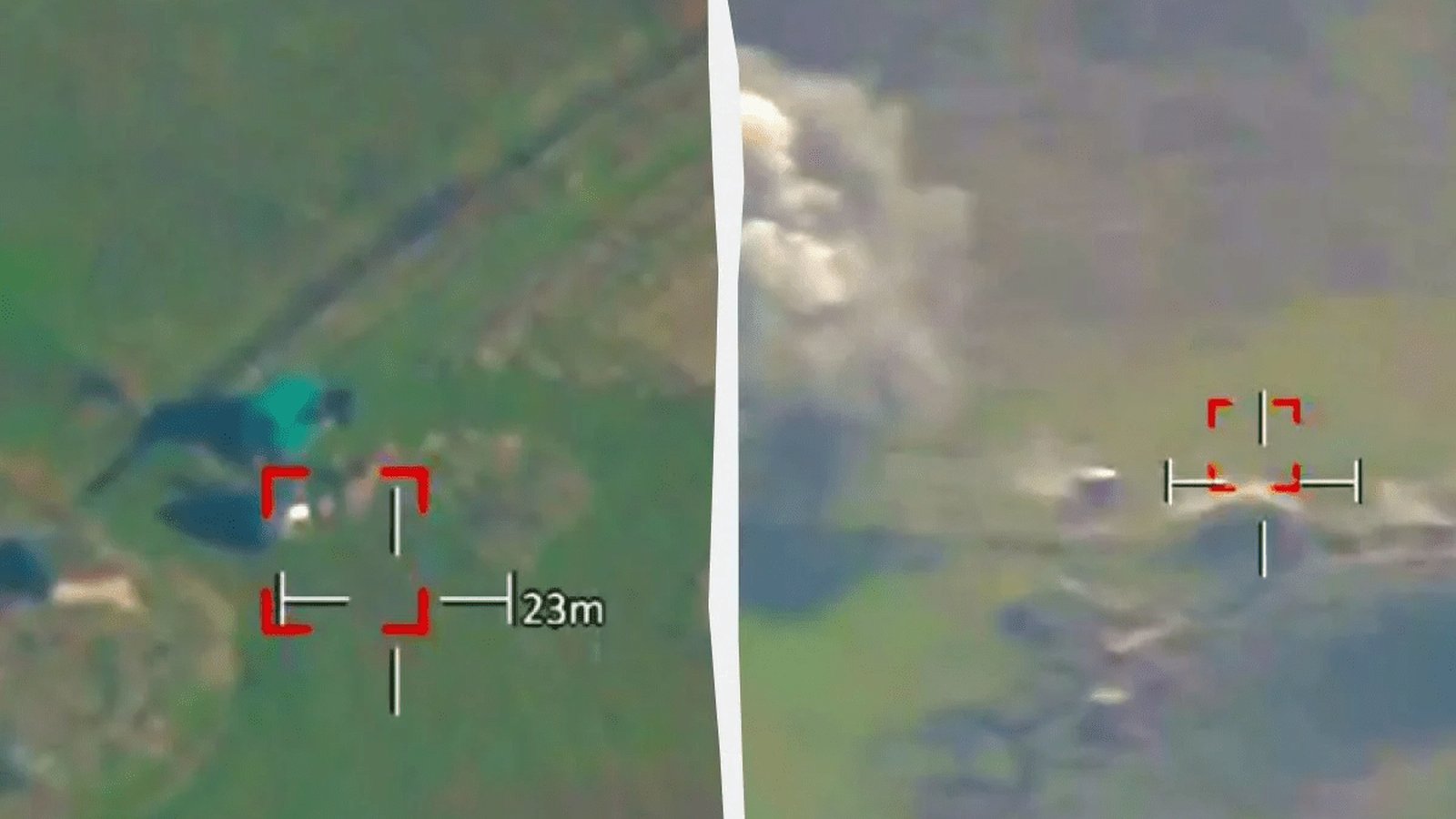
- Russia is integrating AI into its Lancet drones, potentially using Nvidia technology, according to Ukraine’s military intelligence.
- The development suggests ongoing cooperation between Russia and Iran in modernizing their drone capabilities.
- This advancement is part of a broader race between Russia and Ukraine to develop autonomous weapons.
KYIV (Azat TV) – Ukraine’s Main Intelligence Directorate (GUR) announced on March 23, 2026, that Russia is integrating artificial intelligence (AI) capabilities into its Lancet series of attack drones, a development that includes the use of Nvidia technology and potential cooperation with Iran. One of these AI-enhanced drones was reportedly shot down over Kyiv last week, according to a GUR statement that also referenced a related Telegram post.
The GUR indicated that while the Lancet drones currently require real-time piloting, Russia is actively working to introduce elements of autonomous guidance. This advancement is also being applied to a smaller variant of the Lancet known as the Scalpel. The intelligence directorate noted that similar technologies have been previously observed in Russia’s V2U drone, a semi-autonomous loitering munition, and in the Geran series of attack drones, which are based on Iran’s Shahed technology.
AI Integration in Russian Drones
The GUR statement highlighted that the AI modules being incorporated into the Lancet drones are reportedly based on Nvidia Jetson computing boards. These boards are popular for enabling AI and robotics applications. However, developers familiar with AI-assisted weapons told Euromaidan Press that while Nvidia boards are effective for adding battlefield autonomy, they are costly, particularly for drones intended to be expendable. For comparison, Ukrainian forces often opt for more budget-friendly solutions like Raspberry Pi boards augmented with additional memory.
International Cooperation and Supply Chains
This reported integration of AI and foreign technology underscores a continued pattern of international cooperation and a complex global supply chain supporting Russia’s military modernization. According to GUR, a significant portion of the 62 electronic components found in Lancets and Scalpels are of foreign origin, primarily sourced from the United States, Switzerland, and China. The intelligence directorate emphasized that Russia continues to access critical technologies, even for advanced applications like AI modules, through porous sanctions regimes and a network of shell companies registered in other countries. This access allows Russia to consistently improve its indigenous weapons systems.
The Race for Autonomous Weapons
The development signals an intensifying race between Russia and Ukraine to develop and deploy autonomous weapons. While fully autonomous systems remain a future prospect, advancements in task-level autonomy, such as auto-tracking, assisted navigation, and vision-based target locking, are already becoming more prevalent and effective on the battlefield. This includes interceptor and FPV drones capable of locking onto and pursuing targets, as well as increasingly viable autoturret gun platforms. Ukrainian UAVs have demonstrated sophisticated navigation capabilities, including terrain image matching for both low-altitude flights and deep strikes into Russian territory. The reported testing of similar technologies by Russia with its Lancet drones indicates a direct competitive response. Ukraine’s former Commander-in-Chief, Valeriy Zaluzhnyi, has previously stated that Ukraine must win this technological race by 2027.
The strategic partnership between Russia and Iran appears to be evolving beyond traditional arms transfers, with a focus now on joint modernization and technological development, particularly in the rapidly advancing field of AI-driven weaponry. This collaboration not only enhances their immediate military capabilities but also presents a growing technological challenge to global security.