
Quick Read
- OOFD’s Decemberg ride along the Salt Path was canceled for the first time in 10 years due to extreme cold.
- Forty riders had registered for the 46-mile journey through several key Chicagoland trails.
- Camp Reinberg’s heated cabins remained unused as safety concerns prevailed.
- Regional tours like the Grand Illinois Bike Tour highlight ongoing investment in cycling infrastructure.
- Hoffman Estates adopted a new plan to expand bike routes and improve active transportation.
Salt Path: The Backbone of Chicagoland’s Bike Community
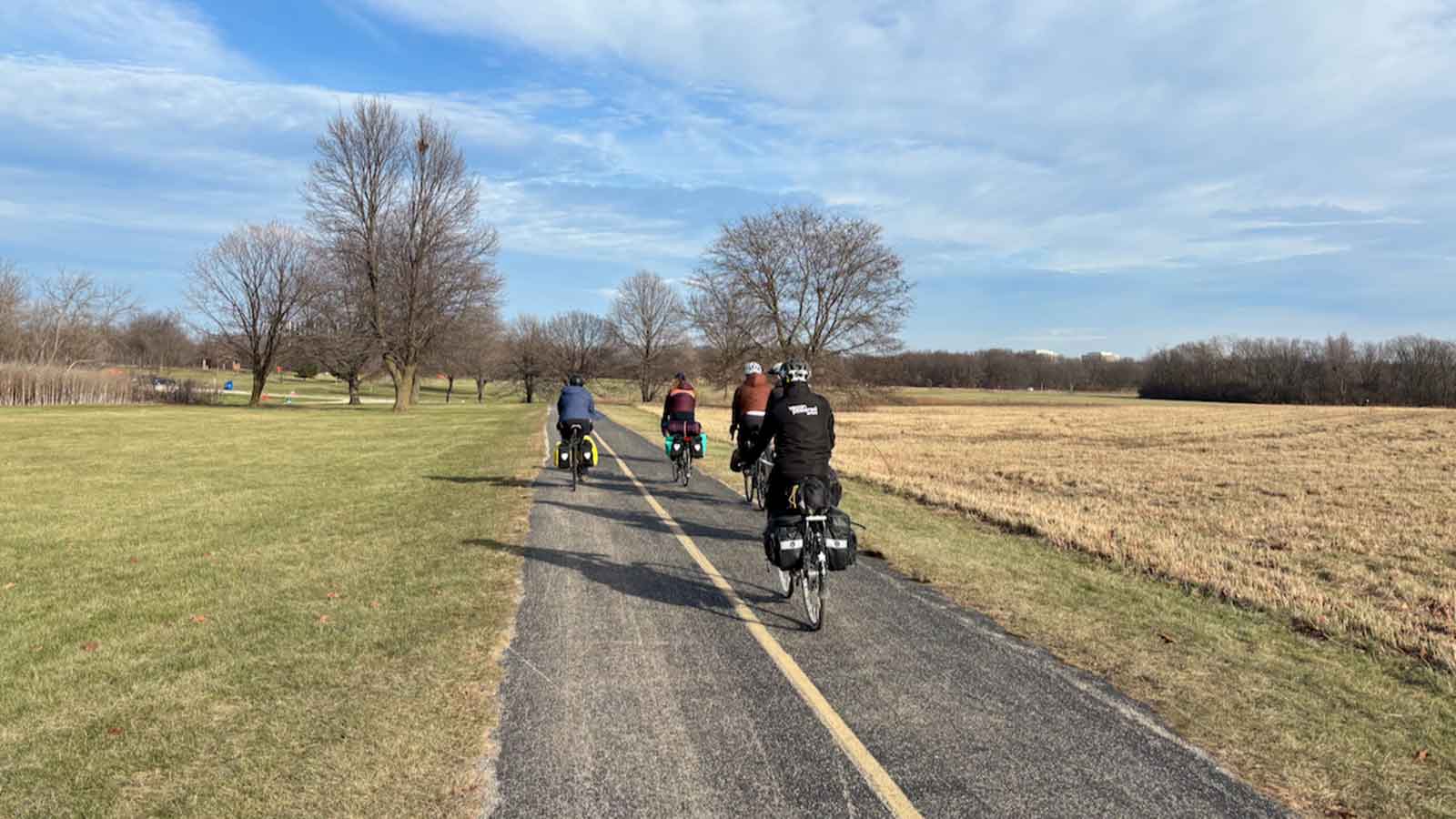
In the world of cycling, few things challenge riders more than the unpredictable grip of winter. This December, that reality became clear as Out Our Front Door (OOFD), a Chicago-based bike camping organization, made the tough call to cancel its annual winter ride along a route that intertwines the Salt Creek Greenway—a path that has become a lifeline for local adventurers.
For ten straight seasons, the group’s “Decemberg” event pressed on, rain, shine, or snow. But when the temperature plunged into single digits, the organization decided that “wisdom is the better part of valor.” Forty riders had already signed up to pedal 46 miles from Chicago’s Ukrainian Village, traversing the Illinois Prairie Path, Salt Creek Greenway, Busse Woods, and Palatine Trail, before arriving at Camp Reinberg in the Forest Preserves of Cook County. The cabins, usually a sanctuary warmed by firewood and camaraderie, stood empty this year.
Weather’s Unforgiving Grip on Adventure
Glenn Schneider, Jr., OOFD’s cofounder and executive director, described the cancellation as unprecedented. “It’s the first time in 10 seasons that we’ve canceled a ride due to weather,” Schneider explained. Their annual Decemberg outing, which started in 2017 as a winter riding challenge, was built on the idea that adventure is possible even in the coldest months. Yet, the Salt Path and other meandering trails aren’t heated, and this time, the risk outweighed the reward.
OOFD always plans for the unpredictable—alternate routes for snow and ice, a hefty firewood budget for warmth. “My initial instinct was we would push on because we always ride—rain, shine, or snow,” Schneider admitted. “We believe in adventure and we’d hate to take this opportunity away from the riders. However, these are the most extreme temps/conditions we’ve faced for Decemberg or any of our rides for that matter.”
Camp Reinberg, revitalized in 2015 as part of Cook County Forest Preserves’ centennial celebration, symbolizes the area’s commitment to outdoor recreation. Purchased in 1931, it helped expand Deer Grove—the region’s first forest preserve. The camp’s four heated cabins are a modern touch, but even they were no match for this year’s biting cold.
Salt Creek Greenway: More Than Just a Route
The Salt Creek Greenway, often simply called the ‘Salt Path’ by local cyclists, is more than a line on a map. It’s a connector—threading together neighborhoods, natural preserves, and communities. For OOFD and similar organizations, it’s a route that brings both challenge and joy, where the journey is as important as the destination.
But the Salt Path also reflects broader trends in regional cycling. Infrastructure is key: safe, well-maintained routes allow riders to venture further, even in adverse conditions. The cancellation of this year’s ride underscores the need for continued investment—not just in paths, but in the support systems that make winter adventure possible.
Regional Growth: Tours and Planning Beyond the Salt Path
While winter forced some indoors, the bike community is already looking ahead. The Grand Illinois Bike Tour (GIBT), organized by Ride Illinois, showcases the state’s growing network of bike-friendly routes. In June, GIBT will roll out from Litchfield, winding through O’Fallon, Edwardsville, and Alton. The region’s extensive infrastructure—including Madison County Transit’s 12 MCT Trails and 22 tunnels—demonstrates what’s possible when communities invest in cycling.
GIBT’s director, Ben Harris, and Ride Illinois’s executive director, Dave Simmons, emphasize inclusivity and safety. The tour attracts riders from across the Midwest and beyond, many of whom return year after year. Communal meals, music, and shared experiences off the bike are as important as the ride itself, reflecting the social fabric woven through every mile of trail.
Notably, camping options for GIBT are unavailable in 2026, but organizers are considering their return. In the meantime, the emphasis remains on safe routes, cultural sites, and making cycling accessible to all.
Village Planning: Building the Future of Active Transportation
Infrastructure isn’t just about long tours—it starts at home. Hoffman Estates, a northwest suburb, recently adopted its “Hoffman in Motion” multimodal transportation plan. Phil Green, the village’s transportation planner, outlined ambitious goals: over 16 miles of new bike routes, almost a mile of new lanes, and 42 miles of side paths. The plan aims to directly link residents to major destinations and transit, making cycling a realistic choice for more people.
Beyond the physical network, Hoffman Estates is merging its bicycle and pedestrian committees to form the Active Transportation Advisory Committee. This holistic approach aims to streamline efforts and foster partnerships, all with the goal of increasing bike ridership and earning official recognition as a Bike Friendly Community.
Whether on the Salt Path, in local neighborhoods, or across the state, the commitment to cycling is clear. It’s about more than just moving from point A to B—it’s about resilience, community, and adapting to whatever Mother Nature throws your way.
In 2025, the story of the Salt Path is one of adaptation and community spirit. The cancellation of a beloved winter ride—though disappointing—spotlights the realities faced by cyclists, planners, and advocates: weather’s unpredictability, infrastructure’s importance, and the enduring desire to connect. As Chicagoland and Illinois continue to invest in active transportation, the Salt Path remains a symbol of both challenge and possibility.