


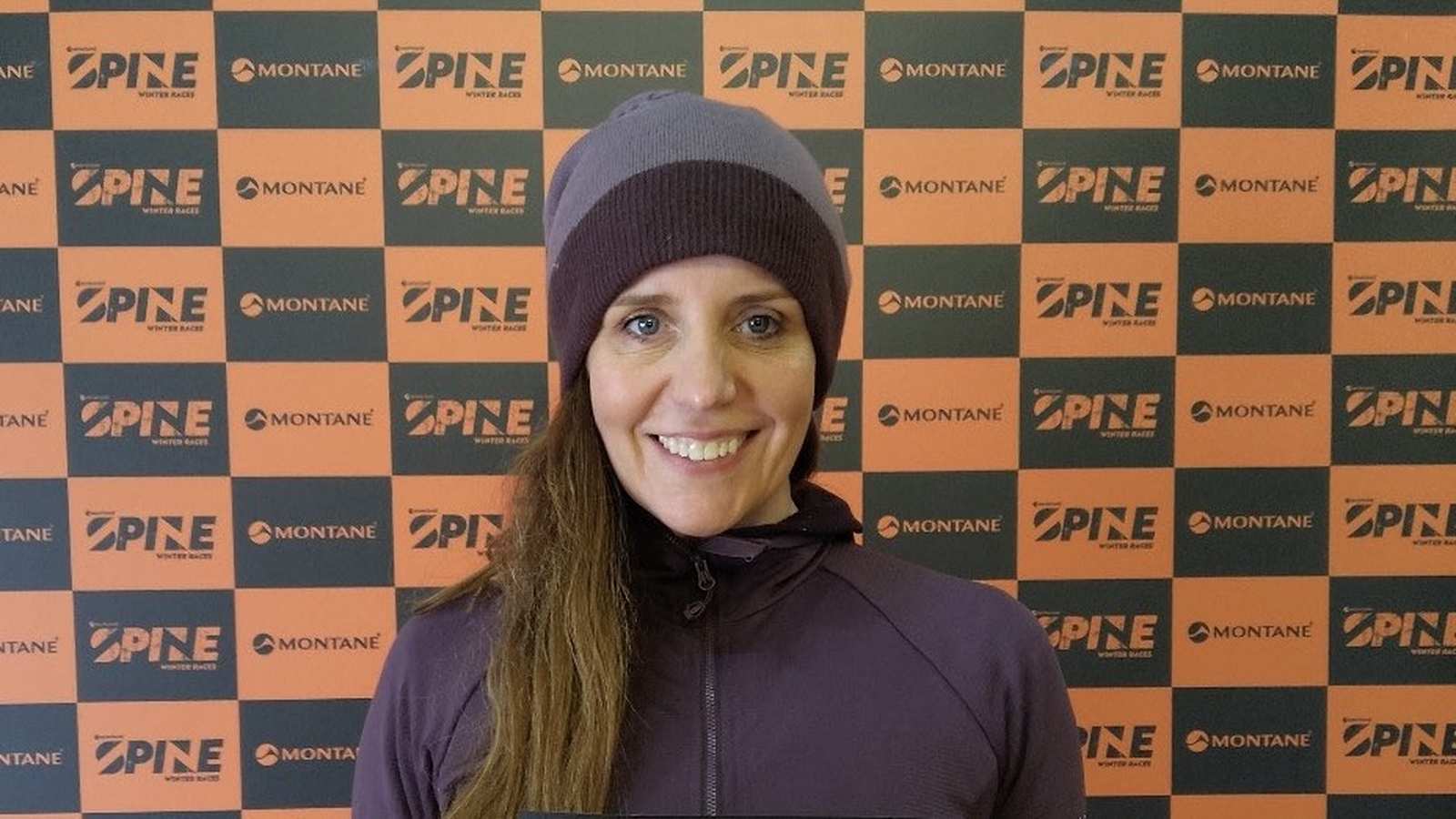
In an unprecedented turn of events for the world of ultra-endurance racing, British runner Sarah Porter was dramatically withdrawn from the Montane Spine Challenger South, a grueling 108-mile ultramarathon, after receiving death threats. The threats, far from being random, were directly linked to her profound humanitarian work, which includes evacuating and supporting women and girls from war zones and advocating for women’s rights in male-dominated spaces. This forced exit from one of Britain’s most brutal races has sent ripples through the endurance community, raising critical questions about athlete safety and the intersection of personal conviction with global conflicts.
The incident unfolded on Saturday, January 10, 2026, during the Winter Spine Challenger South, part of the wider Spine Race family. Porter, who was tackling her first race exceeding 50 miles, was navigating the challenging conditions of the Pennine Way when organizers intervened. According to reports, she had completed approximately 30 miles of the course when a team from the Spine Race met her at Standedge and conveyed the difficult decision. “We’re withdrawing you from the race and we need you to get off course,” they told her, as she recounted to the RunUltra podcast.
Threats Emerge from Lifesaving Humanitarian Efforts
Sarah Porter’s withdrawal wasn’t due to the usual perils of ultra-running – hypothermia, injury, or exhaustion – but a grave security risk. Her humanitarian efforts are spearheaded through the Inspired Minds Foundation, a charity she helped establish. This work began through her community-led tech business, which aims to ensure AI is accessible to everyone and used for good. This path led her to work with women and girls in low-to-middle-income countries, where she focused on setting up schools and education centers. Notably, she built the first STEM school for girls in Afghanistan and worked with an all-girl robotics team in the country, before it was tragically destroyed.
The most perilous aspect of her work, and the direct source of the threats, involves the high-stakes evacuation of these girls and their families during critical periods, such as the fall of Kabul. Porter describes her team’s position as being “on a bit of a knife’s edge,” explaining that the more they do to help, the more it angers certain groups. She pointed to the dire situation in Afghanistan, where, for women and girls, a “new world is emerging” with fewer rights than even a dog in the UK. This fervent advocacy and direct action have manifested in a stream of threats and messages from angry individuals, compelling her to engage with counter-terror police in her everyday life for safety.
For this specific race, Porter was using the platform to raise funds to support women and girls evacuated from war zones and to assist those still trapped within them. Despite her inability to complete the race, her fundraising page remains active, attracting significant donations from the supportive running community who learned of her plight.
The Unyielding Spirit of an Ultra-Runner
Sarah Porter is no stranger to pushing physical and mental boundaries, with a background in triathlons and long-distance swimming. However, trail running is a more recent passion, ignited after joining her son on a few runs. She was drawn to the Spine Race, known as “Britain’s most brutal race,” seeing a potent parallel between its inherent toughness and the brutal realities faced by women globally. “A lot of what we talk about with the charity work that we do is about brutality and how hard it is for women, so I thought it was a really good parallel to do for charity,” she shared with LFTO.
Beyond fundraising, trail running serves as a vital coping mechanism for Porter. She openly discusses living with generalized anxiety disorder, a direct consequence of her demanding work. For her, being out in nature, pushing her limits, and finding her “quit or break point” offers a profound sense of control and mental clarity. As her running coach, John Shield, often emphasizes, people can push themselves further than they believe possible, a philosophy that resonates deeply with Porter’s life and work. Her disappointment at being pulled from the race was palpable, as she told LFTO, “Not long enough to feel like I’d accomplished much… though I’d fallen around in the snow a bit and had managed to sledge down a bit on my backpack, which I was happy about.”
Race Organizers Prioritize Safety Amidst New Challenges
The Montane Spine Challenger South is a non-stop, 108-mile ultra race along the Pennine Way, giving competitors a 60-hour time limit from Edale to Hawes. Before the race, a risk assessment had been conducted, with discussions between organizers and Porter’s security team. Initial measures included the presence of a bodyguard at certain public points along the course, though he was not permitted to interact directly with her. The idea of anonymizing her tracker was considered, but Porter initially insisted it remain active for sponsors. However, it was eventually switched off shortly after the start.
Race organizers confirmed the withdrawal, stating, “On Saturday the 10th we made the difficult decision to remove one of our participants from the race following a personal safety threat… we understand that this is disappointing for the runner in question, but the safety of all our participants is always our primary concern.” The decision, made on the recommendation of race director Phil Hayday-Brown, underscores the gravity of the situation. As Swikblog highlighted, ultra-events are accustomed to dealing with risks like weather and injury, but death threats introduce an entirely new dimension, forcing organizers to treat a race like a protected event and rethink security protocols.
Despite this setback, Sarah Porter remains undeterred. She has a full season of ultra-races ahead, including mountain races across England, Wales, Scotland, and the USA. Her resolve to surpass the 100-mile mark remains strong. “I haven’t managed to run more than 50 miles yet and I really do want to get past the 100-mile point,” she affirmed, a testament to her unyielding spirit in the face of adversity. Her story is a powerful reminder that while the physical challenges of ultra-running are immense, some battles extend far beyond the trail.
The forced withdrawal of Sarah Porter from the Spine Race due to death threats marks a somber, yet critical, moment for the ultra-running community. It underscores the uncomfortable reality that global conflicts and humanitarian crises can spill over into seemingly insulated spaces, even those dedicated to personal endurance. This incident not only highlights the immense personal courage of individuals like Porter, who dedicate their lives to aiding the vulnerable, but also challenges event organizers to evolve their understanding of risk, moving beyond environmental and physical dangers to confront the far more insidious threats born of ideological extremism.