


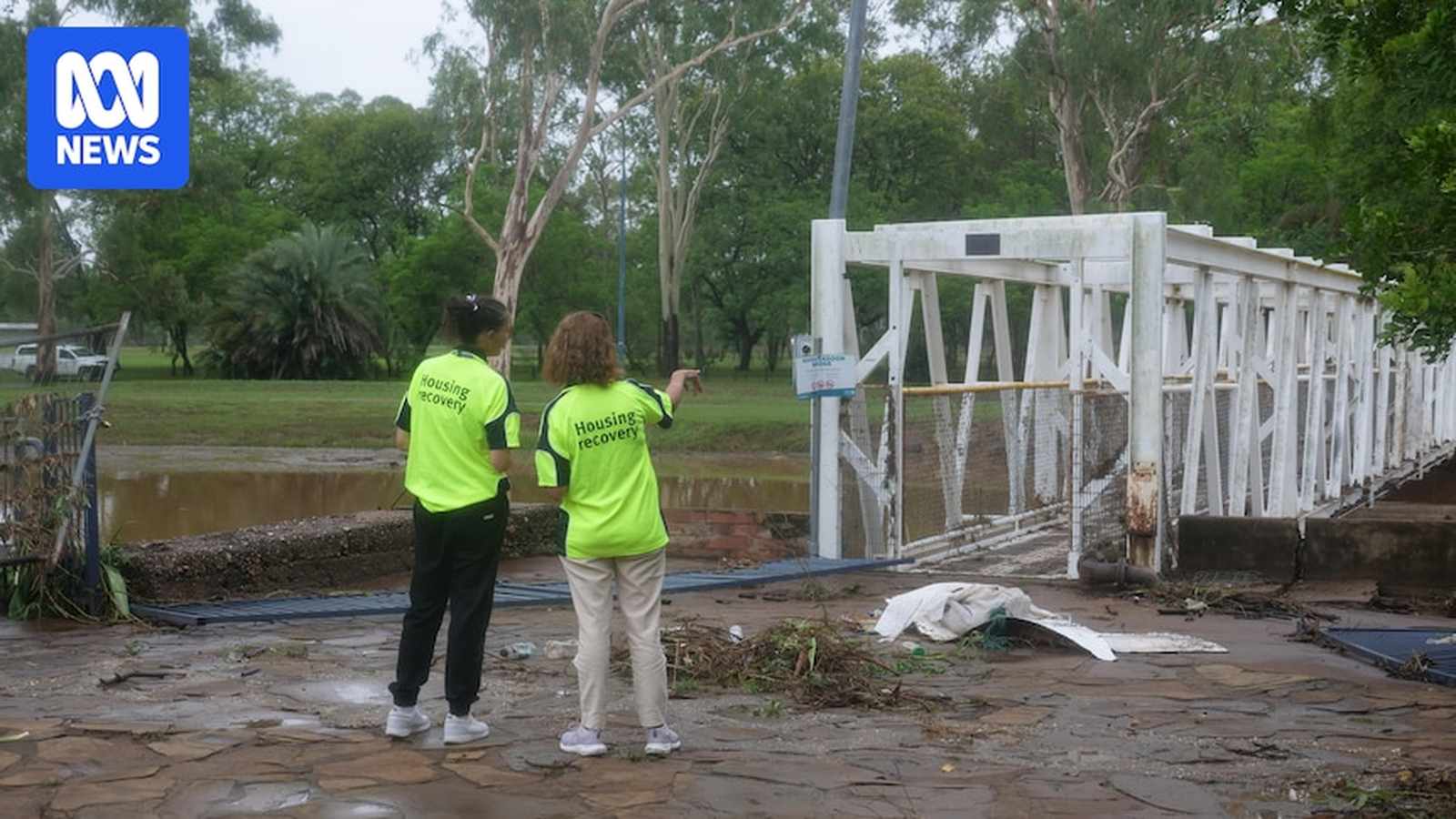
Queensland, a state synonymous with resilience, is once again grappling with the immense power of nature as devastating floods, triggered by ex-Tropical Cyclone Koji, sweep across vast swathes of its territory. The deluge has left a trail of destruction, submerging towns, isolating communities, and claiming the lives of tens of thousands of livestock, all while sparking a contentious debate over governmental presence during the crisis.
The scale of the disaster is staggering. Communities from the state’s north to the central regions have been inundated, with areas like Clermont experiencing rainfall not seen in over a century. The Bureau of Meteorology (BOM) has issued dire warnings, with major flood alerts remaining in place for several river systems, including the Georgina, Flinders, Connors-Isaac, and Mackenzie rivers. Residents in low-lying areas near the Mackenzie River, in particular, have been urged to “leave now” as water levels rapidly surpass major flood thresholds, as reported by ABC News.
Minister’s Absence Fuels Public Scrutiny Amidst Crisis
As Queensland battled the rising waters, a significant point of contention emerged: the absence of Amanda Camm, the Minister in charge of Community Recovery. Camm, whose portfolio is crucial during such widespread emergencies, was confirmed to be on holiday in Africa with her partner, Sport Minister Tim Mander. This revelation, first brought to light by 9news.com.au, immediately drew criticism and raised questions about leadership during a critical period.
Queensland Premier David Crisafulli, however, swiftly defended his minister, emphasizing that his cabinet operates as a cohesive team. “We’ve worked really well together,” Crisafulli told Today, asserting his role as the ultimate head of the government’s response. He praised the work of Sam O’Connor, who has been acting in Camm’s stead, and underscored the tireless efforts of first responders and emergency services personnel on the ground. Despite the Premier’s assurances, the optics of a key recovery minister being abroad during a major natural disaster have undoubtedly fueled public scrutiny and highlighted the complexities of political accountability.
Clermont: A Town Under Siege, Tales of Survival Emerge
The central Queensland town of Clermont bears the brunt of ex-Tropical Cyclone Koji’s fury, recording its heaviest rainfall in over a century. More than 200mm of rain since Monday morning has transformed streets into rivers, forcing rapid evacuations. Isaac Regional Council estimated that up to 71 homes were impacted, with four suffering significant damage. The stories emerging from Clermont are a testament to both the destructive power of the floods and the indomitable spirit of its residents.
Joe Masters and his family were among those who narrowly escaped the rapidly rising waters. “Within minutes,” he recounted, the bottom floor of their home was submerged, leaving three bedrooms “absolutely destroyed.” Similarly, Justin Lawrence, a Clermont resident for over 50 years, described the current flooding as unprecedented. He recalled the town’s devastating 1916 flood, which claimed more than 60 lives, but stressed, “We’ve had some big floods here, but nothing to this extent.” Chopper crews have been instrumental in rescuing stranded residents from outlying properties, a stark reminder of the isolation many face. Mayor Kelly Vea Vea of the Isaac Regional Council acknowledged the community’s swift response and the long road to recovery ahead, urging politicians to deliver tangible solutions.
Livestock Devastation and Miraculous Escapes
Beyond the immediate impact on human settlements, the floods have unleashed an ecological and economic catastrophe for Queensland’s agricultural sector. Initial estimates from the Department of Primary Industries indicate that over 51,393 livestock are dead or missing across the state, a number expected to climb as graziers gain access to their properties. While this figure is smaller than the catastrophic 2019 floods that wiped out over 600,000 head, the impact on individual producers is no less devastating. Shane McCarthy, General President of AgForce Queensland, described losses of “up to and over 90 percent of herds gone” in some areas as “absolutely catastrophic,” affecting not only current stock but also future breeding cycles.
Amidst the grim statistics, stories of remarkable survival offer a glimmer of hope and illustrate the sheer tenacity of life. Michael “Lizard” Seymour, a farmer west of Mackay, lost 70 head of cattle, but one 11-month-old red brangus heifer made a truly miraculous journey. Swept 80 kilometres through floodwater, hurled over three weirs, and washed out to sea, the calf was eventually found alive on a town beach in Mackay, brought back by the returning tide. “That cow has gone over three weirs… Then it got washed out to sea, and then the returning tide brought it back onto the beach,” Mr Seymour marvelled to ABC News.
Another incredible tale comes from Brett “Slippery” Johnstone, a truck driver and horse farrier, who, along with his wife Rebecca, rescued their horses as floodwaters engulfed their property. Their pregnant mare, Lily, and three fillies were swept downstream towards converging creeks. Through sheer determination and shouting, they coaxed one filly, Pearl, to swim harder, leading the others to safety. “They wouldn’t have had a hope,” Johnstone said, reflecting on the peril. Miraculously, Lily also emerged unscathed further downstream, leading to a heartwarming reunion where the horses “huddled up like four scared children.”
A State Not Out of the Woods: Calls for Infrastructure Investment
Queensland Premier David Crisafulli has assured affected graziers that fodder and medical supply drops are continuing to combat bacteria and pneumonia among surviving livestock. Minister for Regional and Rural Development Dale Last announced joint federal and state funding for emergency hardship assistance payments, offering up to $180 for individuals and $900 for families of five or more in Clermont and McKinlay Shire. Essential services hardship grants are also available, providing vital support for those reeling from the disaster.
However, the state remains on high alert. Forecaster Morgan Pumpa from the Bureau of Meteorology warned that Queensland is “not out of the woods yet,” with the possibility of further river rises and flooding in the coming days as the system is expected to shift north-west. Premier Crisafulli also voiced a critical concern regarding communities “flying blind” in assessing flood risks, citing reports of rain gauges failing at crucial times. He urged the federal government to invest further in essential infrastructure, emphasizing that in a disaster, such information can be the “difference between life and death.”
The Queensland floods of 2026 serve as a potent reminder of the escalating challenges posed by extreme weather events. While the resilience of communities and the heroism of first responders are undeniable, the incident also underscores the critical need for transparent and proactive governmental leadership. The controversy surrounding Minister Camm’s absence, despite her Premier’s defense, highlights a fundamental expectation from the public: that those entrusted with recovery efforts must be visibly present and engaged during times of profound crisis. As the long and arduous process of rebuilding begins, the focus must shift from immediate response to long-term strategies, including robust infrastructure investment and clear lines of accountability, to better prepare for the inevitable future encounters with nature’s raw power.