
Quick Read
- Sergio Ramos is leading a €400 million bid with foreign investors to buy his boyhood club, Sevilla.
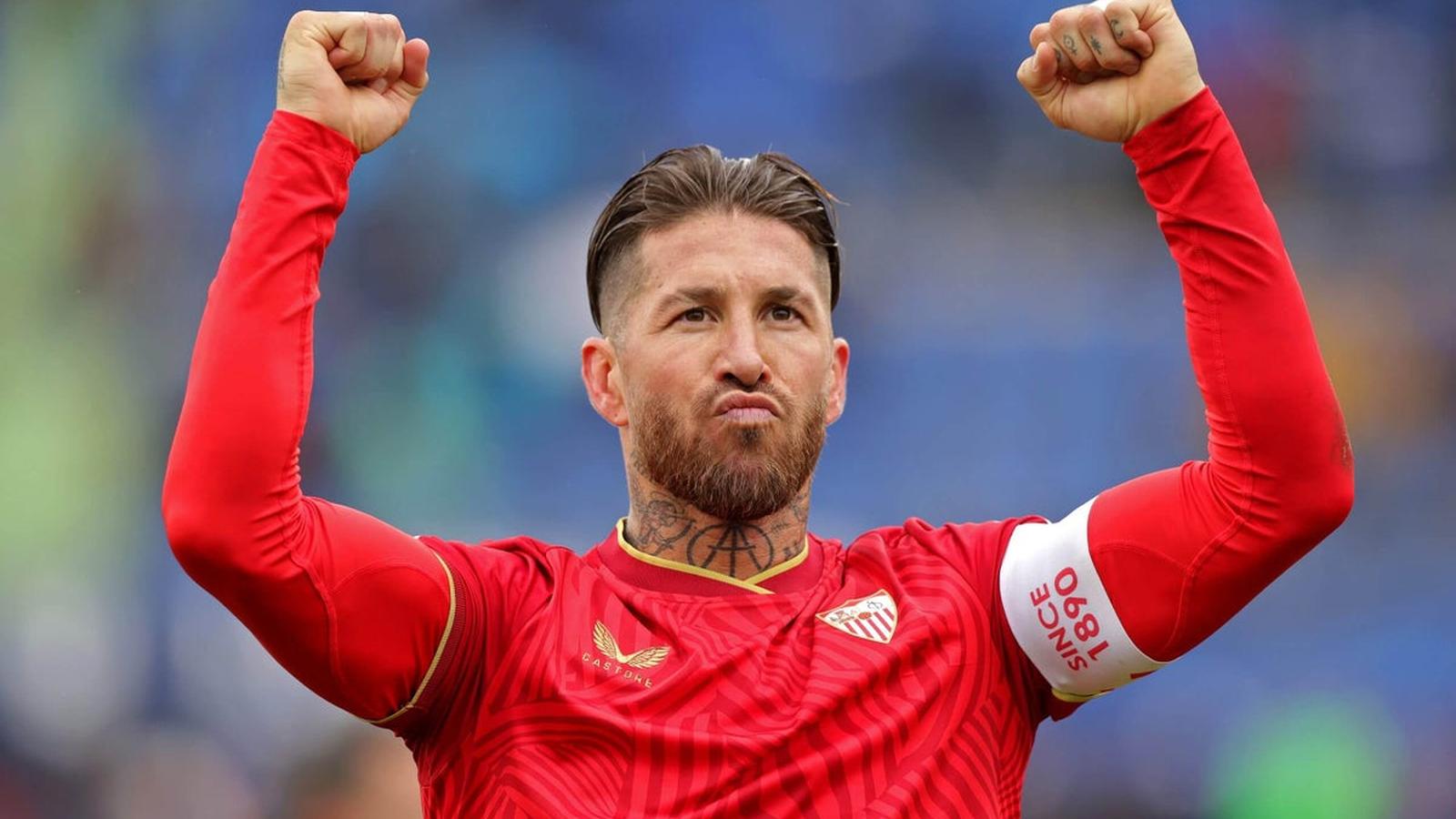
- Ramos, a free agent at 39, would be the public face of the bid, with an American fund as a key investor.
- Sevilla reported €81.8 million in losses for the 2023-24 season and took a €108 million loan in March 2024.
- The club’s debt is estimated around €180 million, with uncertainty over whether a CVC Capital Partners loan counts as debt.
- Sevilla’s ownership is fragmented among several families and groups, requiring consolidation for a full takeover.
In a move that blends sentiment with significant financial ambition, football icon Sergio Ramos is leading a formidable €400 million bid to acquire his boyhood club, Sevilla. The proposal, spearheaded by the former Real Madrid and Spain defender alongside a consortium of foreign investors, primarily an American fund, aims to take full ownership of the storied La Liga club, currently grappling with considerable financial challenges. This potential takeover represents a pivotal moment for Sevilla, offering a glimmer of hope for stability amidst economic turbulence.
Ramos, a figure synonymous with Spanish football, made his professional debut for Sevilla in February 2004, emerging from the club’s esteemed academy before his high-profile transfer to Real Madrid in 2005. After a glittering career spanning 16 years at the Santiago Bernabéu and two seasons with Paris Saint-Germain, he made an emotional return to Sevilla for the 2023-24 season. Now, at 39 years old and a free agent after departing Mexican club Monterrey in December, Ramos is poised to transition from player to potential owner, becoming the public face of this ambitious acquisition.
Ramos’s New Role: From Pitch Leader to Boardroom Visionary
The prospect of Sergio Ramos, a local hero, returning to lead Sevilla from the boardroom rather than the pitch resonates deeply with fans. His involvement as the public face of the €400 million bid adds a powerful narrative layer to what is ultimately a complex financial undertaking. While he wouldn’t be the largest investor, his name carries immense weight and credibility within Spanish football, potentially galvanizing support and trust in the new leadership. However, this transition comes with its own set of rules: Spanish regulations explicitly prohibit a player from simultaneously owning and playing for the same club, a detail that underscores the definitive shift in Ramos’s relationship with the team he holds dear.
The bid, covering 100 percent of the club, is framed around Sevilla’s ‘enterprise value’. This valuation, however, is subject to the precise assessment of the club’s existing debt. According to sources briefed on the process, this uncertainty is a critical hurdle, potentially influencing whether the current offer is deemed the most advantageous for Sevilla. The entanglement of sporting legacy with intricate financial maneuvers highlights the modern realities of top-tier European football, where passion often meets rigorous economic scrutiny.
Navigating Sevilla’s Financial Labyrinth
Sevilla’s financial health has been a significant concern in recent years, making this takeover bid all the more crucial. The club reported substantial losses of €81.8 million for the 2023-24 season, a stark indicator of the economic pressures facing many La Liga teams. To mitigate these challenges, Sevilla secured a considerable €108 million loan, organized by Goldman Sachs, in March 2024. These figures paint a clear picture of a club in urgent need of capital injection and strategic financial restructuring.
A major point of contention and complexity revolves around the club’s debt, which sources estimate to be around €180 million. A significant portion of this uncertainty stems from a loan provided by CVC Capital Partners as part of its wider 2021 investment in La Liga. Crucially, Sevilla, along with La Liga itself, does not categorize this ‘participatory’ loan as traditional debt. This interpretative difference creates a valuation conundrum, as potential buyers and the club itself hold differing views on what constitutes the true financial liabilities. Such discrepancies are not uncommon in large-scale acquisitions, but they add layers of negotiation and due diligence to an already intricate process, as reported by The Athletic.
The broader context of CVC’s involvement across La Liga has been a mixed bag for clubs. While it provided an immediate cash injection, its long-term implications for club finances and autonomy remain a subject of debate. For Sevilla, clarifying the status of this particular loan is paramount to reaching a mutually agreeable valuation and ensuring the stability of any future ownership structure. The financial intricacies underscore the delicate balance between securing new investment and accurately representing the club’s financial obligations.
A Club of Many Hands: Understanding the Ownership Landscape
Sevilla’s current ownership structure is notably fragmented, a common characteristic among many historic European football clubs. The club’s shares are distributed among several groups and families, including the Del Nido family holding 24 percent, the Sevillistas de Nervion group with 22 percent, former club president Rafael Carrion controlling 15 percent, and Sevillistas Unidos 2020 also holding 15 percent. This dispersion of ownership means that any significant strategic decision, such as a full takeover, requires navigating a complex web of interests and securing agreement from multiple stakeholders.
Such a fragmented structure can present both opportunities and challenges. While it theoretically ensures broader representation, it can also complicate and prolong negotiations, as each major shareholder group will undoubtedly have its own agenda and valuation expectations. Ramos’s bid, aiming for 100 percent acquisition, necessitates consolidating these diverse interests, a process that demands skilled negotiation and a clear vision for the club’s future under new stewardship.
The Road Ahead for Sevilla: A New Era?
The potential acquisition by Sergio Ramos and his investor group could mark a transformative period for Sevilla, both on and off the pitch. Fresh capital could alleviate the pressing financial concerns, enabling investment in infrastructure, talent acquisition, and long-term strategic planning. A stable financial foundation is critical for any club aspiring to compete at the highest levels of La Liga and in European competitions. Sevilla’s recent on-field performance, including a 2-0 defeat to Real Madrid in December 2025, as noted by Realmadrid.com, serves as a backdrop to the urgent need for revitalization.
Beyond the financial injection, Ramos’s leadership could bring a renewed sense of identity and direction. His deep understanding of the club’s culture and aspirations, combined with the strategic vision of his investment partners, could usher in an era of renewed competitiveness. However, the path to a successful takeover is rarely straightforward. The external audit commissioned by the bidders to clarify the debt situation, particularly concerning the CVC loan, remains a critical step. The outcome of these financial assessments will ultimately determine the viability and attractiveness of the €400 million bid.
This bid represents a critical juncture for Sevilla, balancing the emotional pull of a club legend’s return with the stark realities of modern football finance. While Sergio Ramos’s involvement offers a compelling narrative and potential for stability, the success of the takeover hinges on untangling complex debt structures and aligning the diverse interests of the club’s current shareholders, ultimately determining whether this is the best pathway for Sevilla’s future prosperity.