


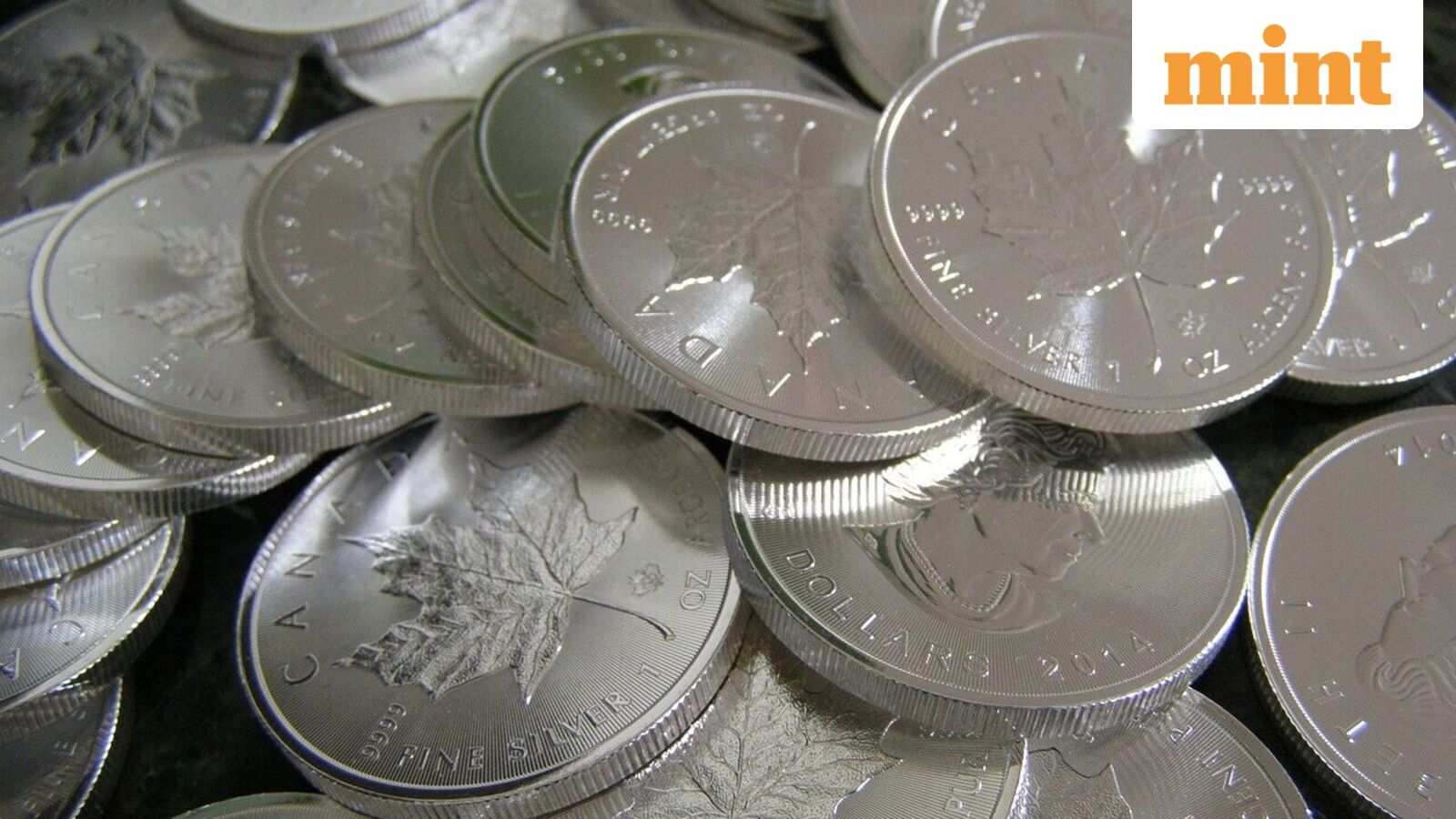
The precious white metal, silver, has captivated global markets with a dramatic display of volatility, charting an extraordinary trajectory that saw it reach unprecedented highs before a swift and significant correction. After climbing to a record $82.670 per ounce in the international market, silver recently concluded trading at $71.300 per ounce, marking an $11.37 per ounce, or 13.75%, dip from its peak. This rollercoaster ride has left investors reeling and experts issuing stark warnings: the metal that surged by an astonishing 180% in 2025 could face a potential crash of up to 60% by the end of fiscal year 2027.
This isn’t merely a market correction; it’s a profound re-evaluation of silver’s intrinsic value, influenced by a complex interplay of evolving industrial demand, historical market patterns, and a volatile global geopolitical landscape. As the world navigates a new year fraught with economic uncertainties and political flashpoints, silver’s future appears more precarious than ever, prompting a critical look at the forces shaping its destiny.
Silver’s Rollercoaster: From Record Highs to Steep Declines
The year 2025 proved to be a banner year for silver, with its price skyrocketing by approximately 180%. This remarkable surge was largely attributed to a burgeoning demand-supply constraint, particularly from the industrial sector. A significant catalyst was Samsung’s announcement regarding a transition from traditional lithium-ion batteries to solid-state batteries, a development that initially boosted silver’s appeal due to its perceived role in this emerging technology.
However, the celebratory mood quickly dissipated as the market entered 2026. After hitting a lifetime high of $82.670 per ounce internationally and ₹2,54,174 per kg on the Indian Multi-Commodity Exchange (MCX), silver prices experienced a sharp decline. The international COMEX silver price tumbled by over 13% from its record, settling at $71.300 per ounce. Similarly, on the MCX, silver slipped by 1.45% over the week, dropping by ₹17,858, or 7.02%, to close at ₹2,36,316 per kg on Friday, as reported by PTI. This rapid descent has prompted a chorus of experts to advise investors holding long positions to consider booking profits and exiting their holdings, signaling a shift in market sentiment from bullish enthusiasm to cautious apprehension.
Industrial Shifts Threaten Silver’s Industrial Demand
The primary driver behind the dire predictions of a potential 60% crash by FY27 stems from a fundamental shift in industrial dynamics. Silver, often dubbed the ‘white metal’ for its industrial applications, is facing an existential threat from technological advancements seeking cheaper and more sustainable alternatives.
Amit Goel, Chief Global Strategist at Pace 360, articulates this challenge succinctly: “An industry can digest a raw material until it is economically viable for the survival of its business. Otherwise, it would start looking for an alternative.” He highlights that the skyrocketing silver prices have already jeopardized some of its industrial demand. Photovoltaic cells and solar industries, traditionally significant consumers of silver, have successfully begun transitioning to copper. This move is not just an aspiration but a tangible reality for these sectors.
The threat extends to the very technology that once buoyed silver’s prospects: batteries. Efforts are now vigorously underway to transition from silver coil binding to copper coil binding in solid-state batteries. Companies in Israel, Taiwan, Australia, and China are actively exploring and implementing copper replacements. Even Tesla CEO Elon Musk’s recent alarm regarding supply chain vulnerabilities for critical materials cannot be ignored, implicitly underscoring the urgency for industries to diversify away from potentially volatile and expensive inputs like silver.
Anuj Gupta, Director at Ya Wealth, draws a parallel to historical market behavior, reminding investors that “Silver price has a history of crashing heavily after a strong bull trend.” He points to the 2011 episode, where silver rates plummeted 75% after peaking near $48 per ounce, eventually falling from around $49.50 to $11 per ounce. This historical precedent serves as a chilling reminder of silver’s capacity for dramatic retreats. The current rebound, post-record highs, is attributed to short-covering positions by major institutions like BofA and Citibank, rather than a renewed fundamental strength, further advising retail investors against new positions or holding existing ones.
Moreover, market mechanisms are already reacting to the heightened volatility. Exchanges like CDX have increased margin money by 25%, a move designed to mitigate risk but one that can also trigger short-covering due to a liquidity squeeze, contributing to further price declines.
Geopolitical Storms and Economic Indicators Fuel Broader Volatility
Beyond the specific industrial challenges, silver prices, like gold, are also caught in the crosscurrents of broader geopolitical tensions and crucial economic data releases. The capture of Venezuelan President Nicolas Maduro by US forces in dramatic weekend events has sent ripples of concern through global markets, raising the geopolitical risk premium. Investors are closely monitoring the potential for oil market disruptions and the broader impact of such instability on asset prices, as reported by Reuters.
Simultaneously, the Middle East remains a hotbed of regional geopolitical issues. Saudi Arabian equities, for instance, experienced their steepest fall in almost nine months, reflecting investor concerns over tensions in Yemen, Iran, and Venezuela, according to Bloomberg. While there’s no immediate indication of confrontation, the sentiment of geopolitical risk adds an underlying layer of uncertainty to safe-haven assets.
Closer to home for global finance, the United States is poised for a busy economic calendar that promises to inject further volatility. Key indicators include ISM Manufacturing data, December ADP employment figures, and the unemployment rate. The employment data, due on January 9, is particularly critical, as concerns over labor market weakness prompted the Federal Reserve to lower interest rates at each of its last three meetings in 2025. Lower rates generally support equities, but the extent of further cuts in 2026 remains uncertain, with Fed officials divided and inflation still above the 2% target.
As Eric Kuby, chief investment officer at North Star Investment Management, notes, “Softening in the labor market has really given the Fed good cover to change their outlook about reducing rates.” However, an overly weak report could signal deeper economic concerns than markets currently anticipate. Furthermore, a closely watched report on inflation trends, the monthly U.S. consumer price index, is due on January 13, along with fourth-quarter earnings season. These data points will collectively shape investor confidence in economic conditions and macro policy, directly influencing the appeal of precious metals as hedges against inflation or economic downturns.
The confluence of industrial innovation driving substitution away from silver, historical patterns of sharp corrections, and an increasingly complex global geopolitical and economic landscape paints a challenging picture for the white metal. While its past performance has been spectacular, the future appears to demand extreme caution from investors, as the fundamental pillars supporting its price are undergoing significant and potentially long-lasting transformations.