
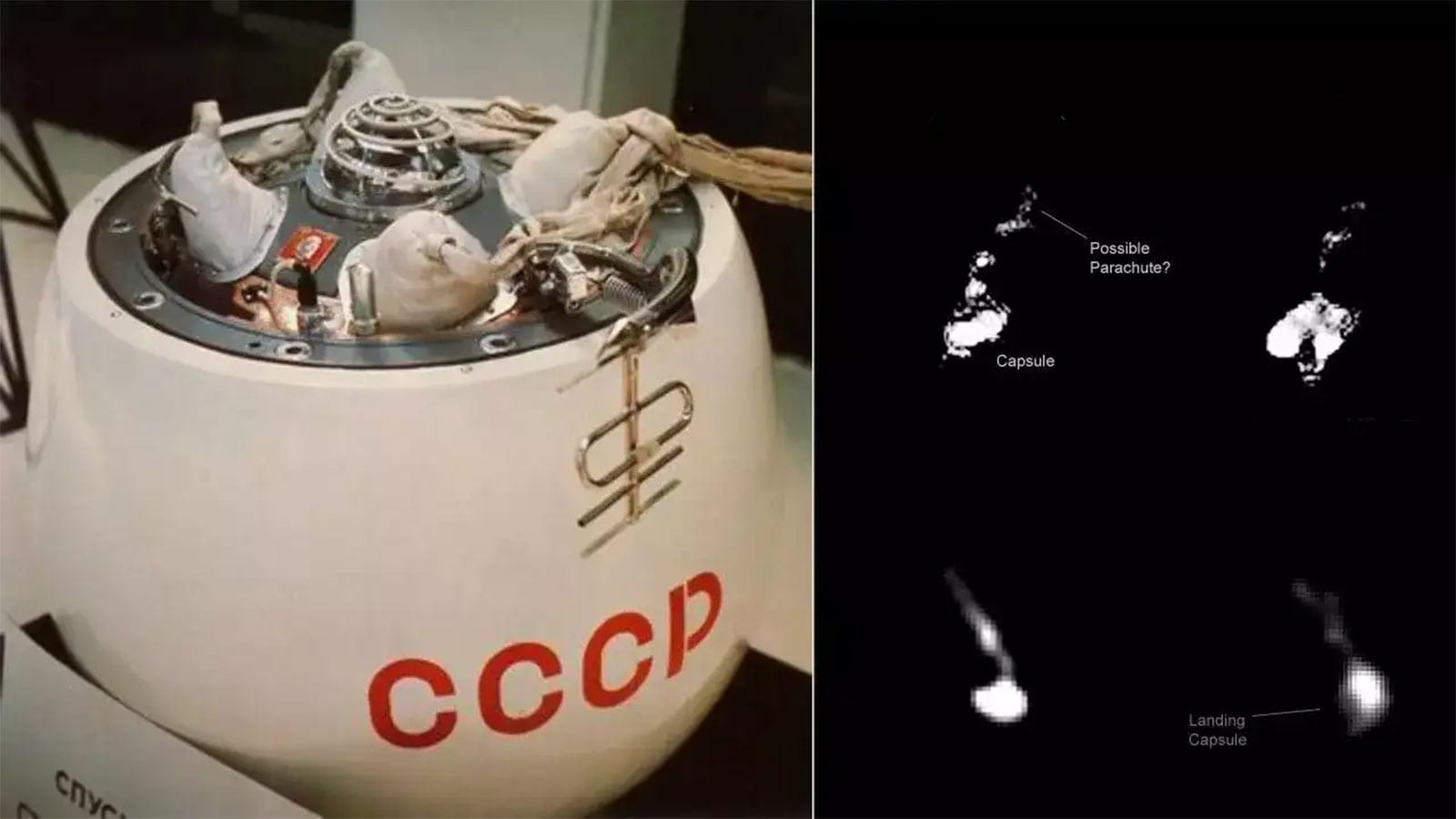
Soviet Spacecraft Kosmos 482 Returns to Earth After 53 Years
The Soviet-era spacecraft Kosmos 482, originally launched in 1972 for a mission to Venus, has made an uncontrolled reentry into Earth’s atmosphere after spending over five decades in orbit. The event marks the end of a long and unintended journey for a spacecraft that failed to fulfill its original mission due to a rocket malfunction shortly after launch.
The Mission That Never Reached Venus
Kosmos 482 was part of the Soviet Union’s ambitious efforts to explore Venus, the solar system’s hottest planet. Launched from what is now Kazakhstan, the spacecraft was designed to withstand the extreme conditions of Venus’s atmosphere. However, a malfunction in the rocket’s upper stage left the spacecraft stranded in Earth’s orbit. Over the years, most of the spacecraft’s components reentered the atmosphere and burned up, but the lander module, encased in titanium and weighing approximately 495 kilograms, remained in orbit.
Uncontrolled Reentry and Uncertainty
The reentry of Kosmos 482 was confirmed by the European Union Space Surveillance and Tracking (EU SST) agency, which reported the spacecraft’s disappearance from tracking data. The European Space Agency’s (ESA) space debris office also noted that Kosmos 482 failed to appear over a German radar station, indicating it had reentered the atmosphere. Despite these confirmations, the exact location of the reentry remains uncertain. Some experts suggest it may have occurred over the Indian Ocean, but this has not been definitively verified.
Survivability and Risks
Experts had long speculated that parts of the spacecraft might survive reentry due to its robust design. The lander was built to endure the harsh conditions of Venus, including high temperatures and atmospheric pressure. This durability raised concerns about the potential risks posed by its uncontrolled descent. However, scientists emphasized that the chances of the debris causing harm were exceedingly low, given the vastness of Earth’s surface and the high likelihood of it landing in an uninhabited area.
Tracking Challenges
The reentry of Kosmos 482 highlights the challenges associated with tracking space debris. Solar activity, the spacecraft’s deteriorating condition, and its uncontrolled nature added layers of complexity to predicting its reentry path. The U.S. Space Command, which monitors dozens of reentries each month, had yet to confirm the spacecraft’s demise as of Saturday morning, as it continued to analyze data.
Implications for Space Debris Management
The case of Kosmos 482 underscores the growing issue of space debris and its implications for both safety and sustainability in space exploration. With an increasing number of satellites and spacecraft being launched, the risk of collisions and uncontrolled reentries is becoming a significant concern. Experts like astronomer Jonathan McDowell have called for more robust measures to manage and mitigate space debris.
The reentry of Kosmos 482 serves as a reminder of the complexities and risks associated with space exploration. While the spacecraft’s journey has come to an end, it leaves behind lessons for future missions and the importance of addressing the challenges posed by space debris. As the global space community continues to expand its activities, ensuring the safety and sustainability of Earth’s orbital environment will remain a critical priority.
Source: European Union Space Surveillance and Tracking, European Space Agency, Smithsonian Institution