


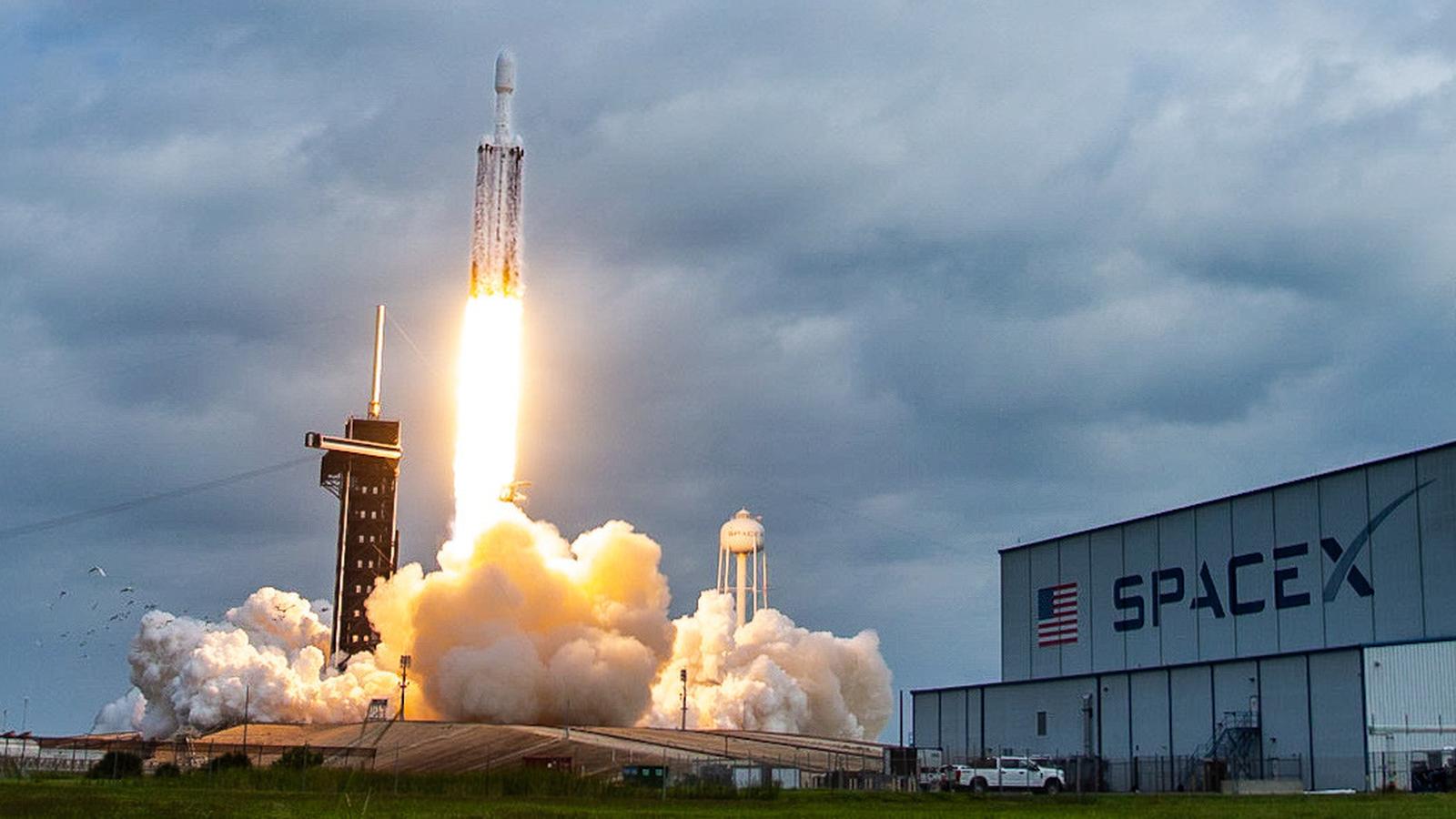
The new year has barely dawned, yet the roar of rockets is already echoing across the skies, heralding an unprecedented era of space activity. SpaceX, a titan in the commercial space sector, wasted no time, launching two critical missions in quick succession from both coasts of the United States. These launches not only underscored the company’s relentless operational cadence but also set the stage for a year poised to shatter previous records in space exploration and satellite deployment.
As the world turned its calendar to 2026, the promise of a bustling space manifest immediately materialized. From delivering high-speed internet to the remotest corners of Earth to enhancing global surveillance capabilities, these early missions highlight the dual-track strategy of commercial viability and strategic importance that defines modern spaceflight. The intensity of these initial operations suggests that the boundaries of what’s possible in orbit are being continually pushed, driven by innovation, reusability, and a burgeoning demand for space-based services.
Florida’s Space Coast Roars to Life with Starlink 6-88
The first significant rumble from Florida’s Space Coast in 2026 came early on January 4, as a SpaceX Falcon 9 rocket majestically lifted off from Launch Complex 40 at Cape Canaveral Space Force Station. The target time was 1:48 a.m. EST, though launch windows often offer flexibility. This mission, designated Starlink 6-88, marked Florida’s inaugural SpaceX launch of the year and carried a payload of 29 advanced Starlink internet satellites into low-Earth orbit.
What made this particular launch noteworthy, beyond its status as the first of the year for Florida, was the use of a brand-new Falcon 9 booster. While SpaceX is renowned for its pioneering work in rocket reusability, deploying a fresh booster for a critical Starlink deployment underscores the company’s ongoing expansion and the rapid pace at which new hardware is integrated into its fleet. This new booster embarked on its maiden voyage, a testament to SpaceX’s manufacturing prowess and its ambition to continually expand its launch capabilities.
The launch itself was a spectacle, especially for those located south of the Cape, who enjoyed clear nighttime views of the rocket ascending southeastward. Crucially, residents of Brevard County were spared the familiar sonic booms, as the Falcon 9’s first stage executed a precise landing on the drone ship ‘Just Read the Instructions’ stationed in the Atlantic Ocean. This successful recovery, completing the booster’s first mission, ensures its future availability for subsequent flights, a cornerstone of SpaceX’s cost-efficiency model. The booster will soon be ferried back to Port Canaveral, where it can often be seen by the public during its brief stopping period before being prepped for its next journey to space.
Kicking Off 2026: Vandenberg’s COSMO-SkyMed FM3 Mission
While Florida prepared for its first launch, SpaceX had already initiated its 2026 manifest a day earlier, on January 3, from the opposite coast. A Falcon 9 rocket launched from Vandenberg Space Force Base in California, carrying Italy’s COSMO-SkyMed FM3 radar Earth observation satellite. This mission was, in fact, SpaceX’s very first launch globally for 2026, a detail that often gets overshadowed by the more frequent Florida operations.
The COSMO-SkyMed FM3 satellite represents a significant advancement in Earth observation technology. It’s equipped with synthetic aperture radar (SAR) capabilities, allowing it to capture high-resolution imagery regardless of lighting conditions or weather, penetrating through clouds and smoke. This is invaluable for a myriad of applications, including disaster response, maritime domain awareness, agricultural monitoring, and critical infrastructure risk checks. For Italy and its allied partners, this constellation provides resilient imaging capacity vital for both civil and defense uses. As Meyka highlighted, this mission reinforces strong demand for Earth observation data and reliable reusable launch services, important signals for the broader commercial space and satellite data markets.
Adding another layer of significance to this mission was the Falcon 9 first stage booster itself. This particular booster successfully completed its 21st flight and landing, a remarkable milestone that further solidifies SpaceX’s confidence in its reusability strategy. Such high reuse rates not only reduce marginal launch costs but also enable more frequent and predictable access to orbit for customers. After a relatively rare 16-day pause in launches, this smooth return to flight from Vandenberg demonstrated SpaceX’s scheduling resilience and operational strength, particularly for investors keen on tracking consistent execution and turnaround times.
A Glimpse into the Future: A Bustling 2026 Launch Calendar
These initial launches are merely the opening acts in what promises to be an extraordinarily busy year for spaceflight. The immediate horizon includes another SpaceX Starlink mission, Starlink 6-96, scheduled for January 7 from Cape Canaveral. This flight will employ booster B1069, which will be making its 29th launch, further emphasizing the incredible longevity and reusability of SpaceX’s fleet. This booster is also slated for a drone ship landing, this time on ‘A Shortfall of Gravitas’.
Beyond SpaceX’s relentless Starlink deployments, the global space community is gearing up for a diverse array of missions. Europe’s emerging commercial launch sector will see a key test with Isar Aerospace targeting January 12-13 for the second test flight of its Spectrum rocket from Andøya Spaceport in Norway. In early February, attention will shift to Asia, where Japan’s H3 rocket is set to launch the Michibiki No. 7 (QZS-7) satellite from Tanegashima Space Center, bolstering the region’s navigation services.
Human spaceflight will also take center stage in February. NASA Communications reported that the rollout of the Space Launch System (SLS) rocket for the Artemis II mission is less than two weeks away, with a launch day possible as soon as February 6 from NASA’s Kennedy Space Center Pad 39B. This mission will send the Orion spacecraft with its Artemis II crew around the Moon, marking the first time astronauts have ventured into the lunar vicinity since 1972. Later in February, SpaceX will return to crewed operations with Crew-12, launching no earlier than February 15 from Cape Canaveral. NASA astronaut Jessica Meir will command this mission, joined by pilot Jack Hathaway, ESA astronaut Sophie Adenot, and Roscosmos cosmonaut Andrey Fedyaev, for a long-duration stay aboard the International Space Station.
Looking further ahead, the manifest includes Russia’s delayed Proton-M launch of the Elektro-L No. 5 weather satellite, Boeing’s uncrewed Starliner-1 test flight aboard a ULA Atlas V in April 2026, and Sierra Space’s Dream Chaser cargo spacecraft targeting late 2026 on a Vulcan Centaur rocket. The decade’s ambitions extend to deep space, with NASA and SpaceX planning the Dragonfly mission in July 2028. This nuclear-powered rotorcraft will explore Saturn’s moon Titan, searching for clues about the origins of life, a mission with a total cost of $3.35 billion, as detailed by Space Coast Daily.
The Evolving Landscape of Commercial Space
The sheer volume and diversity of these missions underscore a rapidly accelerating pace in the global space industry. The Florida Space Coast alone is predicted to see upwards of 120 launches in 2026, significantly surpassing the 109 launches recorded in 2025. This aggressive schedule is largely fueled by the burgeoning demand for satellite internet services and Earth observation data, alongside ambitious governmental programs.
SpaceX’s Starlink constellation continues its phenomenal growth. By the end of 2025, the company had acquired 4.6 million new customers, bringing its total to an impressive 9.2 million globally. This vast network delivers internet connectivity to some of the most remote communities on Earth, with users reporting service even in the middle of oceans, on mountains, or deep within jungles. However, such a large constellation also brings challenges. Following a Starlink satellite issue in December, SpaceX announced plans to enhance the safety of its more than 9,000 satellites in orbit. Over 4,000 satellites will be brought to a lower orbit throughout 2026, facilitating quicker deorbiting of lost satellites and reducing the chance of collisions due to less space junk in these lower altitudes, as reported by Florida Today.
The operational efficiency of SpaceX, particularly its ability to turn around boosters for multiple flights, remains a critical factor in this expansion. The continuous refinement of recovery and refurbishment processes allows for a consistent and high-frequency launch cadence, which in turn supports the rapid deployment of constellations like Starlink and provides reliable access to orbit for various commercial and governmental payloads. The competition in the launch sector is also intensifying, with providers constantly tracking range availability, weather conditions, and payload readiness, all of which influence launch schedules.
The opening weeks of 2026 have undeniably set a powerful precedent for the year ahead. What we are witnessing is not merely a series of rocket launches, but a fundamental shift in humanity’s relationship with space—a blend of relentless commercial expansion, crucial scientific inquiry, and a renewed drive for human exploration. The integration of advanced technologies like SAR, the remarkable reusability of launch vehicles, and the sheer scale of satellite deployments are transforming industries and connecting the world in unprecedented ways. This rapid evolution, while exciting, also brings with it the imperative for responsible stewardship of our orbital environment, ensuring that the ambition of today paves the way for a sustainable and accessible future in space.