


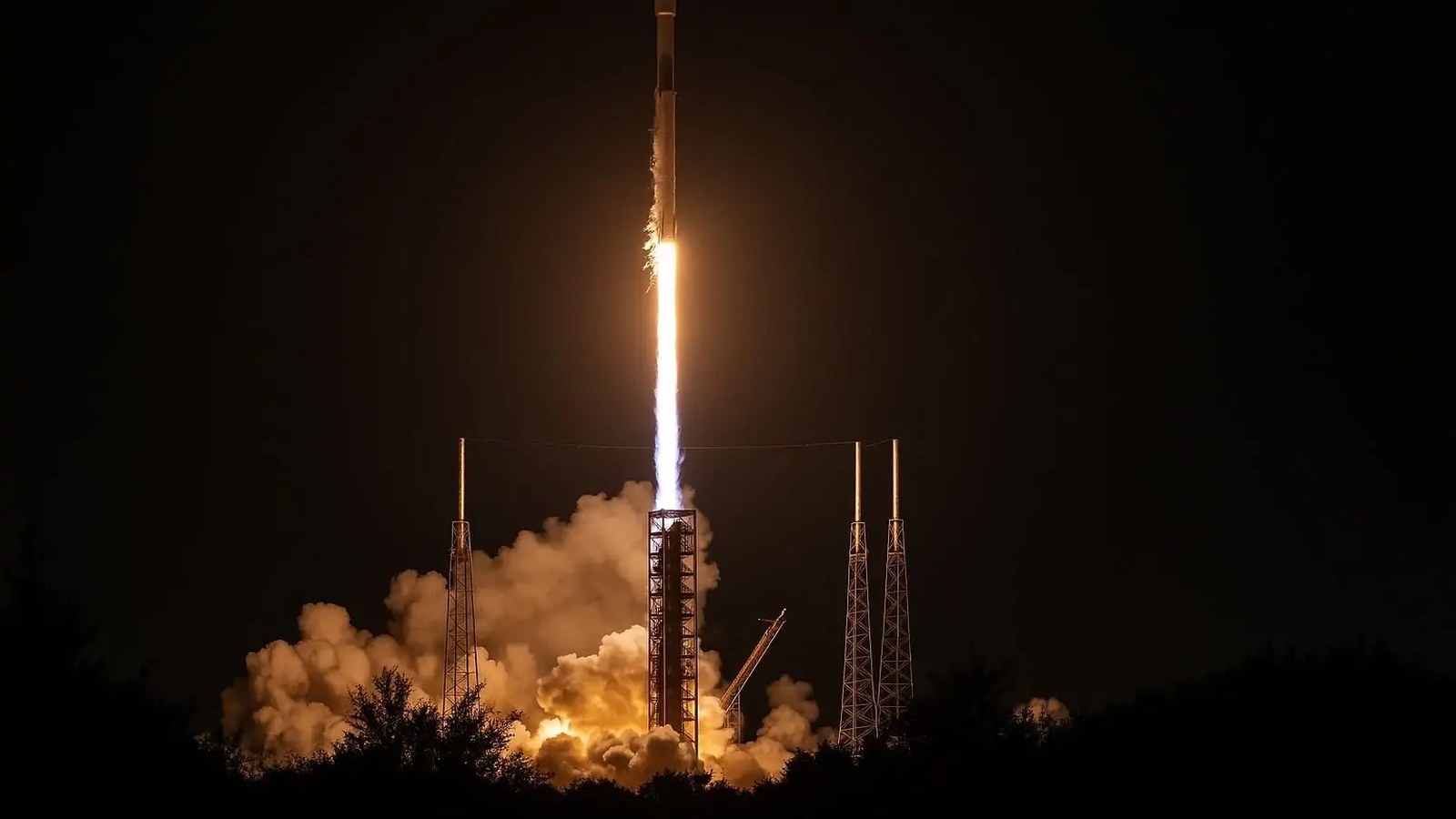
SpaceX Opens December with Dual Falcon 9 Launches
On December 2, 2025, SpaceX set a blistering pace for the final month of the year, launching two Falcon 9 rockets from opposite coasts of the United States. The company’s first mission of the day lifted off from Vandenberg Space Force Base in California, sending 27 Starlink satellites into high-inclination orbit at 9:28 p.m. PST (12:28 a.m. EST / 05:28 UTC). Just hours later, Florida’s Space Coast prepared for another Falcon 9 launch—this time carrying 29 Starlink satellites as part of the Starlink 6-95 mission, with liftoff scheduled for 3:16 p.m. EST from Cape Canaveral Space Force Station (Space.com, Florida Today).
The back-to-back launches showcase SpaceX’s operational tempo and technical mastery, marking the 60th mission of the year from California and pushing Florida’s tally past 100 launches for 2025—a milestone that underlines the region’s transformation into a commercial spaceflight powerhouse (Rolling Out).
Mission Highlights: Starlink Group 15‑10 and 6‑95
The California mission, Starlink Group 15‑10, deployed 27 Starlink v2 Mini satellites into a high-inclination low-Earth orbit. This orbital “shell”—tilted about 70 degrees to the equator—targets high-latitude regions like Alaska, northern Canada, and Scandinavia, where fiber optic internet is sparse and terrestrial infrastructure is costly. The Falcon 9 booster (B1081), a veteran of 20 orbital flights including NASA crewed missions, touched down successfully on the droneship Of Course I Still Love You in the Pacific, exemplifying SpaceX’s reusability strategy and cost-saving prowess.
Meanwhile, on the opposite coast, SpaceX’s Starlink 6‑95 mission was set to deploy 29 satellites into a lower-inclination shell (43 degrees), serving densely populated regions between roughly 43°N and 43°S—prime territory for urban and suburban broadband demand. Booster B1077, making its 25th flight, was slated to land on A Shortfall of Gravitas in the Atlantic. If successful, it would mark the 135th landing on that droneship and the 543rd Falcon 9 landing overall.
Where to Watch: Florida’s Space Coast Turns Out
Rocket launches have become community events along Florida’s east coast, drawing crowds to parks and beaches from Daytona Beach to Vero Beach. According to local media, the late-afternoon launch window for Starlink 6‑95 offered excellent viewing conditions. Prime spots include Playalinda Beach, Jetty Park, Cocoa Beach Pier, Lori Wilson Park, and numerous riverfront parks in Titusville and Cocoa. Weather permitting, the spectacle could be visible as far north as Jacksonville Beach and as far south as Boynton Beach. For those unable to attend in person, live streams from SpaceX and media outlets covered every moment, with coverage beginning 90 minutes before liftoff (Florida Today).
Unlike some launches, this mission was not expected to produce sonic booms over populated areas, allowing for a quieter experience along the Space Coast.
Starship’s New Florida Home: SLC‑37 Gets Green Light
While Falcon 9 rockets dominated the sky, SpaceX’s long-term ambitions took a leap forward on the ground. The U.S. Department of the Air Force formally approved the redevelopment of Space Launch Complex 37 at Cape Canaveral for Starship-Super Heavy operations. This decision followed extensive environmental studies and paves the way for up to 76 Starship launches per year from the site, supported by towering integration facilities, flame trenches, and advanced propellant systems (TS2.tech).
With SLC‑37 joining NASA’s LC‑39A and Starbase in Texas, Florida is set to become a central hub for deep-space missions, lunar lander deployments, and national security payloads. SpaceX CEO Elon Musk hailed the approval on social media, signaling how crucial the new pad is for the company’s vision of “airport-like operations” for space.
Starlink’s Growing Constellation: Impact and Strategy
With more than 9,000 Starlink satellites now in orbit, SpaceX’s megaconstellation is reshaping global internet access. By strategically populating different orbital shells, the company is optimizing coverage for remote, underserved, and high-demand regions—enabling new services for maritime, aviation, and rural communities, as well as government and enterprise customers.
Launching multiple missions from different coasts allows SpaceX to accelerate deployment and meet regulatory milestones, keeping pace with international competitors and market needs. The rapid cadence also demonstrates the maturity of SpaceX’s reusability model, which is central to lowering costs and sustaining high-frequency operations.
Why December 2, 2025 Matters: A Pivotal Day for SpaceX
December 2 wasn’t just another day on SpaceX’s crowded launch calendar. The twin Falcon 9 missions highlighted a company in full stride, capable of orchestrating complex operations across multiple sites. Approval for Starship’s new Florida launch pad signals a shift toward larger, more ambitious missions—potentially opening the door for lunar and interplanetary flights on a scale never seen before.
For local residents, the launch offered not only a chance to witness cutting-edge technology but also a glimpse of how spaceflight is becoming woven into the fabric of daily life along the Space Coast. From photographers capturing contrails in the early morning darkness to families picnicking on the beach in anticipation of liftoff, these launches have become part of the region’s identity.
As SpaceX continues to expand its Starlink network and lay the groundwork for Starship’s future, the pace and scale of activity at Cape Canaveral and Vandenberg suggest that the era of routine, affordable access to space is closer than ever.
Assessment: SpaceX’s December 2 doubleheader marks a turning point—not just in launch cadence, but in the evolution of space infrastructure and global connectivity. By mastering rapid, reusable launches and securing Starship’s future in Florida, SpaceX is redefining what’s possible for both commercial and government access to orbit. The story here isn’t just about rockets—it’s about the emergence of a new space economy, with the Space Coast at its heart.