
Quick Read
- SpaceX launched its 32nd commercial resupply mission (CRS-32) on April 21.
- The Dragon spacecraft carried 6,700 pounds of supplies, including scientific experiments.
- Dragon docked autonomously with the ISS’s Harmony module on April 22 at 8:20 a.m. EDT.
- The spacecraft will remain docked for about a month before returning to Earth.
- Key research includes air quality monitoring and advanced pharmaceutical nanostructures.
SpaceX’s CRS-32 Mission: A Vital Resupply for the ISS
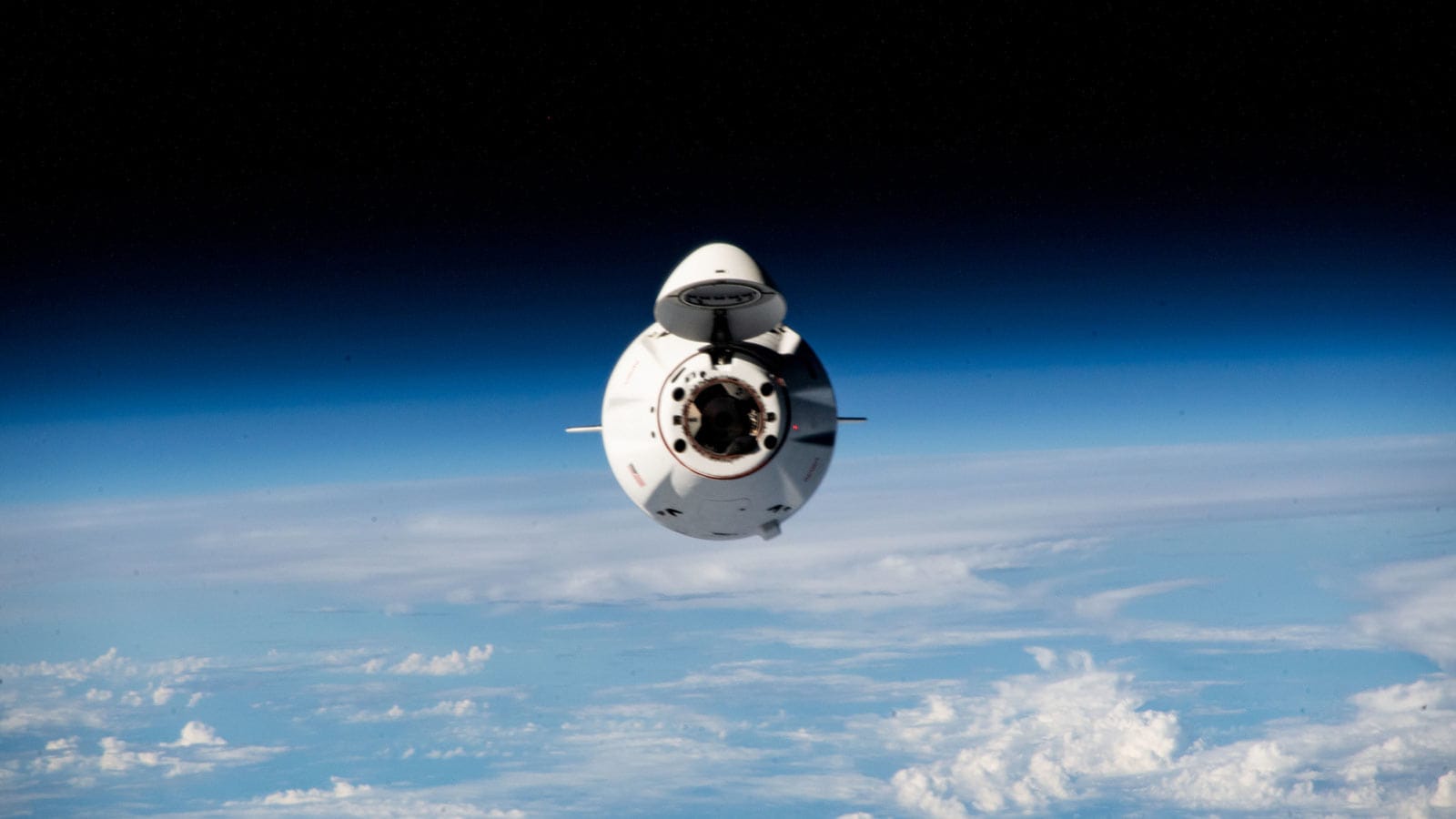
SpaceX’s Dragon spacecraft successfully docked with the International Space Station (ISS) on April 22, 2024, at 8:20 a.m. EDT, delivering approximately 6,700 pounds of supplies, scientific experiments, and equipment. This marks the 32nd commercial resupply services (CRS) mission conducted by SpaceX under its partnership with NASA.
Launch Details
The mission began on April 21, 2024, at 4:15 a.m. EDT, when a Falcon 9 rocket carrying the Dragon spacecraft lifted off from Launch Complex 39A at NASA’s Kennedy Space Center in Florida. The launch was executed flawlessly, with Dragon separating from the rocket’s second stage approximately nine minutes after liftoff. Following the separation, the spacecraft initiated a series of thruster firings to align its trajectory with the ISS.
Docking with the ISS
After a 28-hour journey through orbit, Dragon autonomously docked with the zenith port of the ISS’s Harmony module. The docking process was closely monitored by NASA astronaut Jonny Kim and JAXA astronaut Takuya Onishi, who are part of the Expedition 73 crew aboard the ISS. The spacecraft’s arrival was broadcast live on NASA+, with coverage starting at 6:45 a.m. EDT on April 22.
What Dragon Delivered
The cargo aboard Dragon included a diverse array of supplies critical to both daily operations and scientific research on the ISS. Key items included:
- Food and basic necessities for the astronauts.
- Scientific experiments designed to advance our understanding of space and Earth.
- Technological equipment, such as enhanced air quality monitors and atomic clocks for fundamental physics research.
Scientific Highlights
The CRS-32 mission is notable for the groundbreaking research it supports. Some of the key investigations include:
1. Air Quality Monitoring
The Aerosol Monitors investigation aims to test three different air quality monitoring systems to determine which is best suited for long-duration space missions. These systems are designed to detect airborne particles, such as dust and smoke, ensuring the health and safety of astronauts while minimizing false alarms.
2. Advanced Pharmaceutical Nanostructures
The DNA Nano Therapeutics-Mission 2 experiment focuses on the production of Janus base nanomaterials. These molecules, inspired by DNA, are being studied for their potential to reduce joint inflammation and regenerate cartilage lost to arthritis. Microgravity conditions allow for the creation of larger and more uniform nanostructures, which could revolutionize drug delivery systems on Earth.
3. Robotic Spacecraft Guidance
The Smartphone Video Guidance Sensor-2 (SVGS-2) experiment uses the ISS’s Astrobee robots to refine the maneuvers of small satellites. This technology has applications in docking crewed spacecraft and operating multiple robots on the lunar or Martian surface.
4. Industrial Crystallization
The ADSEP-ICC investigation enhances existing protein crystallization facilities by enabling the processing of new sample types, including gold nanoparticles. These particles are used in cancer detection and targeted drug delivery systems, with microgravity enabling the production of higher-quality materials.
Dragon’s Return
The Dragon spacecraft will remain docked to the ISS for approximately one month. During this time, it will be loaded with scientific samples and other materials for return to Earth. Unlike other cargo spacecraft, Dragon is designed to survive re-entry, making it a vital asset for transporting research back to Earth for further analysis. The spacecraft will splash down off the coast of California, where recovery teams will retrieve its valuable cargo.
The Broader Impact
SpaceX’s CRS-32 mission underscores the importance of commercial partnerships in advancing space exploration. By efficiently delivering supplies and enabling cutting-edge research, missions like this one contribute to the sustainability of the ISS and pave the way for future exploration missions to the Moon and Mars.
For more updates on ISS activities, follow NASA’s official channels, including the space station blog, @space_station on X, and ISS accounts on Facebook and Instagram.