
Quick Read
- At least 39 people died in a high-speed train collision in southern Spain on Sunday night near Adamuz.
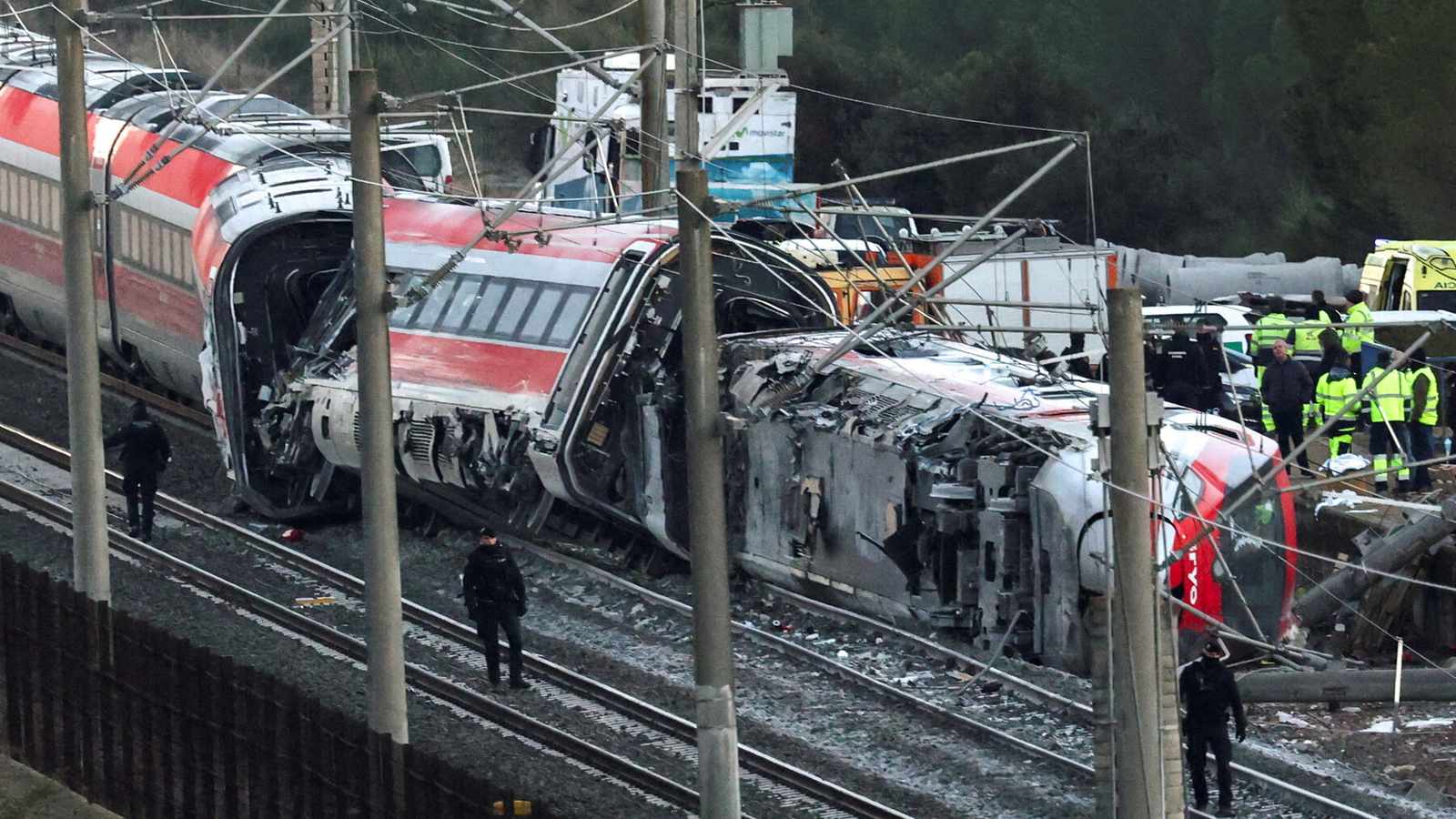
- A Madrid-bound Iryo train derailed and collided with a southbound Renfe train, sending two carriages down a 4-meter slope.
- Dozens were hospitalized, with 12 in intensive care; the Renfe train driver was among the deceased.
- The cause remains unknown, described by officials as “truly strange” given the incident occurred on a recently renovated, straight track.
- Spain’s high-speed rail network is Europe’s largest, globally second, and renowned for its safety and efficiency.
At least 39 people have been killed and dozens more hospitalized after a high-speed train derailed and collided with an oncoming train in southern Spain on Sunday night, plunging the nation into a period of profound grief and triggering an urgent investigation into the causes of the tragedy. The incident, which occurred near Adamuz, approximately 40 kilometers north of Córdoba, marks the deadliest rail accident in Spain since 2013 and has cast a shadow over the country’s celebrated, extensive, and usually reliable high-speed rail network. As emergency services concluded rescue operations and shifted focus to identification, Prime Minister Pedro Sánchez described the events as a “night of deep pain for our country,” reflecting the widespread shock and sorrow felt across Spain.
Collision Details and Devastating Impact
The catastrophic collision transpired just before 8 PM local time on Sunday, when the rear section of an Iryo high-speed train, carrying around 300 passengers and bound for Madrid, unexpectedly came off its rails. Spain’s transport minister, Óscar Puente, revealed that parts of the derailing train are believed to have then struck a southbound Renfe train traveling on the adjacent track. This impact proved devastating, knocking the first two carriages of the southbound train entirely off the track and sending them plummeting down a 4-meter (13ft) slope. These two carriages, according to Minister Puente, bore the brunt of the damage, accounting for the majority of the casualties.
Eyewitness accounts painted a harrowing picture of the moments during and immediately after the crash. María Vidal, 32, who was aboard the northbound Iryo train, recounted to El País that the collision felt “like an earthquake.” She described how “Everything shook, then suddenly the train slammed on the brakes and the lights went out.” Amidst the chaos, Iryo staff urgently requested any doctors onboard to assist passengers in specific carriages, indicating the severity of injuries. Another passenger traveling to Huelva on the southbound Renfe train described the experience as “very fast and chaotic; suitcases started falling, and when we were finally able to get out of the train cars, we saw a catastrophic situation.” The sheer force of the impact was so violent that, as Juanma Moreno, the head of the Andalusian government, noted, “we have found bodies hundreds of metres away, which means that people were thrown through the windows,” necessitating an expanded search area beyond the immediate crash site.
Mounting Casualties and Identification Efforts
By early Monday, officials confirmed the grim tally of at least 39 fatalities. In addition, about four dozen individuals remained hospitalized, with 12 of them in intensive care units, battling severe injuries. Among those confirmed dead was the driver of the Renfe train, highlighting the profound loss sustained by the nation’s railway community. As the initial phase of rescuing survivors concluded, authorities commenced the painstaking process of recovering and identifying the deceased. The scale of the tragedy prompted a nationwide appeal for information, with police establishing several offices where distressed family members could file reports and, critically, “provide DNA samples for the purpose of identification” of their missing loved ones.
The emotional toll on families was immense, with social media platforms becoming a desperate avenue for those searching for relatives who were unaccounted for. The coordinated efforts of emergency services, medical personnel, and law enforcement agencies underscored the gravity of the situation, as Spain mobilized significant resources to address the aftermath of the crash. The national mourning declared by the government served as a solemn acknowledgment of the lives lost and the collective grief gripping the country, as communities grappled with the sudden and unexpected loss of so many.
Investigation Underway Amid Unexplained Circumstances
The cause of the collision remains officially unknown, with Transport Minister Óscar Puente describing the incident as “truly strange.” This assessment stems from several perplexing factors surrounding the crash. The accident occurred on a straight stretch of track, which had undergone renovation as recently as May, suggesting that track conditions were unlikely to be a primary contributing factor. Furthermore, the Iryo train that derailed was relatively new, having been in service for less than four years, and had undergone a routine inspection just four days prior to the incident, seemingly ruling out immediate mechanical failure as an obvious cause.
Speed, a common factor in past rail accidents, has also been largely ruled out in this instance. Álvaro Fernández Heredia, the president of Renfe, stated on Monday that the trains were operating well within the established limits for that section of the track. While the speed limit was 250km/h (155mph), the Iryo train was reportedly traveling at 205km/h and the Renfe train at 110km/h. This information further deepens the mystery surrounding the derailment and subsequent collision, compelling investigators to consider a broader range of possibilities, from signal failures to unforeseen operational anomalies or even unforeseen external factors. The investigation is expected to be thorough and complex, drawing upon technical experts, forensic analysis, and witness testimonies to piece together the sequence of events that led to such a devastating outcome.
Spain’s Highly-Regarded Rail Network
Spain boasts one of the world’s most impressive high-speed rail networks, ranking as the largest in Europe and the second biggest globally, surpassed only by China, according to the Spanish infrastructure administrator Adif. With nearly 4,000km of track, the network is renowned for its efficiency, competitive pricing, and, crucially, its exceptional safety record. In 2024 alone, Renfe reported that more than 25 million passengers utilized its high-speed services, underscoring its immense popularity and integral role in Spanish transport infrastructure.
The network’s reputation for safety is a source of national pride, making Sunday’s crash all the more shocking. While the 2013 Santiago de Compostela derailment, which killed 80 people, remains a tragic outlier caused by excessive speed on a curved section of track, the Adamuz incident occurred under seemingly optimal conditions. Spain opened its high-speed rail network to private competition in 2020, with Iryo, a joint venture involving Italy’s state railway operator Ferrovie dello Stato Italiane, Spanish airline Air Nostrum, and infrastructure fund Globalvia, commencing operations in November 2022 and rapidly expanding its routes. The incident therefore not only challenges perceptions of safety but also potentially raises questions about the long-term implications for the country’s privatized rail landscape, even as officials emphasize the network’s robust standards.
The unique circumstances of this high-speed train collision, particularly its occurrence on a modern, recently renovated straight track with trains operating within speed limits, present a complex challenge for investigators and raise unprecedented questions for Spain’s highly regarded and technologically advanced rail network.