

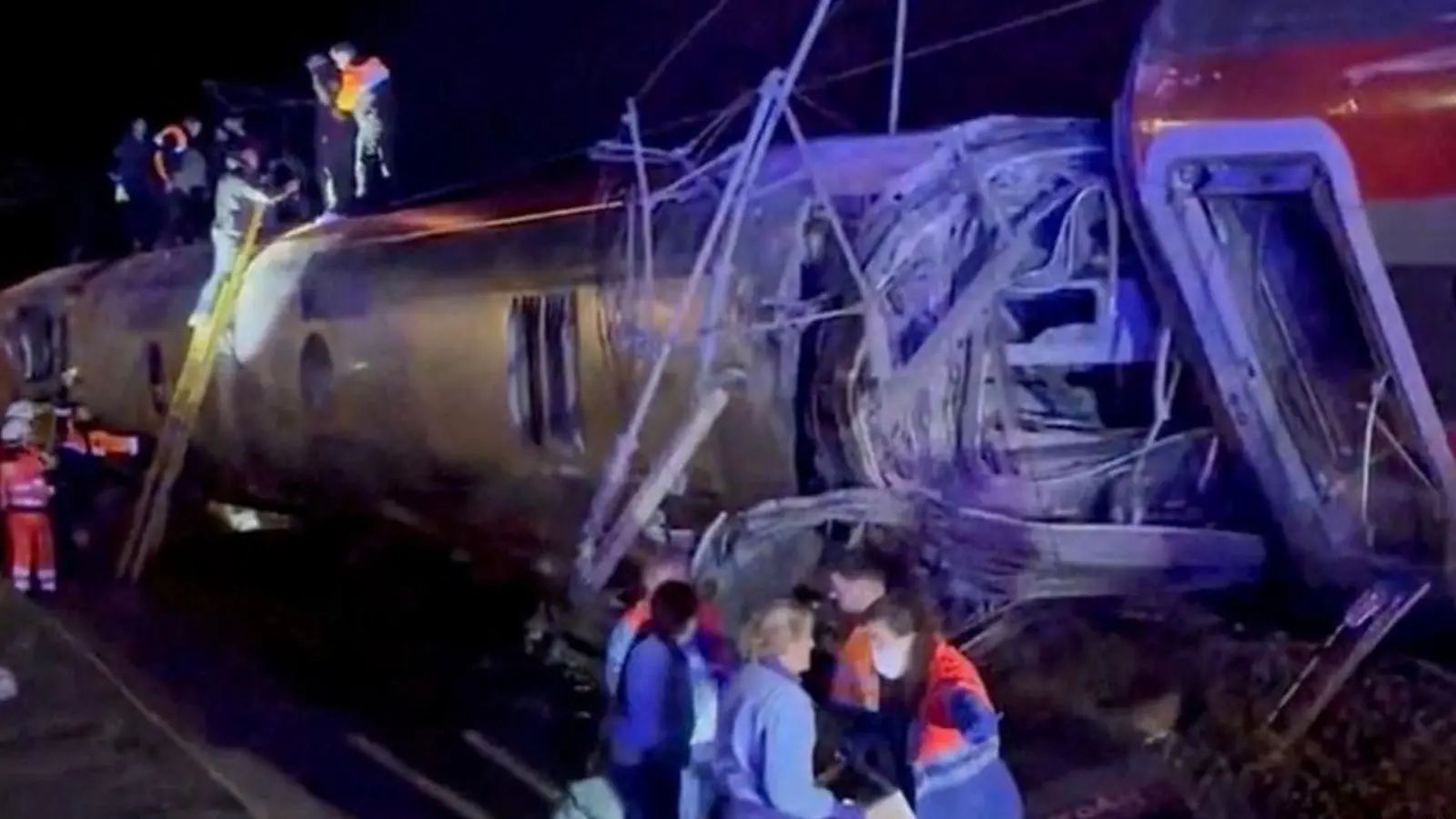
A high-speed train crash in southern Spain has claimed at least 21 lives and left dozens hospitalized as investigators work to determine the cause. The incident occurred near the town of Adamuz in Córdoba province, when a high-speed train derailed from its track and collided with another train traveling in the opposite direction. Emergency authorities reported that 75 people were hospitalized, with 15 in critical condition. The disaster unfolded on a line that had undergone recent renovations, raising questions about the integrity of a section of track and the safeguards in place for high-speed services.
According to Spanish state sources and regional authorities, the two trains together carried roughly 400 passengers. The majority were Spaniards returning home from the weekend or en route to Madrid for business or personal reasons. Rescue teams have cautioned that the death toll may still rise as responders continue to comb through twisted cars and wreckage, and as some survivors remain unaccounted for in the derailed carriages.
Authorities have said the investigation will focus onvarious angles, including signaling and switch settings, as well as the condition of the rail infrastructure involved in the accident. Transport Minister Oscar Puente described the incident as “really strange,” noting that the train departed from a straight portion of track that had just been renovated. Officials said it is too early to assign blame and that a thorough examination of the train’s data recorders and track-side equipment will be essential to determine how such a derailment and collision could occur on a line designed for high-speed service.
El País identified a 27-year-old driver from Madrid among the deceased. The driver was traveling from Madrid to a destination that authorities have not yet confirmed publicly. The report underscored the human toll of the tragedy, with families and communities across Spain seeking to understand how this could happen on a system that has long been a model of modern rail travel. The tragedy also comes as Spain has been expanding the reach of its high-speed rail network, knitting together major urban centers with increasingly rapid services. The accident thus touches on broader debates about rail safety, maintenance standards, and the reliability of a network that millions depend on for daily life.
Rescue workers and emergency crews have remained on site through the night, using heavy machinery to remove debris and searching for trapped passengers. Hospitals in Córdoba and nearby cities have activated emergency protocols to manage a surge of trauma cases, with medical staff coordinating triage operations to treat burn injuries, fractures, and internal trauma. The emotional toll is evident in the accounts of survivors who described terrifying moments as the train derailed and collided, followed by a stark scramble to escape from crowded cars and to assist fellow passengers who were injured or in shock.
Analysts note that the immediate priority for authorities is to account for all passengers, stabilize those who are critically injured, and determine whether any of the fatalities could have been prevented through different safety measures. The scope of the investigation will likely involve multiple agencies, including national rail safety bodies and international experts, given the prominence of high-speed rail in Spain and the potential implications for this sector’s future safety protocols.
As the investigation unfolds, questions about the maintenance schedule and recent renovations on the track will be central to the discussion. It is common for high-speed lines to undergo routine upgrades and modernization projects, sometimes involving temporary modifications to signaling systems or track geometry. Investigators will need to examine whether any such changes were properly tested and whether workers and signaling equipment were in compliance with established safety standards. The complexity of high-speed rail operations means that even minor discrepancies can create serious consequences at the speeds these trains routinely reach.
In the wake of the tragedy, the Spanish public and international observers will be watching closely as more information becomes available. The incident raises important considerations for rail safety policy, including how rail operators monitor track conditions, how quickly investigators can access critical data from trains and signaling equipment, and how emergency response plans perform in real-world scenarios involving high-speed vehicles. The resilience of Spain’s rail system will be tested in the days ahead as authorities navigate the delicate balance between rapid travel, safety, and public accountability.
The path forward will involve a combination of immediate rescue and medical response, careful forensic work, and public communication that preserves trust in the rail network. For families affected by the disaster, the coming days will be about seeking clarity, support, and accountability. For the rail industry, it will be a moment to reflect on lessons learned and to reinforce the safeguards that allow high-speed travel to continue safely for millions who rely on it every day.
Investigators will also likely review the operational procedures that were in place at the time of the crash, including crew communications, signaling checks, and the status of safety interlocks designed to prevent such outcomes. The potential implications for rail operators in other countries with similar networks could be broad, highlighting the universal need for rigorous safety protocols in high-speed rail operations.
In the weeks ahead, a clearer picture will emerge as official reports are published, and the rail company involved will face intense scrutiny over its maintenance and safety practices. The tragedy is a sobering reminder that even in regions where rail travel is among the safest modes of transport, the margin for error remains small when trains travel at high speeds. Authorities have pledged full transparency as they work to determine what happened and how to prevent a recurrence.
Finally, the human dimension remains central to this story. The families who lost loved ones, the passengers who survived with injuries, and the thousands who rely on Spain’s rail network for daily life deserve answers, accountability, and ongoing support from the institutions tasked with safeguarding public safety. The road to understanding the full scope of the incident will be long, but it begins with a thorough, independent investigation, clear communication with the public, and a steadfast commitment to preventing future tragedies on the rails.