


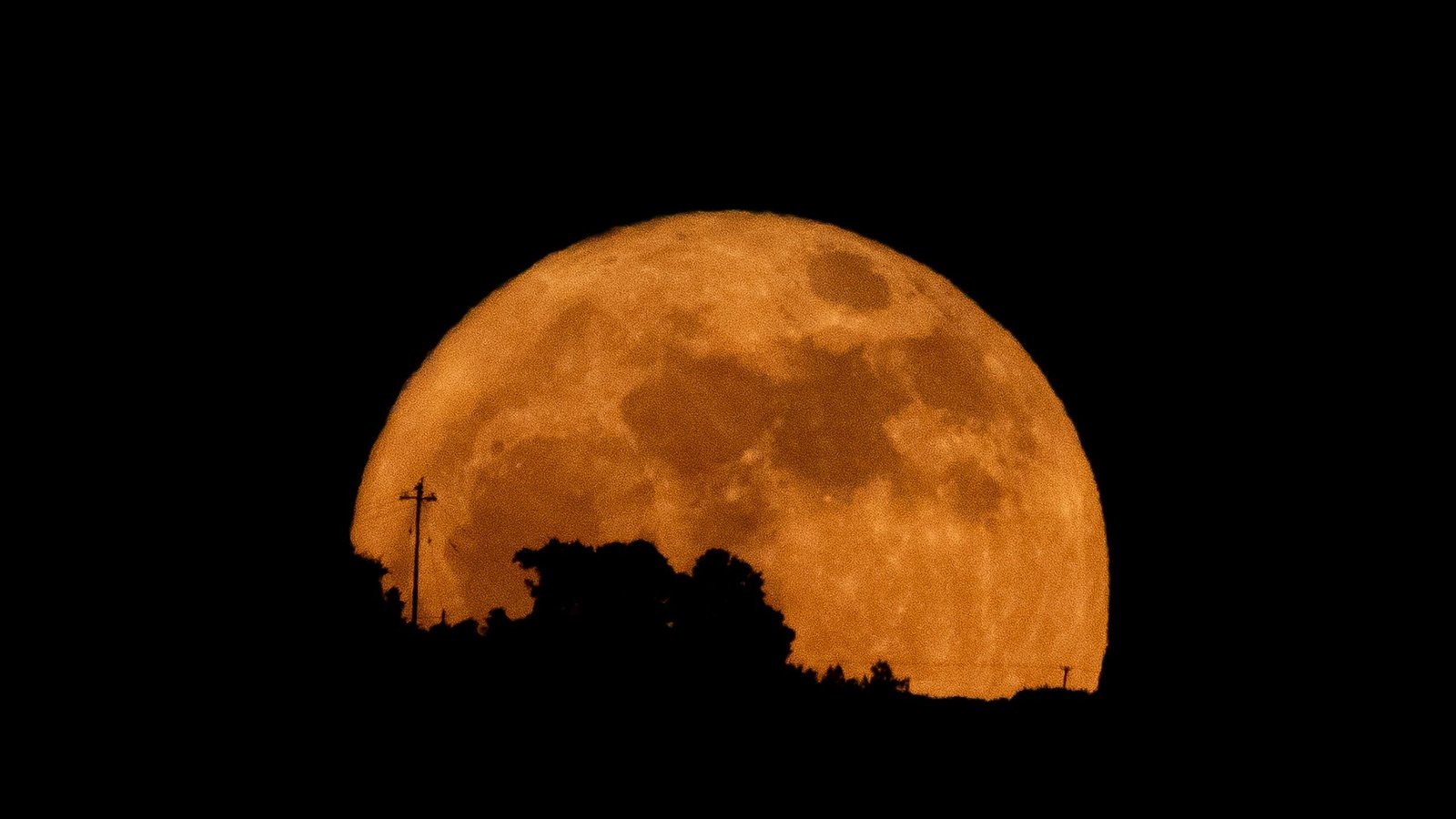
Stargazers in the Northern Hemisphere are preparing for the June full moon, commonly referred to as the ‘Strawberry Moon,’ which will reach its peak illumination at 7:57 p.m. EDT on Monday, June 29, 2026. According to data from Astronomy.com and NASA, the event marks the first full moon of the summer season.
The ‘Low-Path’ Phenomenon
Unlike other full moons that climb high into the night sky, the Strawberry Moon follows an unusually low trajectory across the southern horizon for observers in the Northern Hemisphere. This occurs because the moon is positioned opposite the sun; in June, the sun follows its highest and northernmost path of the year, forcing the full moon to take the reverse, lowest path. This “low-hanging” effect is most pronounced shortly after moonrise, creating a visual spectacle where the moon appears to hug the horizon.
Atmospheric Scattering and Color
The distinctive golden or orange hue often associated with the Strawberry Moon is a result of atmospheric scattering. Because the moon remains low, its light must travel through a thicker layer of Earth’s atmosphere, which filters out shorter blue wavelengths and allows the warmer, longer wavelengths to reach the eye. Experts note that this “Strawberry Moon mood” typically lasts only the first 30 to 60 minutes after moonrise before the moon climbs higher and returns to its standard bright white appearance.
Cultural Origins and Observational Tips
The name ‘Strawberry Moon’ does not refer to the lunar color, but rather to the traditional harvesting season. As noted by the Old Farmer’s Almanac, the name originates from Native American Algonquin tribes who tracked the brief window when wild strawberries reached peak ripeness. For those looking to photograph the event, experts recommend scouting a location with a clear southeastern horizon, such as a beach or open field, and timing shots for the hour immediately following moonrise.