
Quick Read
- Taylor Swift appeared on Stephen Colbert’s Late Show in December 2025.
- Colbert compared Swift to The Beatles, which she humbly deflected.
- Swift discussed her goal of helping fans escape everyday stress through her music.
- Fans praised the interview online, citing thoughtful questions and Swift’s candidness.
- Swift referenced ‘post-concert amnesia’ among Eras Tour attendees.
Taylor Swift’s Gracious Deflection: Not the Next Beatles
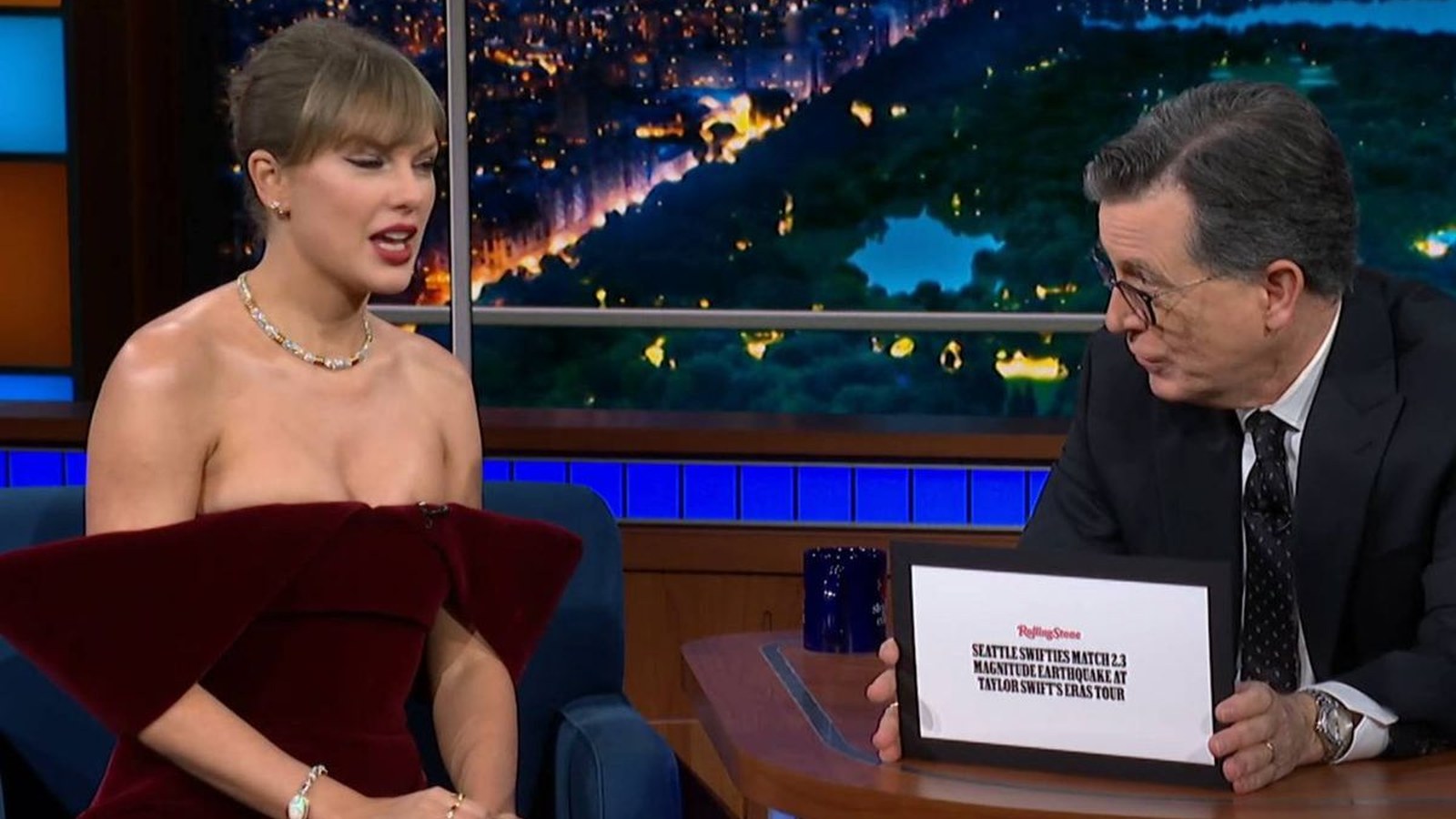
When Taylor Swift took her seat opposite Stephen Colbert on CBS’s Late Show this December, the energy in the studio was unmistakable. The global superstar—dressed in a striking burgundy minidress—was greeted with warmth and anticipation. But what truly set the night apart was a moment of humility that resonated far beyond the Ed Sullivan Theater.
Colbert, ever the affable host, welcomed Swift with genuine excitement. He didn’t waste time before drawing a bold parallel: “I imagine this is what it felt like when the Beatles came into the Ed Sullivan Theater in 1964.” It was a comparison many might have embraced, especially given Swift’s dizzying array of achievements—multiple Grammy awards, chart-topping albums, and an army of devoted fans known as Swifties.
Yet Swift’s response was strikingly modest. “I don’t know, I feel like they had a whole thing going. You know what I mean?” she replied, gently pushing back on the analogy. Her words weren’t rehearsed or self-effacing for effect—they spoke to a genuine sense of perspective about her place in music history. “But that was so nice and so wonderful and you’ve been so supportive.”
Celebrating Connection: Swift’s Philosophy on Entertaining
The conversation soon moved beyond celebrity comparisons, delving into what truly drives Swift’s artistry. She opened up about her lifelong quest to offer fans more than just entertainment—a real escape from the everyday grind. “My whole life, I’ve been trying to study like, how do you not just entertain people, but really transport them out of their problems, their life, their stresses,” Swift explained.
This ethos is reflected in the immersive experience of her Eras Tour, which has drawn not only critical acclaim but also sparked an unusual phenomenon: “post-concert amnesia.” As Swift recounted, medical professionals have observed fans leaving her shows with a kind of memory blank, overwhelmed by the intensity of the performance and the emotional release it provides. It’s a testament to the power of music—and to Swift’s intent to make each concert a transformative event.
Swifties React: Online Praise for Colbert and Taylor
Swift’s appearance ignited enthusiastic reactions across social media platforms. Fans were quick to praise both Colbert’s thoughtful interviewing and Swift’s candid style. One user wrote, “Between Stephen Colbert actually asking GOOD questions and Taylor’s ability to yap and do so about whatever she wants despite what’s being asked, this is the best interview she’s given this year for sureee.” Another added, “I love you Stephen Colbert thank you for asking thoughtful questions.”
This online applause underscores a crucial point: in a media landscape often dominated by rehearsed soundbites, viewers crave genuine, unscripted moments. Swift’s willingness to be herself—to share her anxieties, her hopes, and her gratitude—sets her apart, even as she stands at the pinnacle of pop stardom.
Why Humility Resonates: Lessons from a Superstar
In a world where celebrity is often equated with ego, Swift’s humility is more than just a personality trait—it’s a strategic choice. By refusing to accept the Beatles comparison, she acknowledges both the legacy of those who came before her and the individuality of her own journey. Her remarks suggest that greatness isn’t about eclipsing icons, but about forging new paths with authenticity and respect.
It’s this same approach that’s drawn millions to her music, inspired countless think-pieces, and made her interviews a subject of fascination. Swift’s connection to her fans is built not on myth-making, but on relatability—her willingness to admit uncertainty, celebrate others, and stay grounded in the midst of overwhelming success.
The Story Within the Story: Taylor Swift’s Enduring Impact
Beyond the surface-level headlines, Swift’s appearance on Colbert’s show reflects a deeper shift in how we view celebrity and artistry in 2025. The old model—where stars were distant, untouchable icons—is giving way to something more interactive, more vulnerable, and more real. Swift’s journey, from country prodigy to global phenomenon, is marked not just by hits, but by an evolving relationship with her audience and with herself.
Her remarks about “post-concert amnesia” invite us to consider the psychological impact of live events in an age of heightened stress and digital overload. Her humility in dismissing Beatles comparisons reminds us that every era has its own voice, and that true influence comes from connection, not competition.
As fans and critics alike dissect her latest interview, the consensus is clear: Taylor Swift’s greatest strength may be her ability to remain genuinely herself, even as the world tries to put her on a pedestal.
In 2025, Taylor Swift’s humility isn’t just refreshing—it’s instructive. By choosing connection over comparison, and authenticity over self-aggrandizement, she offers a blueprint for lasting influence in a world hungry for genuine human stories. As her conversation with Stephen Colbert demonstrates, sometimes the most powerful legacy is one built not on being the next Beatles, but on being unmistakably, unapologetically yourself.