
Quick Read
- Tesla’s Q1 2025 profits fell by 71%, with revenue dropping 9%.
- Elon Musk plans to reduce his involvement in government work to focus on Tesla.
- Protests against Musk’s political role have impacted Tesla’s public perception and sales.
- Competition in the EV market is intensifying, with rivals offering advanced features and lower prices.
- Tesla aims to launch a cheaper Model Y and expand autonomous vehicle capabilities in 2025.
Elon Musk Shifts Focus Back to Tesla After Profit Decline
Tesla, the electric vehicle (EV) giant, has reported a significant 71% drop in profits for the first quarter of 2025 compared to the same period last year. Revenue also declined by 9%, marking a challenging period for the company. This comes amid growing backlash against CEO Elon Musk’s dual role as head of the Department of Government Efficiency (DOGE) under the Trump administration and his leadership at Tesla.
Financial Struggles and Market Competition
During a recent earnings call, Musk acknowledged the company’s struggles, attributing part of the downturn to organized protests targeting Tesla dealerships worldwide. These demonstrations have been fueled by Musk’s political affiliations and his role in implementing cost-cutting measures through DOGE. Despite these challenges, Tesla remains the most valuable car company globally, though its stock has fallen over 40% this year.
Analysts suggest that Tesla’s declining performance is also tied to increasing competition in the EV market. Companies like BYD in China and European automakers have introduced advanced EV models with competitive pricing and features. For instance, BYD’s new battery technology promises faster charging times, while European brands are gaining traction among environmentally conscious consumers disillusioned with Musk’s political stance.
Musk’s Political Role and Public Backlash
Elon Musk’s involvement with DOGE has polarized public opinion. As the architect of significant government cost-cutting measures, Musk has faced criticism from various groups, including Tesla’s traditionally left-leaning customer base. Protests, dubbed the “Tesla Takedown,” have emerged as a focal point for opposition to both Musk and the Trump administration’s policies.
In Europe, Tesla’s sales have suffered due to Musk’s public support for far-right political figures, such as Germany’s Alternative for Germany party. This has led to double-digit declines in Tesla’s market share across the continent, further compounding the company’s challenges.
Strategic Shifts to Rebuild Confidence
In response to these issues, Musk announced plans to reduce his involvement in government matters, dedicating more time to Tesla. Starting in May, he intends to spend only one to two days per week on DOGE-related work, refocusing on the company’s core operations. This decision has been welcomed by some investors, who view it as a necessary step to stabilize Tesla’s performance.
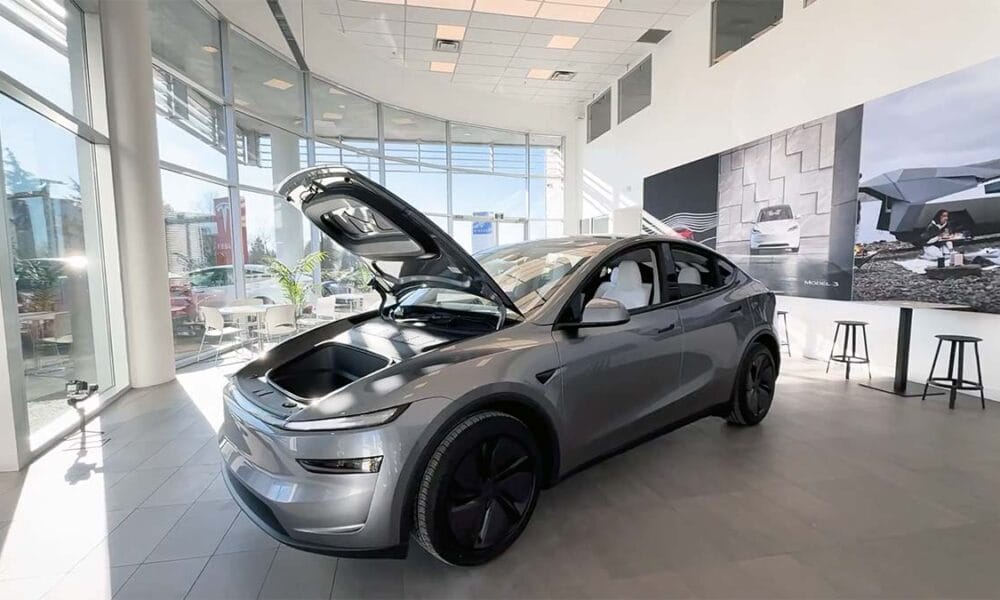
To regain its footing, Tesla has outlined several strategic initiatives. The company plans to introduce a more affordable version of its popular Model Y SUV in the first half of 2025. Additionally, Tesla aims to launch its long-awaited robotaxi service, featuring autonomous vehicles without steering wheels or pedals, by mid-year. Musk has expressed confidence in the technology, claiming that millions of Teslas will operate autonomously by the end of 2025. However, industry experts remain skeptical, citing unresolved safety concerns and regulatory hurdles.
Challenges in Autonomous Vehicle Development
Tesla’s autonomous driving technology, including its “Full Self-Driving” (FSD) feature, has faced scrutiny from regulators and safety advocates. The National Highway Traffic Safety Administration (NHTSA) is investigating whether Tesla’s systems adequately alert drivers when their attention is required. Critics argue that the technology is not yet robust enough for unsupervised use, raising questions about the feasibility of Tesla’s robotaxi ambitions.
Despite these challenges, Tesla continues to invest in its vision of a fully autonomous future. The company has also emphasized its commitment to improving vehicle safety and addressing regulatory concerns. However, achieving these goals will require significant resources and time, adding to the pressure on Tesla’s leadership.
The Road Ahead for Tesla
As Tesla navigates this turbulent period, it faces a complex set of challenges. The company’s financial performance, public image, and competitive positioning are all under scrutiny. While Musk’s decision to prioritize Tesla over his political role may help rebuild investor confidence, the road to recovery will not be easy.
Tesla’s ability to innovate and adapt will be critical in maintaining its leadership in the EV market. The launch of new products, such as the cheaper Model Y and the robotaxi service, could provide a much-needed boost. However, the company must also address broader issues, including its relationship with customers and its approach to regulatory compliance.
Ultimately, Tesla’s future will depend on its ability to balance innovation with accountability. As the EV market continues to evolve, the company must navigate a rapidly changing landscape while staying true to its mission of sustainable transportation.