
Quick Read
- Two major crane collapses occurred in Thailand within two days, killing 34 people and injuring dozens.
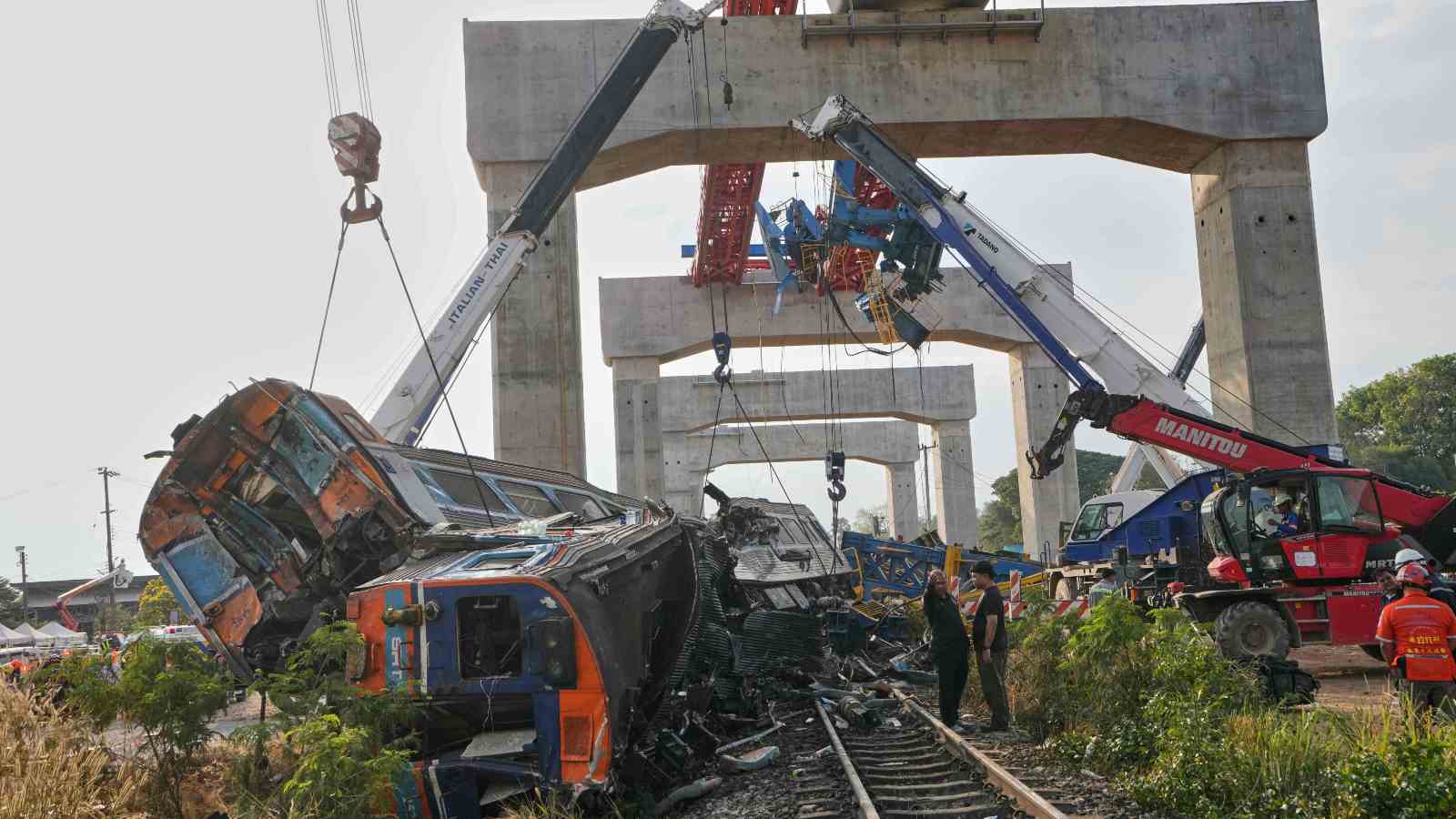
- The first incident in Nakhon Ratchasima killed 32 after a crane fell on a moving train, part of a high-speed rail project.
- The second collapse in Samut Sakhon killed 2 and injured 5 when a crane fell onto a highway.
- Both accidents involved Italian-Thai Development, one of Thailand’s largest construction companies.
- Prime Minister Anutin Charnvirakul ordered the company blacklisted and prosecuted, citing negligence.
A wave of shock and grief has swept across Thailand following two catastrophic construction crane collapses within a single week, leaving a devastating toll of 34 dead and dozens injured. The incidents, occurring in separate parts of the country but both linked to one of Thailand’s largest developers, Italian-Thai Development, have ignited a fierce debate about lax safety standards and accountability in the nation’s rapidly expanding infrastructure sector.
The first tragedy unfolded on Wednesday in the north-eastern province of Nakhon Ratchasima, where a massive crane, part of a joint Thai-Chinese high-speed rail project, toppled onto a moving passenger train below. The impact was horrific: 32 people lost their lives, and more than 60 others sustained injuries as the train derailed and briefly caught fire. Transport Minister Phiphat Ratchakitprakarn confirmed that 195 passengers were on board at the time of the disaster, which occurred on a route that has been under construction for approximately a decade, intended to elevate a high-speed rail line above the existing tracks, as reported by Al Jazeera.
Before the nation could fully process the magnitude of Wednesday’s disaster, another tragedy struck just a day later. On Thursday, in Samut Sakhon, a bustling suburb of Bangkok, a construction crane working on an elevated highway project collapsed onto the road below. This incident claimed two more lives and injured five others, according to Police Colonel Sitthiporn Kasi, superintendent at the local district police station, speaking to Reuters. Footage from the scene captured the terrifying moment the crane crashed, sending a cloud of dust and debris across the highway and crushing several cars. Local media noted the collapse occurred in front of the Paris Inn Garden Hotel, further underscoring the public nature and immediate danger of such failures.
The common thread in both devastating events was Italian-Thai Development, a construction giant with a significant footprint across Thailand. The company swiftly issued a statement to Thailand’s stock exchange on Thursday afternoon, expressing its ‘deepest condolences’ to the victims and their families. It acknowledged full responsibility for providing compensation and initiated a process for assessing damages, promising to ‘review and improve safety measures to be more thorough and stringent, moving forward,’ as cited by the BBC.
However, the Prime Minister, Anutin Charnvirakul, wasted no time in condemning what he termed ‘negligence’ in construction. Following Wednesday’s accident, he ordered the transport ministry to revoke contracts and blacklist Italian-Thai Development, signaling a resolute intent to prosecute the company. ‘This is shocking for the public and causing massive risks to assets and the safety of the people,’ the Prime Minister stated, reflecting widespread public anger and concern. The State Railway of Thailand has also announced its intention to sue Italian-Thai Development, adding legal pressure to the company already facing intense scrutiny.
These recent collapses are not isolated incidents but rather stark reminders of a pervasive problem within Thailand’s construction industry. Industrial and construction site accidents have long been common in the South East Asian nation, often attributed to weak enforcement of safety standards and regulations. The expressway where Thursday’s collapse occurred, for instance, has ominously earned the nickname ‘Death Road’ due to a history of multiple accidents in recent years. More broadly, around 150 people have been killed over the past seven years in various mishaps associated with a road improvement project stretching from Bangkok to the south of the country, highlighting a systemic issue rather than mere unfortunate occurrences.
Italian-Thai Development’s history also includes other high-profile incidents. Last year, the company’s president, along with several designers and engineers, faced charges of professional negligence following the collapse of a Bangkok skyscraper in March 2025 during an earthquake. Notably, this was the only building in the city to fall during that seismic event, raising questions about the company’s engineering and safety protocols long before these recent crane disasters.
The current situation demands more than just expressions of regret and promises of compensation. The repeated failures, culminating in such significant loss of life, underscore a critical need for rigorous oversight and a culture of safety that permeates every level of construction planning and execution. The government’s strong stance against Italian-Thai Development, including blacklisting and prosecution, sends a powerful message that negligence will no longer be tolerated. Yet, the challenge remains to ensure these actions translate into lasting systemic changes, preventing future tragedies and restoring public trust in the safety of Thailand’s infrastructure projects.
The double crane collapses in Thailand serve as a grim testament to the urgent need for a fundamental overhaul of construction safety enforcement and accountability. While immediate government action against the responsible firm is a necessary first step, the enduring legacy of these tragedies will depend on whether this moment catalyzes a genuine and sustained commitment to human life over expedited development, transforming a history of ‘Death Roads’ into a future of secure infrastructure.