


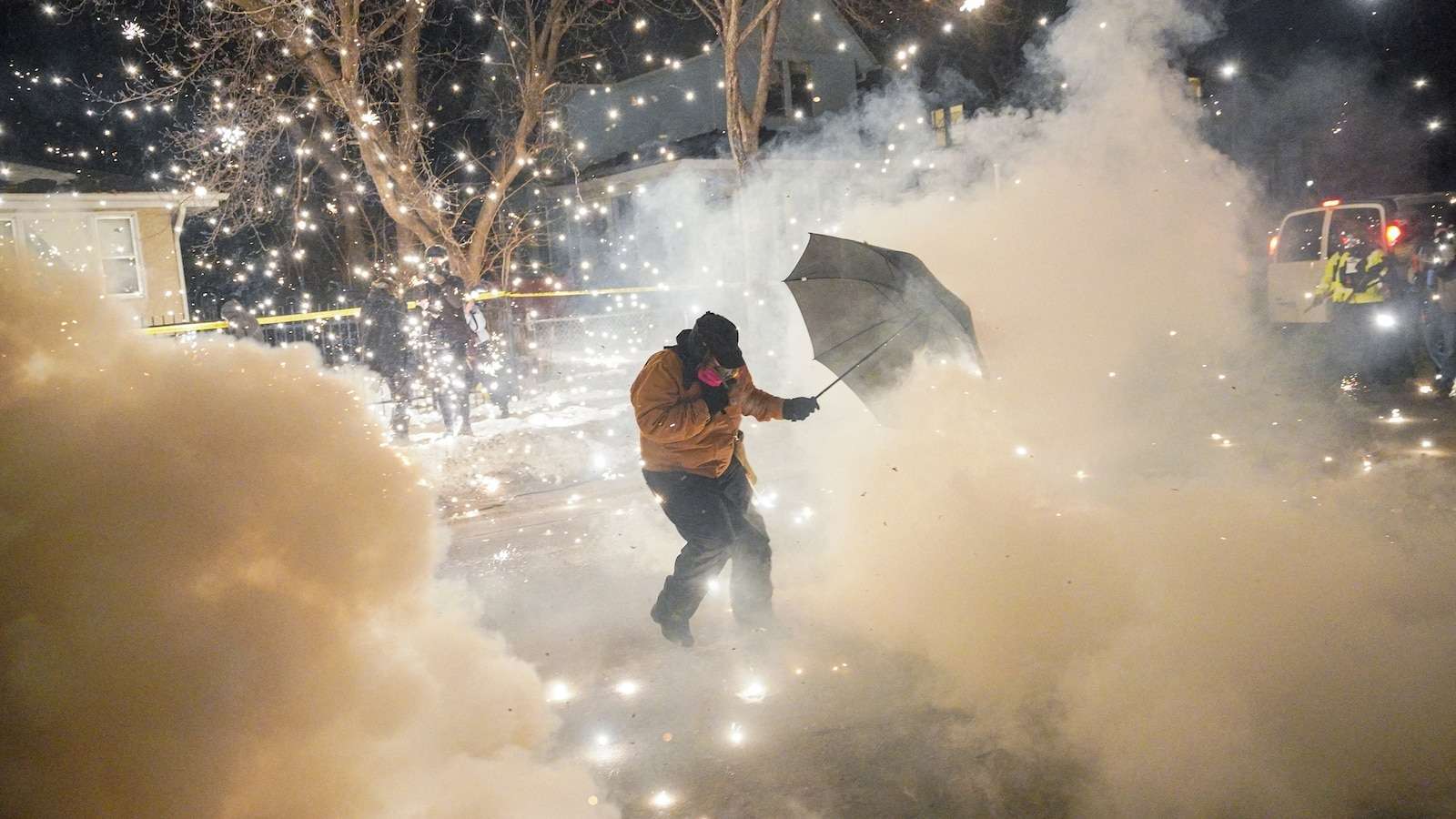
Minneapolis finds itself at a dangerous crossroads, a city grappling with an unprecedented surge in federal immigration enforcement that has culminated in two federal agent-involved shootings within a single week. The ripple effects of these incidents have not only ignited widespread protests but have also drawn the direct intervention and sharp criticism from the highest echelons of federal power, setting the stage for a dramatic confrontation between local governance and federal authority.
A Second Shooting Ignites Further Outcry
The latest flashpoint occurred on January 14th, when a federal agent shot and wounded a man in north Minneapolis. According to a statement from the Department of Homeland Security (DHS), federal agents were conducting a “targeted traffic stop” involving “an illegal alien from Venezuela” just before 7 p.m. The individual allegedly attempted to evade arrest, fled in his vehicle, crashed into a parked car, and then continued on foot. DHS reported that when an officer caught up to the man and attempted to arrest him, he assaulted the officer. The situation escalated further when, as they struggled, two other individuals emerged from a nearby apartment and allegedly attacked the officer with a snow shovel and a broom handle.
“Fearing for his life and safety as he was being ambushed by three individuals, the officer fired a defensive shot to defend his life. The initial subject was hit in the leg,” DHS stated, adding that the three individuals then ran back into the apartment and barricaded themselves inside. Both the officer and the initial subject of the stop were hospitalized, with the subject sustaining non-life-threatening injuries. The two alleged attackers were later taken into custody.
However, the narrative from local authorities offered a more cautious account. Minneapolis Police Chief Brian O’Hara, briefing reporters later that evening, confirmed the incident began on Interstate 94 and concluded in front of a house in the Hawthorne neighborhood. While O’Hara acknowledged that a snow shovel and broom handle were present at the scene, he could not definitively confirm the DHS’s assertion that two additional people had attacked the officer. He stated that “one person may have assaulted federal law enforcement,” but couldn’t specify if this was the same individual who was shot or someone else. The immediate aftermath saw a large crowd gather in the area, leading to an “unlawful assembly” declaration after some individuals began lighting fireworks and throwing items at law enforcement. Authorities reportedly deployed tear gas and flash bangs to disperse the crowd, which had grown to hundreds.
The Shadow of Renee Good’s Death Looms Large
This latest shooting did not occur in a vacuum; it unfolded against the backdrop of an even more tragic event just a week prior. On January 7th, 37-year-old Renee Macklin Good, a mother, was fatally shot in the head by ICE agent Jonathan Ross in south Minneapolis. Her death has been the primary catalyst for the intense public outrage and sustained protests that have swept across the city, transforming a local tragedy into a nationwide talking point about federal overreach and immigration policy.
The federal government’s increased presence in Minnesota is part of a broader, aggressive immigration crackdown. The Department of Homeland Security (DHS), which oversees ICE, reported making more than 2,000 arrests in the state since early December and has unequivocally vowed to “not back down.” This resolute stance from federal agencies has been perceived by many as an escalation, further deepening the divide between federal directives and the sentiments of the local community.
Political Firestorm: Trump’s Threats and Local Leaders’ Pleas
The escalating situation has quickly drawn the attention of the White House, with President Donald Trump issuing a stark threat to intervene. On Thursday, Trump threatened to invoke the rarely used Insurrection Act, a federal law that allows the deployment of U.S. military troops or the federalization of the National Guard for domestic law enforcement, often over the objections of state governors. In a social media post, Trump declared, “If the corrupt politicians of Minnesota don’t obey the law and stop the professional agitators and insurrectionists from attacking the Patriots of I.C.E., who are only trying to do their job, I will institute the INSURRECTION ACT, which many Presidents have done before me, and quickly put an end to the travesty that is taking place in that once great State.”
This aggressive rhetoric was echoed by Deputy Attorney General Todd Blanche, who accused Minnesota Governor Tim Walz and Minneapolis Mayor Jacob Frey of “encouraging violence” and even “terrorism” amid the ongoing protests. Blanche’s social media post was uncompromising: “Minnesota insurrection is a direct result of a FAILED governor and a TERRIBLE mayor encouraging violence against law enforcement. It’s disgusting. Walz and Frey – I’m focused on stopping YOU from your terrorism by whatever means necessary. This is not a threat. It’s a promise.”
Local leaders, meanwhile, have sought to de-escalate tensions while simultaneously criticizing federal actions. Mayor Jacob Frey described the situation as “not sustainable” and an “impossible situation our city is being put in.” He expressed profound concern, noting that “We have residents that are asking the very limited number of police officers that we have to fight ICE officers on the street.” Frey also condemned ICE’s conduct as “intolerable” and urged protesters to remain peaceful, stating, “We cannot respond to Donald Trump’s chaos with our own chaos.” Governor Tim Walz echoed the mayor’s call for calm, urging protesters not to give President Trump “what he wants” by resorting to violence on the streets.
Calls for Accountability and Independent Investigation
Amidst the political rhetoric and street protests, questions of accountability and independent oversight have come to the forefront. The Minnesota Bureau of Criminal Apprehension (BCA) announced late Wednesday that it is launching an “independent BCA investigation” into the January 14th shooting. This move is particularly significant given the controversy surrounding the investigation into Renee Good’s fatal shooting. The BCA had initially believed it would be working jointly with the FBI on that case, only for the FBI to reportedly reverse course, leaving the BCA excluded from the initial inquiry. This exclusion became a “major point of contention,” highlighting a perceived lack of transparency and independence in federal investigations.
Community groups and legal organizations are also mobilizing. The ACLU of Minnesota is expected to announce a new class-action lawsuit against the federal government, challenging the legality and conduct of the federal operations. The NAACP Minnesota–Dakotas State Conference is holding a press conference to address ICE’s actions, and Minneapolis City Council members, alongside community stakeholders, are launching an “Evict ICE, Not Us” campaign, signaling a concerted effort to push back against the federal presence. Mayor Frey candidly admitted that “there’s still a lot that we don’t know at this time” regarding the specifics of the latest shooting, underscoring the ongoing need for thorough and impartial investigations.
The situation in Minneapolis is a crucible, testing the boundaries of federal authority, state sovereignty, and community rights. The twin shootings have amplified pre-existing tensions surrounding immigration policy, transforming a local enforcement issue into a national flashpoint. The federal government’s aggressive stance, coupled with its disengagement from local investigative bodies in the initial fatal shooting, has eroded trust and fueled the very unrest it seeks to quell. This environment underscores a dangerous disconnect between federal directives and the on-the-ground realities of urban policing and community relations, making a resolution feel increasingly distant.