


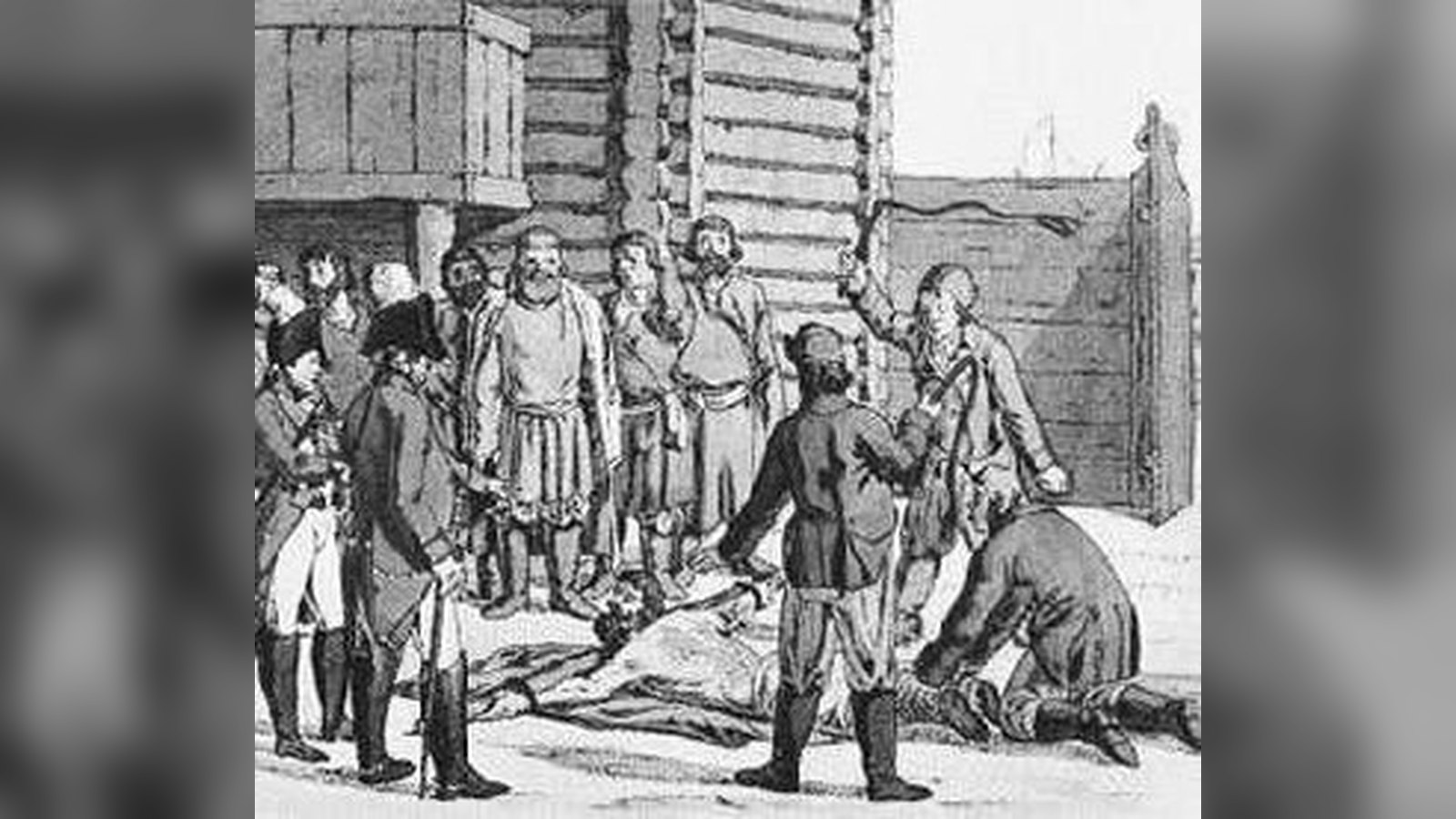
In contemporary Russian, the word podlinnik (подлинник) is a standard term denoting an original document, a master copy, or something authentic. However, its etymological roots are embedded in the harsh realities of medieval Russian judicial proceedings, where the pursuit of truth was frequently synonymous with the application of physical force.
The Instrument of Truth
During the period of the Grand Duchy of Moscow and earlier, the term podlinnik referred to a specific type of stick or rod used by judicial authorities during interrogations. In the context of the ‘praviozh’ (a system of debt collection and testimony extraction), investigators would use this rod to strike a witness or defendant. The logic was grim and direct: by applying pain, the interrogator aimed to ‘beat out’ the truth (dobyvat’ istinu). Therefore, the ‘podlinnik’ was the tool that made the testimony ‘original’ or ‘true’.
Linguistic Evolution
Over centuries, the violent connotations of the word faded, while the association with ‘truth’ and ‘validity’ remained. By the time the word transitioned into standard bureaucratic and academic usage, it had been fully abstracted from its origins as an instrument of torture. It came to signify the primary source, the authentic manuscript, or the artifact that stands as the foundational proof of a claim.
Historical Significance
This etymology serves as a stark reminder of how language preserves the history of power. The evolution of podlinnik illustrates a transition from a society where truth was a physically extracted commodity to one where truth is defined by documents and verified facts. The photograph often associated with this concept—depicting ancient judicial settings or historical artifacts—serves to ground this linguistic evolution in the material culture of the past.