
Quick Read
- The White House will build a $200M ballroom in the East Wing, accommodating 650 guests.
- Construction begins in September 2025, with completion expected before Trump’s term ends.
- Funding comes entirely from private donors, including President Trump and his “Patriot donors.”
- McCrery Architects, Clark Construction, and AECOM will lead the project.
- The ballroom will modernize the East Wing while preserving the White House’s historical integrity.
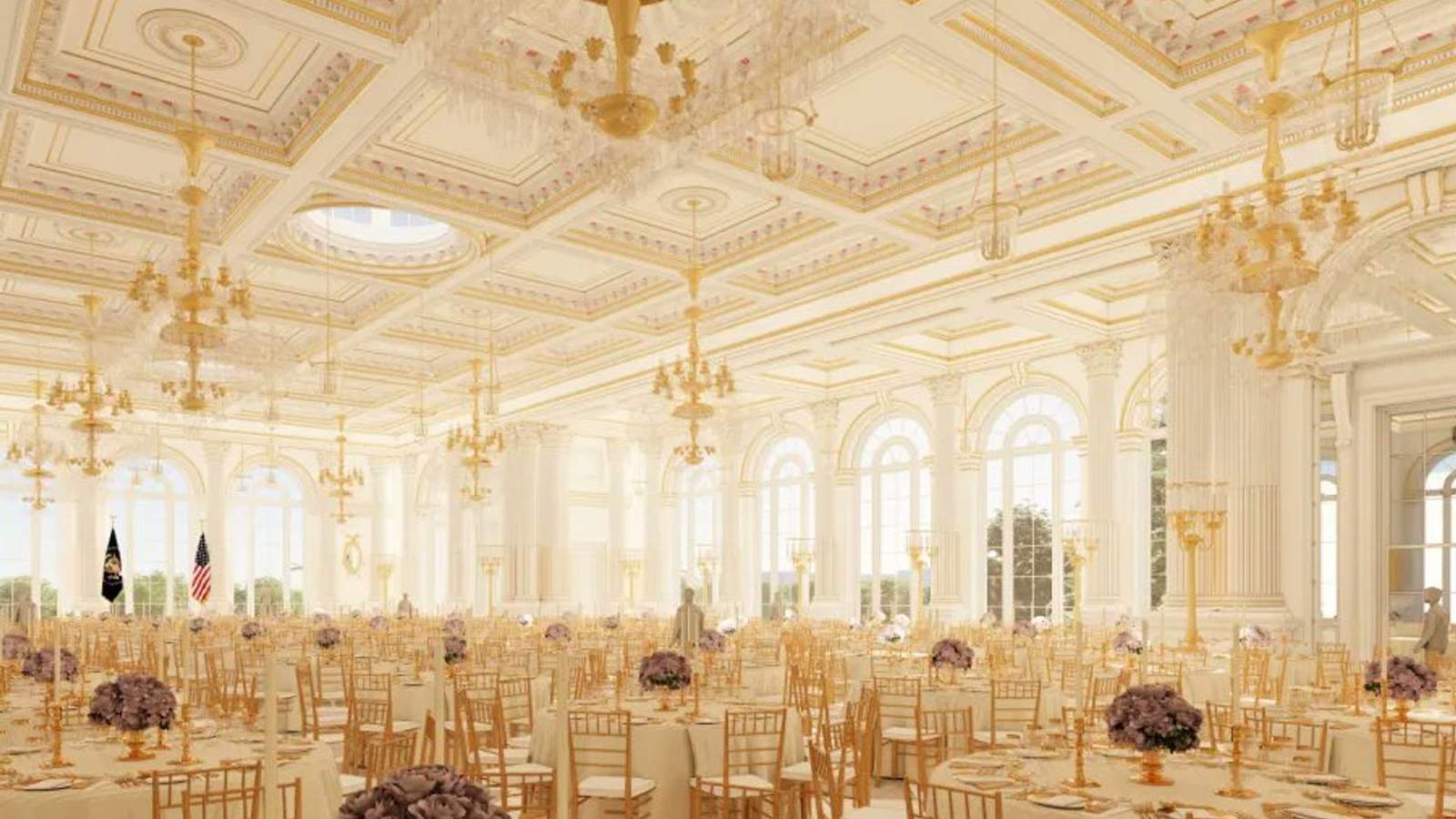
The White House is set to undergo one of its most significant renovations in decades as President Donald Trump announced plans for the construction of a $200 million ballroom in the building’s East Wing. This ambitious project, slated to begin in September 2025, will add a 90,000-square-foot state-of-the-art event space capable of seating 650 guests, a substantial upgrade from the current 200-guest capacity of the East Room, the largest existing venue in the White House. According to SAN, this initiative has been a long-standing aspiration for over 150 years and is expected to be completed by the end of Trump’s current term.
A Solution to Longstanding Limitations
For decades, the White House has faced challenges in hosting large-scale events due to space constraints. The East Room’s 200-guest limit has often forced administrations to resort to setting up temporary tents on the lawn for state dinners and other significant gatherings. Speaking at a press briefing, White House Press Secretary Karoline Leavitt emphasized the necessity of the project, stating, “This new ballroom will finally provide the White House with a venue befitting its stature, enabling it to host dignitaries and guests in an elegant, permanent space.” Renderings of the proposed ballroom, shared by Crossroads Today, reveal a design that seamlessly integrates with the existing architecture while modernizing the East Wing.
President Trump, whose early career in real estate and construction has influenced many of his decisions, expressed his enthusiasm for the project. “They’ve wanted a ballroom at the White House for more than 150 years,” he remarked. “I’m good at building things, and we’re going to build quickly and on time. It’ll be beautiful, top of the line.” The President also noted that the ballroom’s design respects the historical significance of the White House, ensuring it complements rather than alters the existing structure.
Funding and Execution
Unlike many government-funded projects, this endeavor will rely entirely on private donations. President Trump and what he refers to as his “Patriot donors” have pledged to cover the $200 million cost. During her briefing, Leavitt highlighted that no taxpayer dollars would be used, a decision likely aimed at avoiding public controversy over the project’s hefty price tag.
The architectural and construction teams selected for the project are equally noteworthy. McCrery Architects, a Washington, D.C.-based firm renowned for its classical designs, will lead the architectural efforts. “I am honored that President Trump has entrusted me to help bring this beautiful and necessary renovation to The People’s House,” said McCrery Architects CEO Jim McCrery. Clark Construction, another D.C. firm, will manage the construction, while AECOM will oversee engineering. SAN reports that the project timeline is ambitious, with completion expected before the end of Trump’s term.
Modernization and Historical Significance
The new ballroom represents more than just an expansion; it is a modernization effort that will involve temporarily relocating offices housed in the East Wing, including those of the First Lady. This move will allow for a comprehensive renovation of the wing, ensuring it meets the needs of future administrations. Leavitt assured reporters, “Nothing will be torn down. This is about enhancing and preserving the White House’s unique historical value.”
As Daily Sabah notes, this will be the first major structural addition to the Executive Mansion since the Truman Balcony was added in 1948. The ballroom is not merely a functional space but a legacy project that Trump hopes will serve future presidents and their administrations. “It’ll be a great legacy project,” he said. “I think it will be really beautiful.”
A Broader Context
Since returning to office in January 2025, President Trump has undertaken several projects to transform the White House. These include redecorating the Oval Office with gold accents and cherubs, installing towering flagpoles on the lawns, and replacing the grass in the Rose Garden with stone. The ballroom, however, stands out as the most ambitious and expensive of these efforts, reflecting Trump’s penchant for grandeur and his desire to leave a lasting mark on “The People’s House.”
While the project has been met with mixed reactions, its historical and functional significance cannot be understated. As White House Chief of Staff Susie Wiles observed, “President Trump is a builder at heart and has an extraordinary eye for detail. This project will preserve the White House’s special history while preparing it for the future.”
The $200 million ballroom is more than just a construction project; it is a statement of vision, legacy, and the enduring importance of the White House as a symbol of American leadership and hospitality.