
Quick Read
- Tucker Carlson interviewed Nick Fuentes, a far-right commentator known for Holocaust denial.
- Carlson’s podcast episode sparked backlash among Republican Jewish leaders and GOP lawmakers.
- Rep. Dan Crenshaw and Sen. Ted Cruz publicly condemned Carlson’s decision.
- The controversy overshadowed the Republican Jewish Coalition’s annual conference, shifting focus from Middle East ceasefire celebrations to fighting antisemitism.
- College-aged Jewish Republicans protested Carlson’s interview during the conference.
Republican Jewish Leaders Confront Rising Antisemitism After Carlson-Fuentes Interview
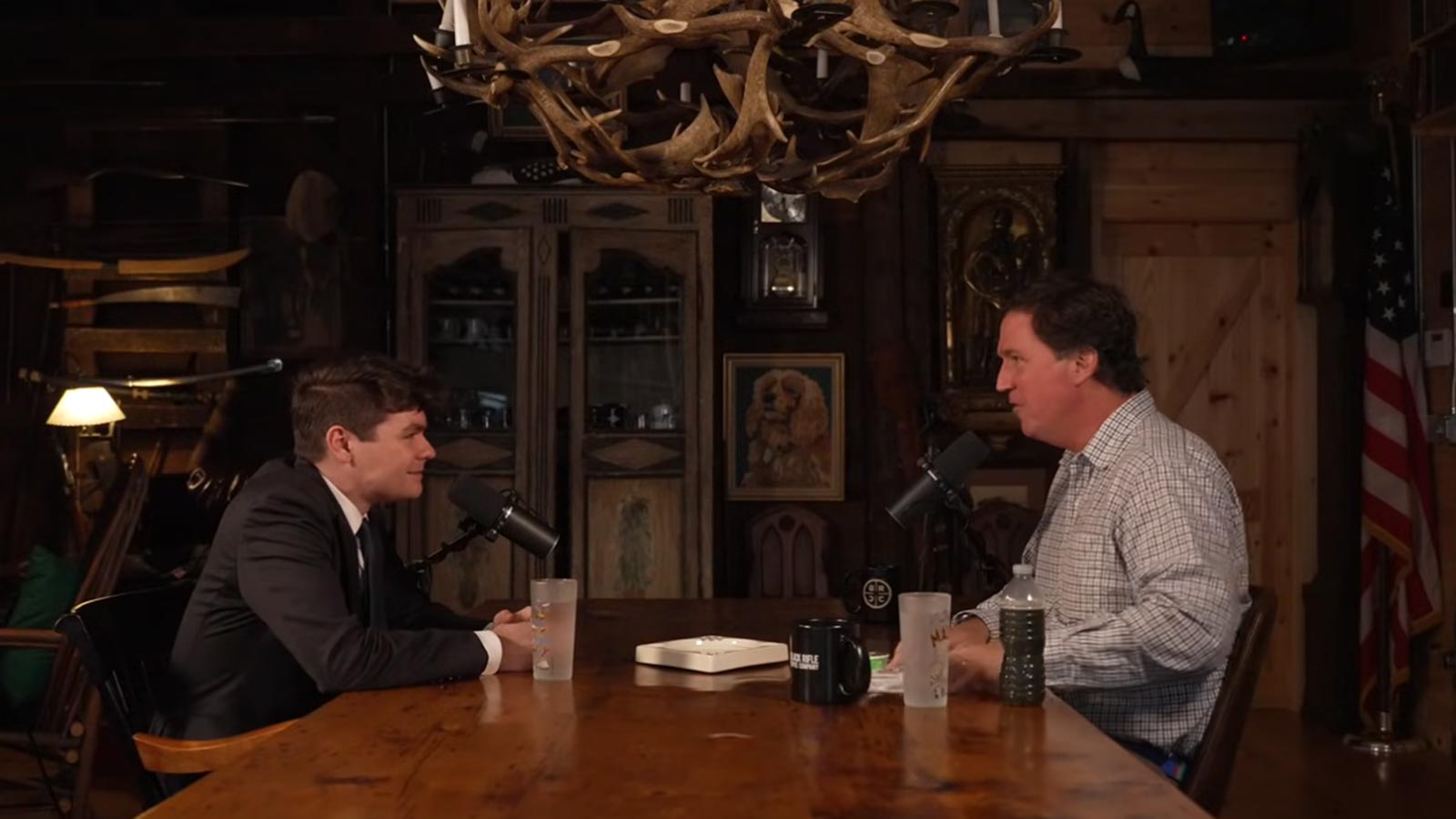
What began as an anticipated celebration of a Middle East ceasefire at the Republican Jewish Coalition’s annual conference in Las Vegas quickly shifted into a reckoning with rising antisemitic rhetoric in the Republican Party. The spark? Tucker Carlson’s podcast interview with Nick Fuentes, a far-right commentator notorious for Holocaust denial and anti-Jewish conspiracy theories.
As attendees gathered at the Venetian Resort, the mood was noticeably tense. A group of college students waved bright red signs declaring, “Tucker is not MAGA,” a pointed protest against Carlson’s perceived embrace of fringe voices. The symbolism was clear: the fault lines within the GOP are widening, and the party’s relationship with Jewish communities, as well as its stance on Israel, is under scrutiny.
Tucker Carlson’s Interview: The Flashpoint
On Thursday, Carlson invited Fuentes onto his show, prompting outrage from across the Republican spectrum. Fuentes, infamous for minimizing the Holocaust and claiming a global Jewish conspiracy, represents a strain of extremism that many in the party are now openly denouncing. Carlson, once a prominent Fox News host, has himself faced criticism for espousing the “great replacement theory,” which alleges a coordinated effort to replace white populations—often blaming Jews as orchestrators.
The Heritage Foundation’s president, Kevin Roberts, defended Carlson, denying any institutional distancing from the host. This defense fueled further debate, as many conference speakers took the stage to demand a clear stand against antisemitism. Republican Jewish Coalition CEO Matt Brooks described the situation as “the early stages of an undeclared civil war within the Republican Party, as it relates to Israel, and antisemitism and the Jewish community.”
Brooks, joined by board member Ari Fleischer, emphasized the urgency of confronting anti-Jewish voices before they gain traction. “It’s really going to be our challenge going forward to combat that before it has a chance to grow and metastasize in the Republican Party,” Brooks told the Associated Press.
GOP Leaders Respond: Divisions and Condemnations
The controversy reached the national stage, with prominent Republican figures joining the condemnation. Rep. Dan Crenshaw (R-TX), speaking on Face the Nation, backed Sen. Ted Cruz’s criticism of Carlson. Crenshaw did not mince words: “I’ve had a long-standing feud with Tucker Carlson. Glad everyone is also waking up now to how bad of a person he is. He’s changed a lot over the last 20 years. You know, hard to say why. But it doesn’t really matter why.”
Crenshaw’s remarks reflect a broader discomfort with Carlson’s evolution and his willingness to platform figures like Fuentes. Cruz and other GOP lawmakers have publicly rebuked Carlson, signaling a shift in how the party deals with extremist views.
On the conference floor, Tennessee Rep. David Kustoff lamented the presence of antisemitism “on the fringes of our own party.” Florida Rep. Byron Donalds was direct: “In our party we will not tolerate antisemitism.”
Sen. Lindsay Graham attempted to inject some levity, calling himself a member of the “Hitler-sucks wing of the Republican Party.” While the line drew laughs, Graham cautioned that those who embrace fringe ideologies would face firm opposition: “If you ever run for office as a Republican, and you embrace this weird s***, we’re going to beat your brains out.”
Challenges Ahead: Generational Divides and the Future of GOP
Despite the strong condemnations, the generational divide within the party is increasingly evident. Fuentes, only 27, commands a large following on social media, with many of his supporters drawn from younger demographics. Brooks pointed to the leak of disturbing messages from Young Republican leaders in multiple states, joking about gas chambers and Hitler—symptoms of a deeper challenge the coalition faces.
College-aged Jewish Republicans made their presence felt at the conference, waving “Tucker is not MAGA” signs during presentations. Their activism signals a desire to push back against the normalization of extremist views and reclaim the party’s commitment to combating hate.
There were moments of joy, too. The release of Israeli hostages after two years of captivity brought emotional reunions, celebrated by speakers like Norm Coleman, former Minnesota Senator and coalition chairman. “It has been a deeply emotional time for all Jewry,” Coleman said.
Yet, even celebrations were tempered by concern. The ceasefire, brokered with the help of President $1, required Hamas to disarm and disband—a condition many saw as unlikely to hold. Renewed violence in Gaza cast a shadow over hopes for lasting peace. Board member Bobby Schostak of Michigan suggested any real solution was still years away.
Norm Coleman was more blunt: “If [Hamas] are still part of the equation, I think it’s going to be very difficult to hold.”
Reconciling Party Values: The Path Forward
The Republican Jewish Coalition’s annual conference, once expected to be a celebration of peace, became a stage for hard conversations about the GOP’s identity and moral direction. The controversy surrounding Carlson’s interview with Fuentes is not just about one media figure—it’s emblematic of the ideological battles now shaping the party’s future.
While some leaders, like the Heritage Foundation’s Kevin Roberts, insist that Carlson’s views do not represent a broader shift, the reaction from activists, elected officials, and Jewish community members suggests otherwise. The party faces a choice: confront and root out antisemitism, or risk deepening divisions and alienating key supporters.
The stakes are high. The GOP’s ability to present a united front against hate—while navigating complex debates over Israel and U.S. foreign policy—will likely define its trajectory in the years to come.
The controversy surrounding Tucker Carlson’s interview with Nick Fuentes has exposed profound rifts within the Republican Party, especially regarding its stance on antisemitism and extremism. As party leaders and activists rally to confront these challenges, the episode stands as a stark reminder that the struggle against hate is ongoing—and the future of the GOP may well hinge on how decisively it acts now.