
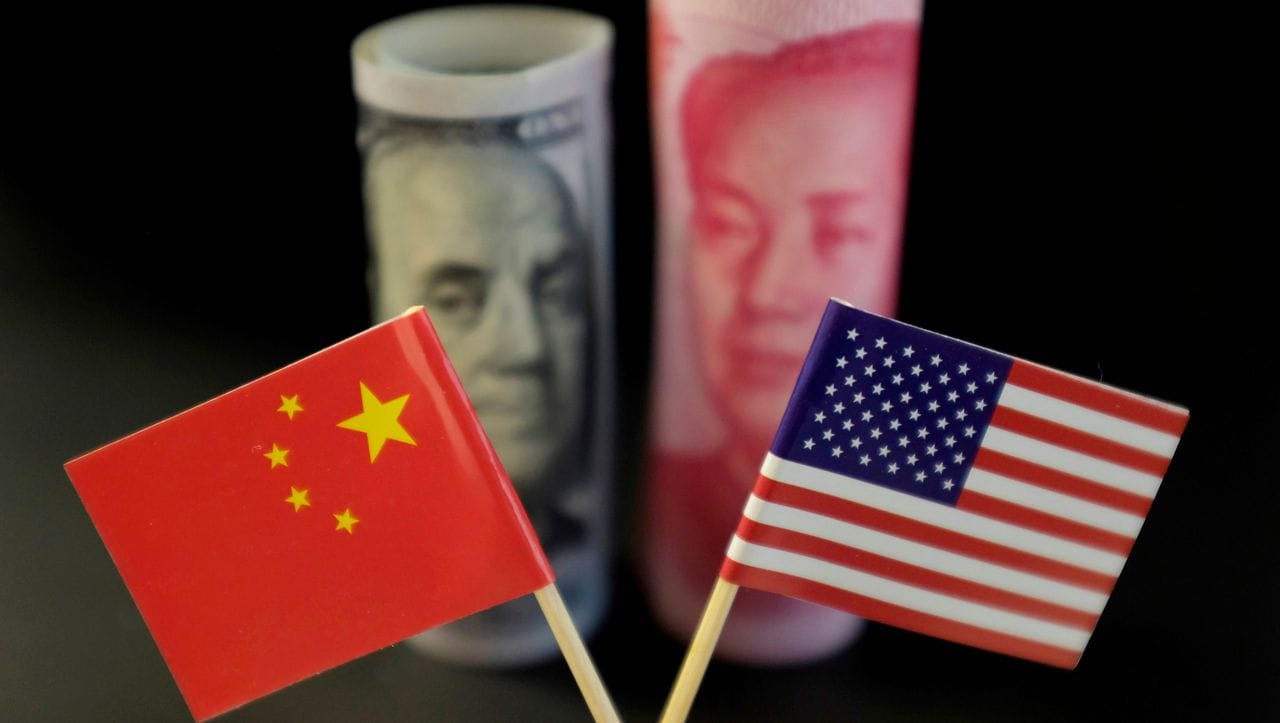
U.S. and China to Meet in Geneva Amid Trade War Tensions
The United States and China are set to hold high-level talks in Geneva this week, marking a potential step toward easing the prolonged trade war between the two economic superpowers. The meeting will feature U.S. Treasury Secretary Scott Bessent and U.S. Trade Representative Jamieson Greer, who will engage with China’s Vice Premier He Lifeng, Beijing’s top economic policymaker. This development comes after months of escalating tariffs and strained relations that have disrupted global trade and economic stability.
Background of the Trade War
The trade conflict between the U.S. and China began in 2018 when the Trump administration imposed significant tariffs on Chinese goods, citing unfair trade practices and intellectual property theft. China retaliated with its own tariffs, leading to a tit-for-tat escalation. Currently, Chinese goods entering the U.S. face tariffs as high as 145%, while U.S. goods exported to China are subject to 125% tariffs. These measures have significantly impacted businesses and consumers in both countries, as well as global markets.
Goals of the Geneva Meeting
The upcoming talks in Geneva are seen as an opportunity to de-escalate tensions and explore pathways to a more balanced trade relationship. In a recent interview with Fox News, Secretary Bessent emphasized the need for “fair trade” and described the current tariff levels as unsustainable. “We don’t want to decouple. What we want is fair trade,” he stated. However, he tempered expectations, noting that the meeting is unlikely to produce a comprehensive trade deal but could lay the groundwork for future negotiations.
China’s Position and Expectations
China has expressed a willingness to engage in dialogue but has made it clear that any agreement must be based on mutual respect and equality. A spokesperson for China’s Commerce Ministry stated that the country remains “open for negotiation” but will not compromise its principles. Chinese political commentator Ming Jinwei echoed this sentiment, urging U.S. officials to adopt a “proper attitude” and reassess their understanding of China’s economic strength.
Global Implications
The trade war has had far-reaching consequences, including disruptions to global supply chains and increased uncertainty in financial markets. Economists and policymakers worldwide are closely monitoring the Geneva talks for signs of progress. Alicia Garcia-Herrero, Chief Economist for the Asia Pacific at Natixis, suggested that both sides are motivated to reach an agreement due to mounting economic pressures. “I think both parties are keen to negotiate,” she said, predicting that a deal could involve the U.S. reducing tariffs while maintaining some duties to protect domestic industries.
Market Reactions
News of the upcoming talks has already influenced financial markets. U.S. stock futures rose following the announcement, with Dow futures up 270 points (0.7%), S&P 500 futures gaining 0.8%, and Nasdaq futures climbing 1%. Investors are optimistic that the meeting could signal a shift toward resolving the trade dispute, which has weighed heavily on market sentiment in recent years.
Challenges Ahead
Despite the optimism, significant challenges remain. Both nations have deeply entrenched positions, and domestic political considerations could complicate negotiations. For the U.S., maintaining a tough stance on China has been a key element of its trade policy, while China is unlikely to make concessions that could be perceived as a sign of weakness. Additionally, the broader geopolitical context, including issues related to technology and national security, adds another layer of complexity to the talks.
The Geneva meeting represents a critical juncture in U.S.-China relations. While it may not result in an immediate resolution to the trade war, it offers a platform for dialogue and the possibility of incremental progress. Both sides have much to gain from a de-escalation of tensions, not only for their own economies but also for global economic stability. As the talks unfold, the world will be watching closely for any signs of a breakthrough.
Source: NPR, CNN